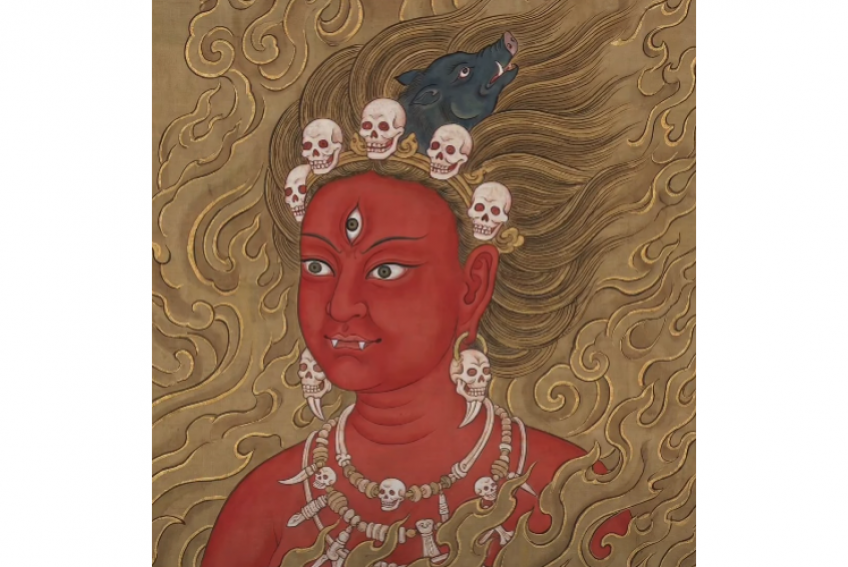
In Buddhist philosophy, the boar (wild boar or pig) holds a deeply symbolic role rather than a literal religious significance. It appears in visual teachings, narrative traditions, and tantric iconography across Theravada Buddhism and Vajrayana Buddhism.
Importantly, “boar” refers to an animal symbol widely used in Buddhist teachings.
The Boar as One of the Three Poisons
One of the most important symbolic roles of the boar appears in the Wheel of Life (Bhavachakra), a core visual teaching in Buddhism.
Within this framework, the boar represents:
The boar is one of the Three Poisons in Buddhist teachings, alongside:
Together, these three forces are understood as the root causes that keep beings bound to the cycle of rebirth.
The Boar in Vajrayana Buddhist Symbolism
In Vajrayana Buddhism, the boar takes on a more transformative and philosophical role.
Rather than being only a symbol of ignorance, it becomes part of spiritual transformation:
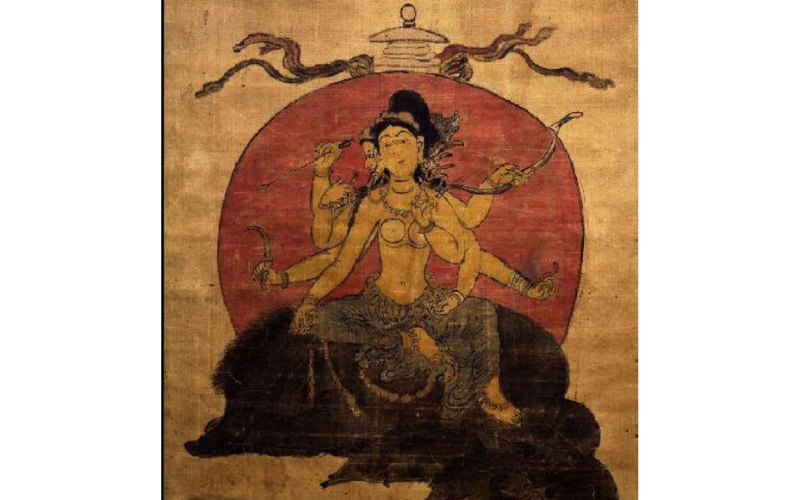
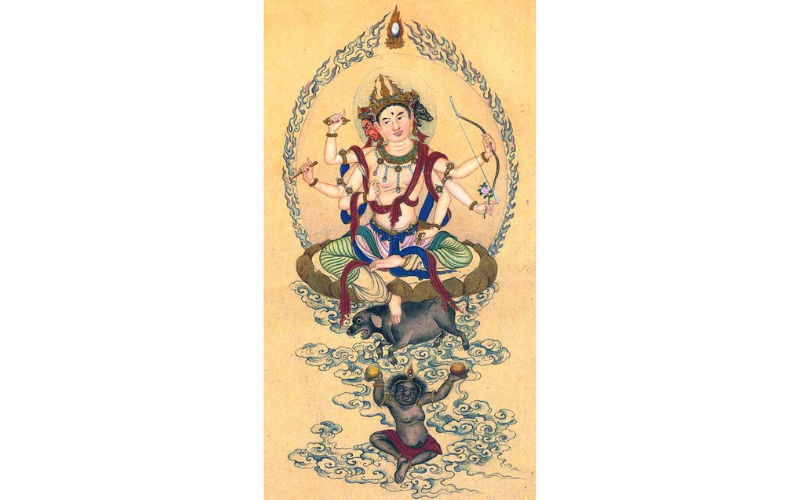
The goddess Marichi is also associated with wild boars, often depicted riding a chariot drawn by them, symbolising the arrival of dawn and illumination over darkness.
The Boar in Jataka Narratives
In Theravada Buddhism, the boar also appears in Jataka tales, which recount the previous lives of the Buddha.
In these narratives, the boar is sometimes portrayed as:
Unlike the symbolic representation of ignorance, these stories focus more on ethical lessons and behavioural wisdom drawn from animal behaviour.
{The Sukara Jataka (No. 153) presents a boastful boar whose ignorance nearly leads to death, while the Vaddhaki-Sukara Jataka (No. 492) depicts the Bodhisatta as a wise and strategic boar who leads his herd to overcome a predator.
These contrasting portrayals reflect the broader Buddhist use of animal figures to communicate ethical and behavioural lessons.}
Boar Symbolism in Nepalese Buddhist Culture
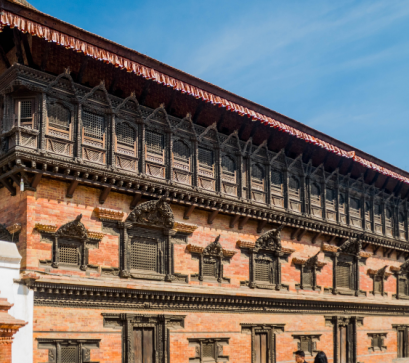
In Nepal, Buddhist symbolism is deeply integrated into everyday visual culture, especially in the Kathmandu Valley’s stupas, monasteries, and thangka art traditions.
It appears mainly in:
The boar in Buddhism is not a literal religious figure but a multi-layered symbol used across different traditions:
Across all interpretations, the boar serves as a reminder that Buddhist teachings often use the natural world as a mirror for understanding the mind—its confusion, its potential, and ultimately, its awakening.
PC: @artofbuddhadharma, Collections, PICRYL
Also Read