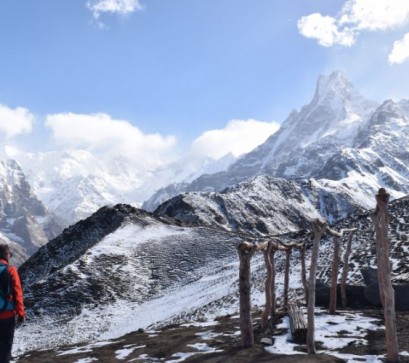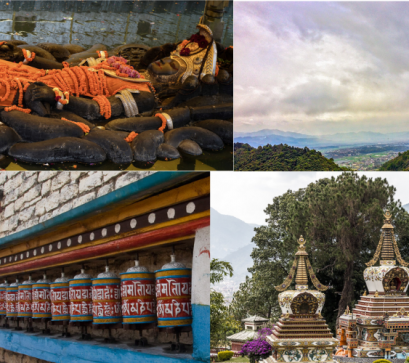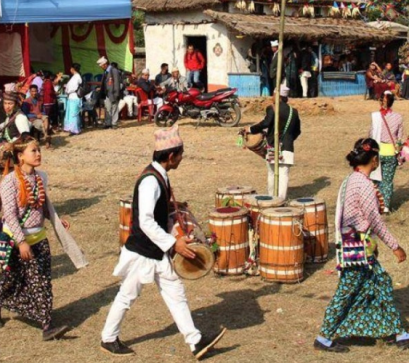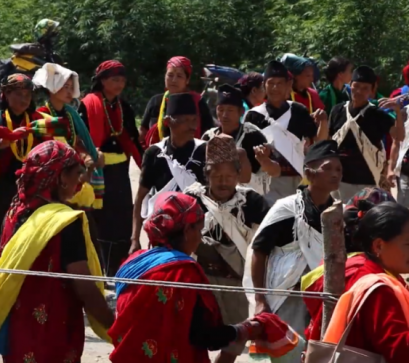
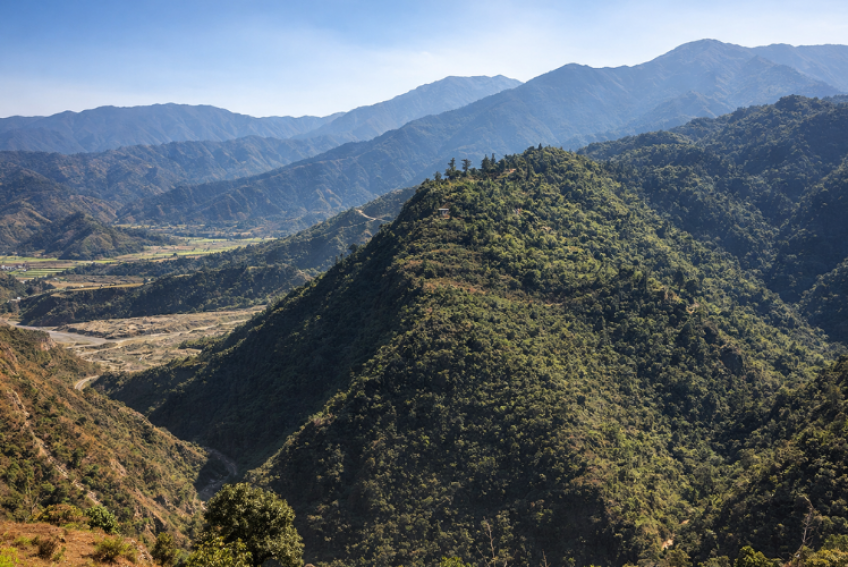
Set in the quiet forested hills of Kavrepalanchowk District, the Ladkeshwor Mahadev Hiking Trail is a rewarding cultural and nature walk that offers spiritual significance, rural landscapes and expansive views towards the eastern Kathmandu Valley. Well suited to a half-day excursion, the trail appeals to travellers seeking an authentic experience beyond the Valley’s better-known routes.
Overview
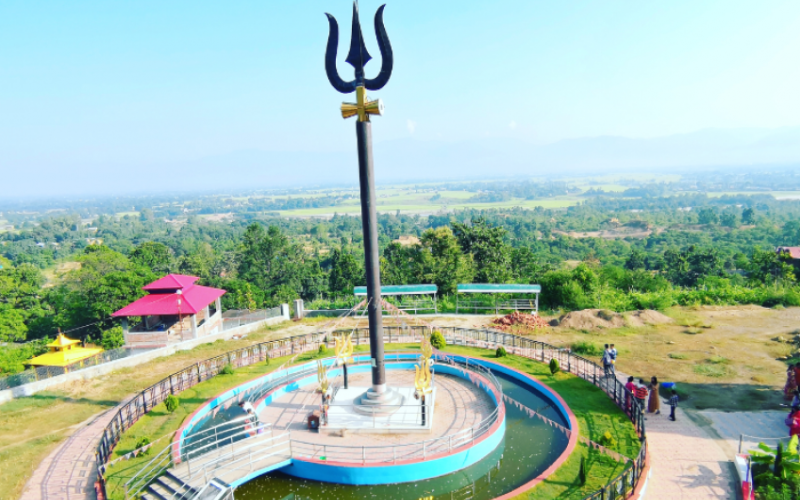
The hike leads to Ladkeshwor Mahadev, a Hindu shrine dedicated to Lord Shiva and revered by local communities of western Kavre. The route follows established rural footpaths through terraced farmland and community-managed forests, providing insight into the cultural and ecological fabric of Nepal’s Middle Hills.
Location
Ladkeshwor Mahadev is administratively and geographically located in Kavrepalanchowk District, Bagmati Province. The shrine lies in the forested hill region of western Kavre, within the Middle Hills of central Nepal.
Although the ridgelines offer views across parts of the eastern Kathmandu Valley, the site itself is firmly situated within Kavrepalanchowk and is traditionally accessed from the Banepa-Panauti side. Local sources and mapping platforms consistently identify Ladkeshwor Mahadev as a Kavre-based religious and hiking destination.
Historical Background
Ladkeshwor Mahadev is rooted in the ancient Shaivite tradition ( a major branch of Hinduism centered on worshipping lord Shiva as the supreme being) that has shaped the spiritual landscape of central Nepal for centuries. While no inscriptions definitively date the shrine’s origin, local oral traditions suggest it began as a forest shrine centred on a natural stone lingam, used by villagers and wandering ascetics for worship and meditation.
Like many hilltop Mahadev shrines of the region, the site likely developed gradually during the Licchavi and early Malla periods, as nearby settlements expanded and religious practices became more formalised. The surrounding footpaths historically formed part of local networks connecting villages, agricultural land and sacred sites.
Today, Ladkeshwor Mahadev remains a living heritage site, maintained by local communities and visited regularly during festivals such as Maha Shivaratri and Teej.
Ecological Region
The ecological condition around the Ladkeshwor Mahadev Hiking Trail is generally healthy and stable, reflecting the typical environment of Nepal’s Middle Hills. The area is dominated by community-managed forests, where mixed broadleaf species such as Schima, Castanopsis, oak and rhododendron are found alongside chir pine on drier slopes. These forests support a variety of birdlife and small mammals and function as an important green buffer for western Kavrepalanchowk. While seasonal monsoon rains can cause minor erosion along village paths, long-standing community forestry practices have helped maintain forest cover, encourage natural regeneration and limit large-scale environmental degradation, making the trail an ecologically sound and scenic hiking destination.
Trail Highlights
Sacred Hilltop Shrine
A peaceful temple setting that encourages quiet reflection and respectful exploration.
Forest and Farmland Scenery
Shaded woodland paths alternate with open terraces and ridgelines.
Rural Village Life
Encounters with local communities offer insight into everyday life in Kavre’s hill villages.
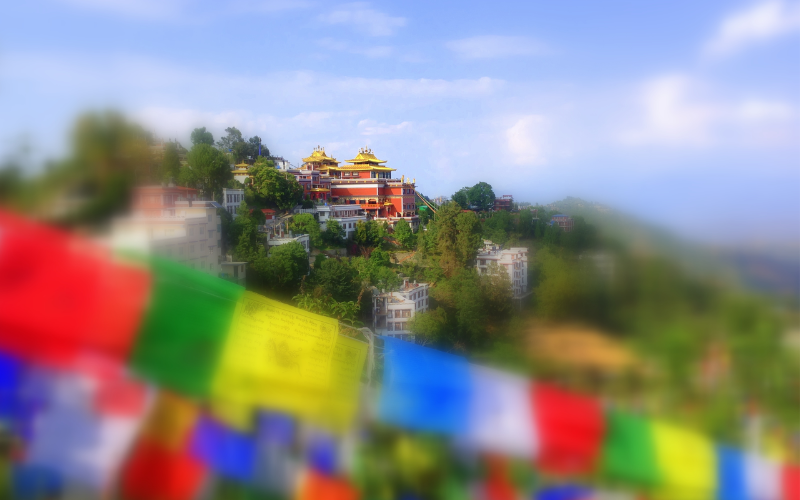
Route Description
The hike begins from villages within western Kavrepalanchowk District, following well-used footpaths that climb gradually through farmland and forest. The ascent is steady rather than steep, making the trail accessible to most walkers.
Near the summit, stone steps lead to the Ladkeshwor Mahadev temple complex. Hikers typically return via the same route, though minor variations are possible depending on the starting village.
How to Get There
From Kathmandu
Ladkeshwor Mahadev is located approximately 25–30 kilometres east of Kathmandu.
By Private Vehicle or Taxi: Drive towards Banepa or Panauti, then continue on local roads to the nearest village trailhead in western Kavre.
By Public Transport: Take a bus or microbus from Kathmandu to Banepa or Panauti. From there, local transport or a short walk leads to the trail start.
By Motorcycle: A practical option for independent travellers, allowing direct access to village roads.
Road and trail signage is limited, so an offline map or local guidance is recommended.
For travellers seeking a quieter alternative close to Kathmandu, the Ladkeshwor Mahadev Hiking Trail offers a meaningful blend of faith, forest and rural life. Undisturbed, culturally rooted and scenically rewarding, it stands as one of Kavrepalanchowk’s understated hiking experiences.
PC: Wikimedia Commons, Flickr
Also Read