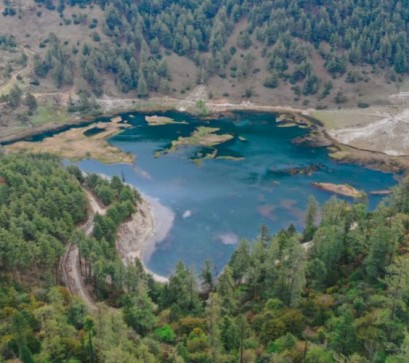
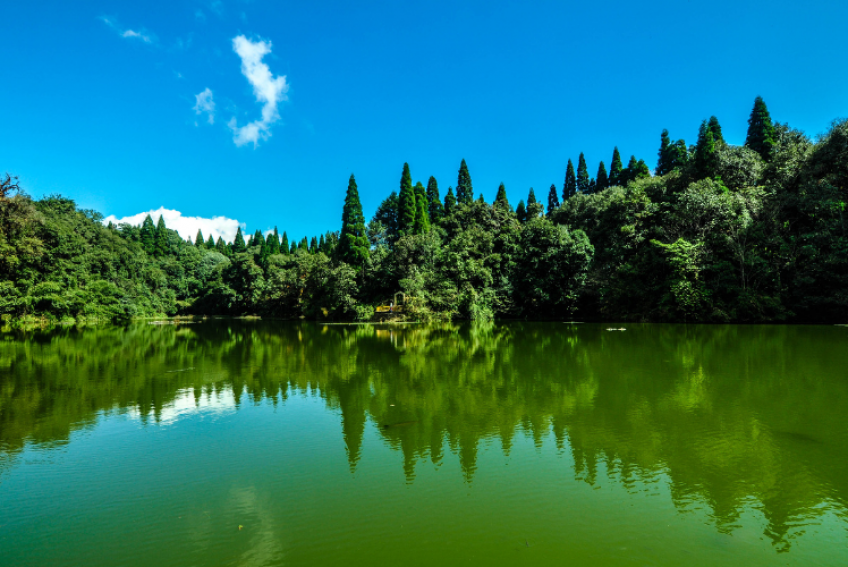
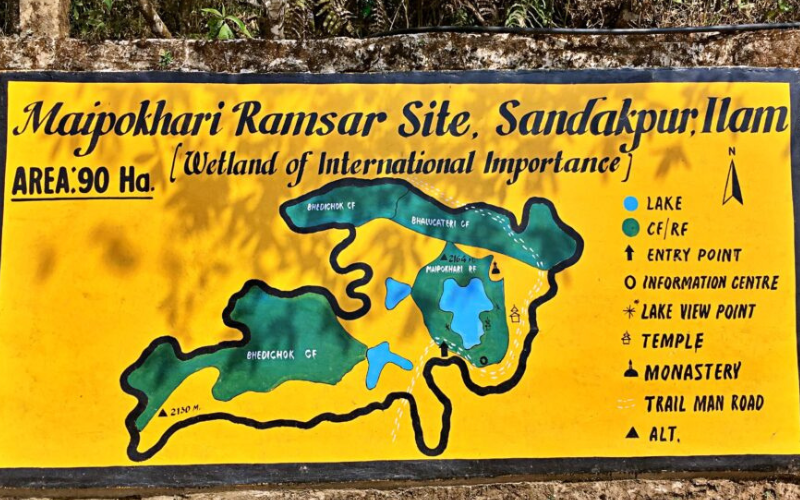
Tucked into the hills of Ilam District, eastern Nepal, Maipokhari is a highland wetland of ecological and spiritual significance, situated at approximately 2,100-2,150 metres above sea level. Designated a Ramsar Site in 2008 under the Ramsar Convention, it ranks among Nepal’s protected wetlands yet remains comparatively under-visited. Located about 13 kilometres from Ilam Bazaar, Maipokhari is reached by motorable road followed by short walking trails through the region’s tea gardens and hill settlements.
Sacred Origins and Cultural Significance
The name Maipokhari translates as “Mother’s Pond”. The lake complex is revered as the abode of Goddess Bhagwati and holds deep spiritual importance for local Hindu devotees. Equally significant is its connection to the Limbu and Kirat communities, for whom the site carries longstanding indigenous religious value.
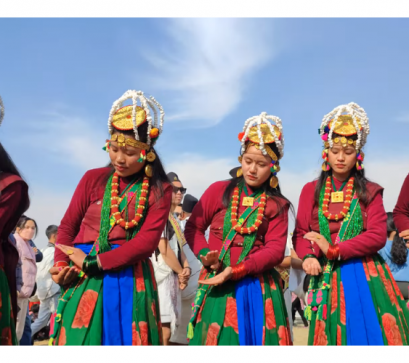
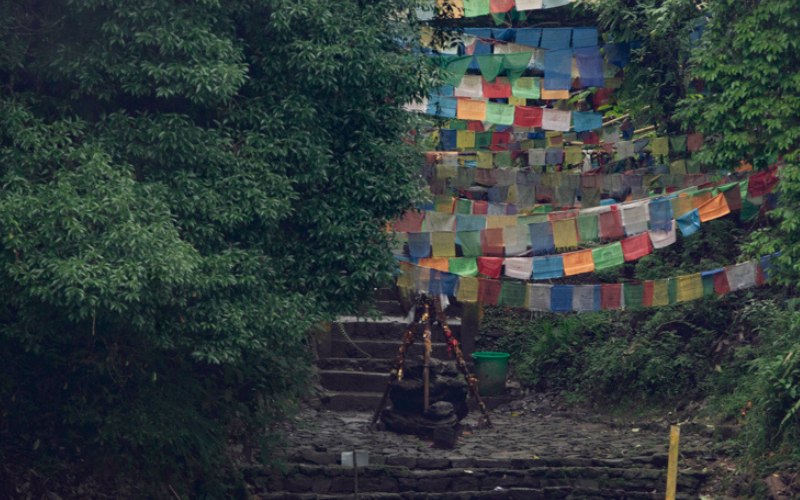
Maipokhari consists of a cluster of nine interconnected ponds surrounded by dense forest. Small shrines, prayer flags and seasonal religious fairs reinforce the site’s sacred atmosphere. Pilgrims gather annually to offer prayers for protection, prosperity and well-being, maintaining traditions that have endured for generations.
Ecological Importance of Maipokhari
As a Ramsar-listed wetland, Maipokhari plays a crucial ecological role within eastern Nepal’s mid-hill ecosystem. The area supports:
The wetland contributes to groundwater recharge, local water regulation and microclimatic stability. The surrounding forest belt dominated by rhododendron, oak and pine forms a layered Himalayan ecosystem that shifts character across the seasons.
Conservation and Visitor Experience
While also referred to as a botanical site due to its plant diversity, Maipokhari is fundamentally a natural wetland conservation area rather than a formally curated botanical garden.
Gentle interpretive trails encircle the ponds, allowing visitors to explore the ecosystem at a relaxed pace. The pathways are suitable for casual walkers and families, offering opportunities for birdwatching, photography and quiet reflection.
For eco-conscious travellers, Maipokhari represents sustainable tourism in Nepal, a destination where conservation awareness and local reverence coexist.
Seasonal Landscape
Maipokhari’s beauty evolves markedly throughout the year:
The lake’s reflective surface and drifting clouds create dynamic scenic compositions, particularly appealing for landscape photographers.
For travellers exploring eastern Nepal beyond mainstream trekking corridors, Maipokhari offers Ramsar-recognised wetland biodiversity, sacred cultural heritage and accessible highland scenery without the demands of strenuous trekking. Visitors are advised to arrive early for optimal birdwatching, carry warm layers as temperatures can drop quickly at this elevation, respect local religious practices and avoid littering, and consider combining the trip with tea garden tours in Ilam District for a fuller regional experience. Unlike high-altitude Himalayan expeditions, Maipokhari provides a contemplative immersion in nature rather than a physically demanding adventure. More than a scenic lake complex, it is a protected wetland woven into the cultural and ecological fabric of Ilam, where biodiversity endures under community stewardship and devotion reinforces conservation, making it one of eastern Nepal’s most meaningful and quietly remarkable natural destinations.
PC: Wikimedia Commons
Also Read