Suspended high above the roaring Kali Gandaki River, the Gandaki Golden Bridge stands as one of Nepal’s most impressive modern engineering landmarks. Linking Baglung and Parbat districts in western Nepal, this striking pedestrian bridge is not only a vital local crossing but also a growing attraction for travellers seeking dramatic landscapes beyond the usual tourist trail.
A Record-Holding Bridge in Nepal
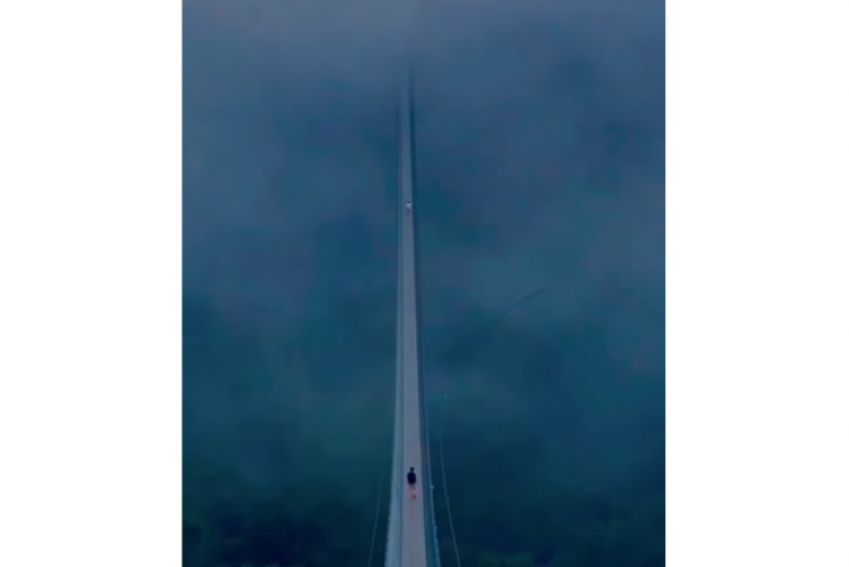
Opened to the public in 2020, the Gandaki Golden Bridge quickly gained national and international attention for its scale. With a single uninterrupted span of approximately 567 metres, it is recognised as Nepal’s longest single-span suspension footbridge. Unlike longer multi-span bridges elsewhere in the country, this bridge hangs freely without intermediate support towers, a feature that significantly increases both its engineering complexity and visual impact.
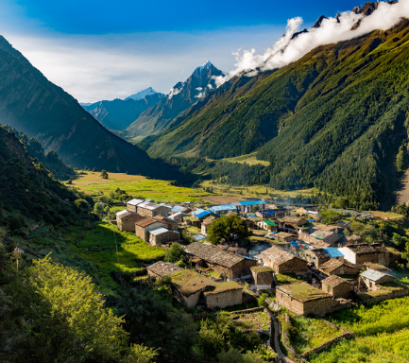
Rising around 120 metres above the river, the crossing offers panoramic views of the Kali Gandaki gorge, one of the deepest in the world
with surrounding hills, forests and distant Himalayan ridgelines forming a dramatic backdrop.
Often Called As Nepal’s Longest Suspension Bridge
The Gandaki Golden Bridge is frequently described as Nepal’s longest suspension bridge in media and tourism narratives. Technically, this title refers specifically to its single-span design, distinguishing it from the Dodhara-Chandani Bridge in far-western Nepal, which is longer in total length but made up of multiple connected spans.

This distinction matters: a single-span suspension bridge represents a higher level of structural challenge and is comparatively rare, especially in mountainous terrain like Nepal’s.
From Local Lifeline to Travel Highlight
Before the bridge was built, residents of Baglung and Parbat relied on time-consuming routes and seasonal river crossings. Today, the bridge plays a crucial role in daily mobility, access to markets, education and healthcare, while also boosting regional tourism.
For travellers, the bridge offers:
The crossing itself takes around 10-15 minutes on foot, depending on crowd levels and how often visitors stop to take in the views.
Visiting the Gandaki Golden Bridge
The bridge is accessible year-round, though post-monsoon (October-November) and spring (March-April) provide the clearest skies and most comfortable walking conditions. As it is a pedestrian-only bridge, it is suitable for most visitors, though those with a fear of heights may find the experience exhilarating.
Local shops and eateries near the bridge entrances offer simple refreshments, making it easy to include the site as part of a day trip around Baglung or Parbat.
A Symbol of Modern Nepal
Beyond records and measurements, the Gandaki Golden Bridge symbolises Nepal’s ability to blend modern infrastructure with challenging Himalayan geography. It reflects how thoughtful engineering can transform everyday life while opening new possibilities for sustainable tourism.
For travellers looking to go beyond Nepal’s iconic temples and trekking routes, a walk across the Gandaki Golden Bridge offers a powerful reminder that sometimes, the journey itself is the destination.
PC: Shutterstock
Also Read