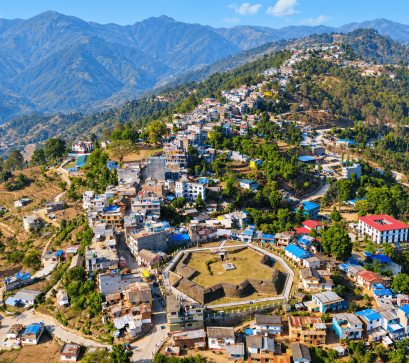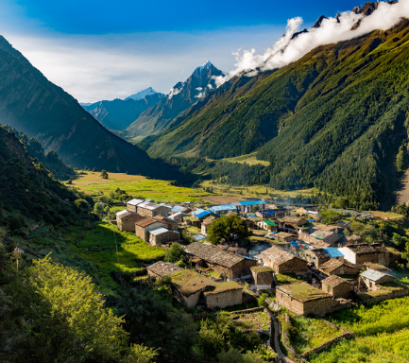
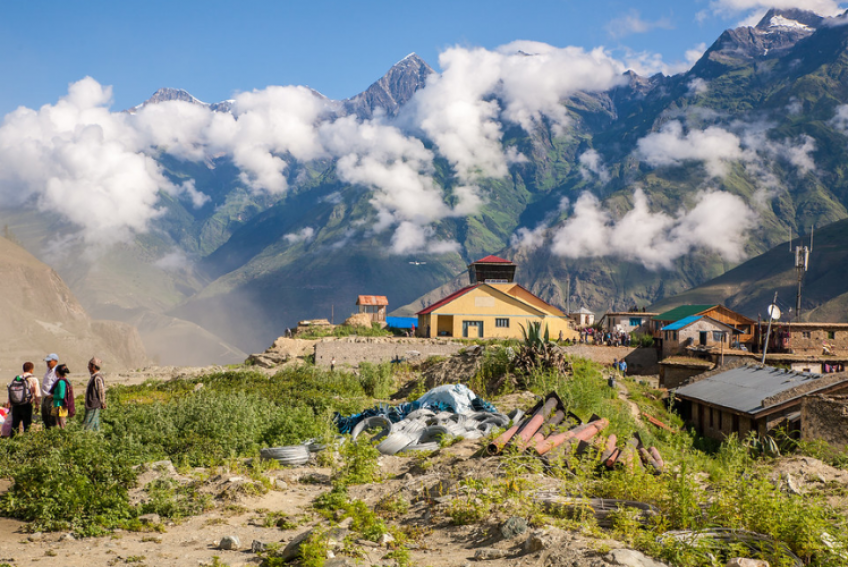
Tucked away in the remote hills of western Nepal, Juphal is a small yet strategically important village in Dolpa District, part of Karnali Province. Despite its modest size, Juphal serves as the principal entry point to one of the most isolated and culturally distinctive regions of the Himalayas—Dolpo.
A Remote Himalayan Setting
Juphal lies at an altitude of approximately 2,475 metres (8,120 feet), surrounded by terraced fields, forested hillsides, and steep mountain terrain. The village sits within the wider basin of the Bheri River system, which supports local agriculture and settlements.
Owing to the district’s rugged geography and limited road infrastructure, Juphal plays a crucial role in regional connectivity. It is home to Juphal Airport, a small but vital airstrip that links the area to Nepalgunj, and occasionally onward to Kathmandu. Air travel remains the most reliable means of access, although flights are frequently subject to weather conditions.
Starting Point for Dolpo Treks
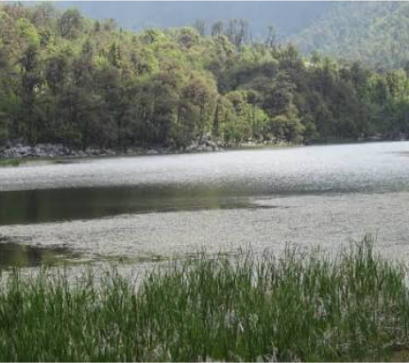
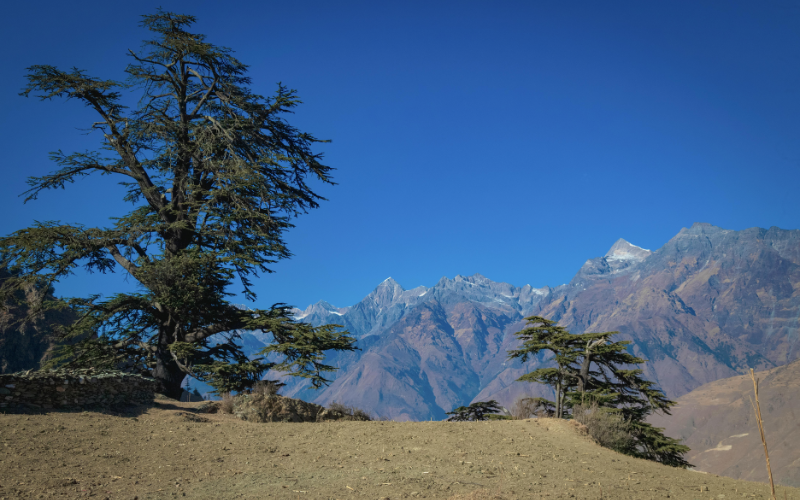
Juphal is best known as the gateway for trekking routes into the remote Dolpo region. Most journeys into Shey Phoksundo National Park begin here. This vast protected area, the largest national park in Nepal, is renowned for its dramatic landscapes, rare wildlife, and the striking turquoise waters of Phoksundo Lake.
Trekkers departing from Juphal often follow ancient trade routes that have been used for centuries. These trails connect a network of isolated settlements, particularly in Upper Dolpo, where Tibetan Buddhist traditions remain deeply rooted. The region gained international recognition through the film Himalaya (also released as Caravan), which portrayed the traditional salt trade and highland way of life.
Culture and Daily Life
Life in Juphal is shaped by its remoteness and close relationship with the natural environment. The population consists mainly of Chhetri and Thakuri communities, alongside other hill groups, with cultural influences from Tibetan traditions due to the proximity of Upper Dolpo.
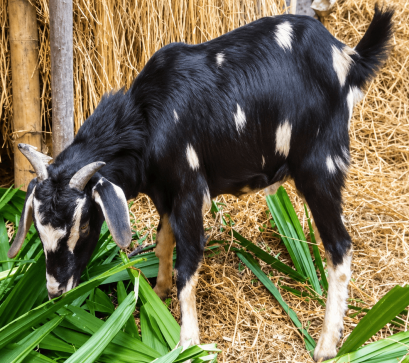
Agriculture forms the backbone of the local economy. Farmers cultivate crops such as barley, buckwheat, potatoes, maize, and millet, depending on altitude and season. Livestock—particularly goats, sheep, and mules—are essential for both subsistence and transport. Unlike higher elevations further north, yak herding is less common in Juphal itself.
Traditional stone houses with slate roofs characterise the village, and daily life follows a steady, community-oriented rhythm shaped by the demands of the landscape.
Tourism and Future Prospects
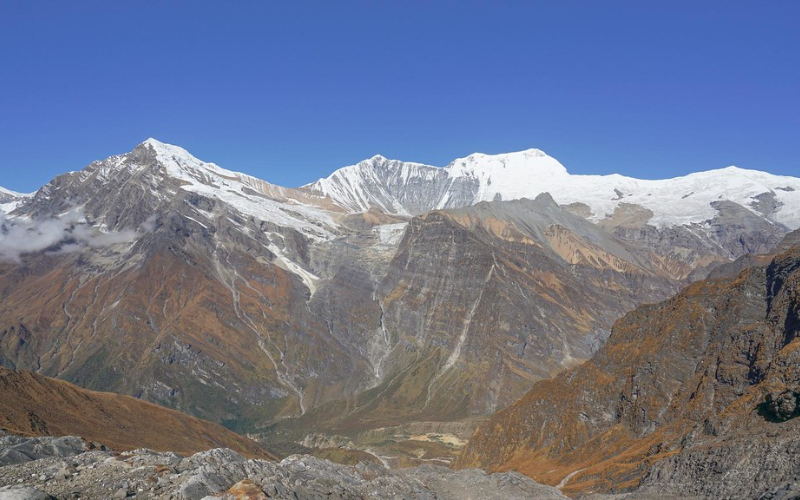
In recent years, trekking and adventure tourism have provided new economic opportunities for local communities. Travellers seeking less crowded and more authentic Himalayan experiences are increasingly drawn to Dolpo via Juphal.
At the same time, there is growing awareness of the need for sustainable tourism practices to preserve the region’s fragile environment and cultural heritage. Efforts to improve basic services and connectivity are ongoing, though progress is necessarily slow given the terrain.
While small in scale, Juphal holds considerable importance as the aerial and trekking gateway to Dolpo. Its unique position at the crossroads of accessibility and isolation offers visitors a rare glimpse into a region where traditional lifestyles and natural beauty remain largely intact. For those willing to venture beyond Nepal’s more frequented routes, Juphal provides an authentic and rewarding introduction to one of the Himalayas’ most remarkable landscapes.
PC: Flickr, Wikimedia Commons, Pexels
Also Read