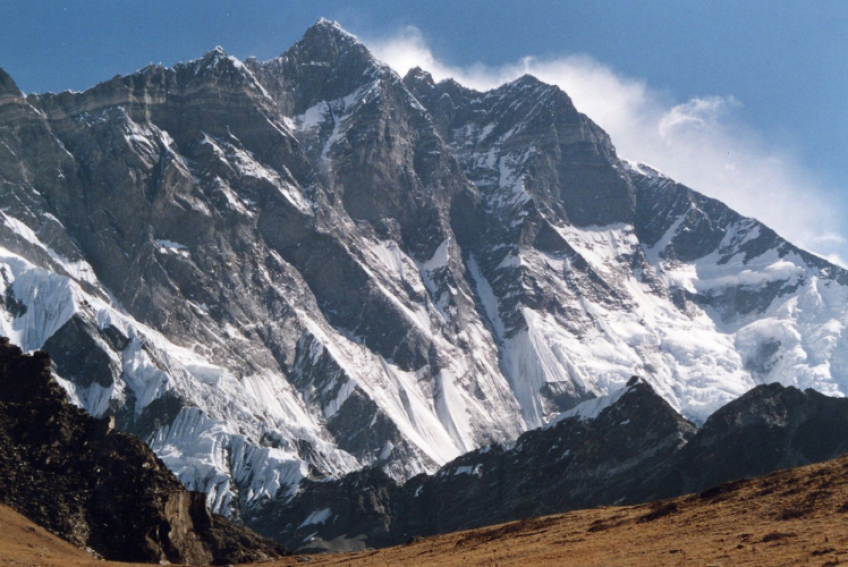
Often overshadowed by its taller neighbour, Mount Everest, Mount Lhotse stands as a formidable expedition objective in its own right. Rising to 8,516 metres (27,940 ft), Lhotse is the world’s fourth-highest mountain and among Nepal’s most technically demanding 8,000-metre peaks.
Connected to Everest via the South Col, Lhotse shares part of its approach with Everest climbers. Yet its final ascent diverges sharply into a steep, narrow and highly exposed couloir; a section that tests even the most experienced mountaineers.
For expedition enthusiasts seeking prestige without Everest’s overwhelming crowds, Lhotse offers an extraordinary alternative.
Geographical Setting and Significance
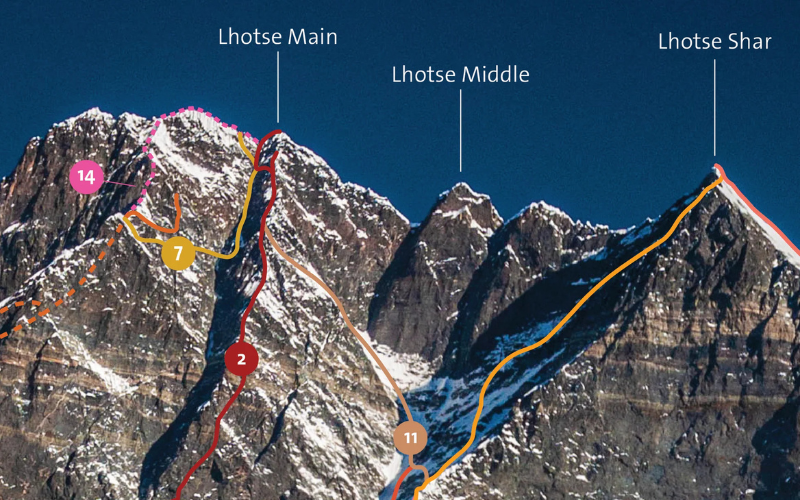
Located in the Khumbu region of eastern Nepal within Sagarmatha National Park, Mount Lhotse forms part of the greater Everest massif. Its name translates to “South Peak” in Tibetan, reflecting its geographical relationship to Everest.
The mountain has three principal summits:
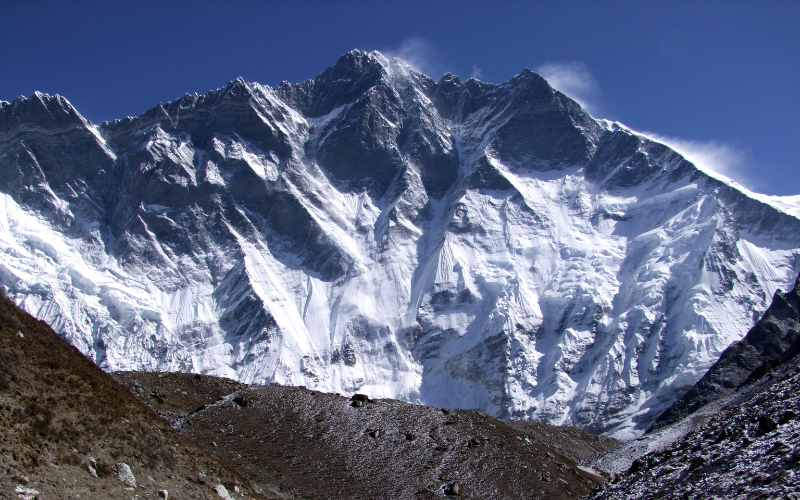
Lhotse’s south face is among the most dramatic walls in the Himalayas, a near-vertical sweep of ice and rock rising more than 3,000 metres, long regarded as one of the great challenges in high-altitude climbing.
Climbing History
Mount Lhotse was first successfully summited on 18 May 1956 by Swiss climbers Ernst Reiss and Fritz Luchsinger, following the same general approach later used for Everest expeditions.
Despite sharing infrastructure with Everest, Lhotse maintains a reputation for seriousness. Its steep terrain, avalanche exposure and technical summit section make it a peak reserved for highly prepared climbers rather than casual aspirants.
The Standard Expedition Route
Approach: The Everest Base Camp Trail
Most Lhotse expeditions begin with the classic trek to Everest Base Camp (5,364m), following a familiar progression:
At the South Col, the routes to Everest and Lhotse diverge.
The defining feature of the Lhotse ascent is the Lhotse Couloir often called the Reiss Couloir: a steep ice gully of roughly 45-50 degrees at around 8,000 metres. The final push demands fixed-rope technique, precise movement and exceptional stamina in the thin air of the death zone.
Best Season for a Lhotse Expedition
Spring remains the preferred season for most summit attempts.
Permits and Expedition Costs
Climbing Lhotse requires several official permissions, including:
Permit fees and expedition costs vary by season and operator. Total expenses depend heavily on guiding services, logistics, oxygen support and expedition style, with Lhotse generally considered a major high-investment Himalayan undertaking.
Technical Difficulty and Physical Demands
Lhotse is widely regarded as slightly more technical than Everest due to:
Climbers must have prior high-altitude experience, ideally on demanding 6,000m or 7,000m peaks and strong acclimatisation capacity before attempting Lhotse.
Why Choose Lhotse Over Everest?
Lhotse appeals to mountaineers seeking an elite Himalayan summit with fewer crowds and greater technical engagement:
For those seeking a purer expedition experience, Lhotse offers a serious challenge without the same level of commercial traffic.
Risks and Safety Considerations
As with all 8,000m peaks, Lhotse carries extreme risks, including:
Proper acclimatisation, experienced support teams and responsible decision-making are essential for safety.
Environmental Responsibility
Lhotse lies within a UNESCO World Heritage landscape. Climbers are required to follow strict waste management regulations, including garbage deposits and removal protocols.
Responsible expeditions prioritise minimal environmental impact, reflecting Nepal’s growing emphasis on sustainable high-altitude tourism.
A Summit for the Serious
Mount Lhotse is not a consolation prize for Everest, it is a world-class expedition objective in its own right. Its proximity to the highest mountain on Earth only deepens its allure, while its steep couloir ensures that only well-prepared climbers stand atop its summit.
For those ready to test endurance, resilience and technical skill at the highest level, Lhotse remains one of Nepal’s most formidable and rewarding mountaineering experiences.
PC: Mont Blanc Lines, Wikimedia Commons
Also Read

.jpg)
.jpg)