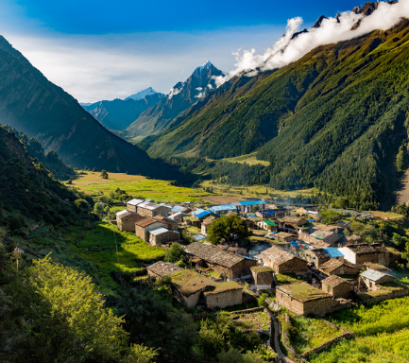
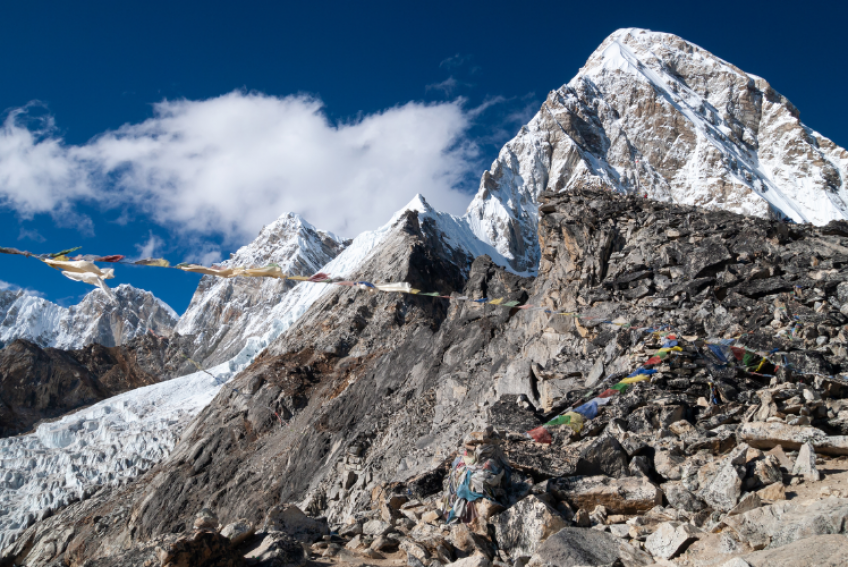
Rising gracefully to 7,161 metres (23,494 ft), Mount Pumori is one of Nepal’s most striking peaks. Situated on the border between Nepal and Tibet in the Khumbu region, it lies just 8 kilometres west of Mount Everest. Though often overshadowed by its famous neighbour, Pumori offers a rewarding and memorable experience for travellers seeking both beauty and adventure in the Himalayas.
A Mountain with Character
Mount Pumori is affectionately known as the “Daughter of Everest,” a name given by British mountaineer George Mallory. Its elegant, pyramid-shaped summit and dramatic ridgelines make it one of the most visually appealing peaks in the Everest region.
The mountain was first successfully climbed in 1962 by a German-Swiss expedition, and it has since become a respected challenge for experienced climbers, often used as preparation for higher Himalayan expeditions.
Trekking Experience Around Pumori
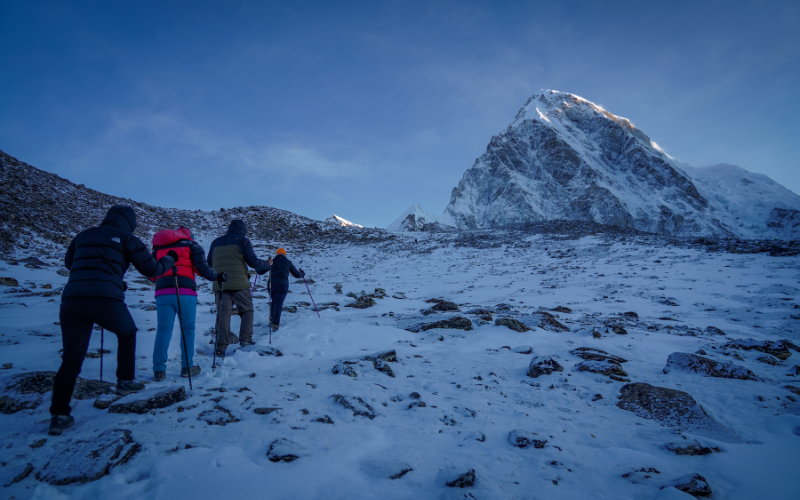
While climbing Pumori itself requires advanced mountaineering skills, most visitors experience its beauty through trekking. The mountain is prominently visible along the world-renowned Everest Base Camp route.
One of the finest vantage points is Kala Patthar, where trekkers are rewarded with breathtaking panoramic views of Everest, Pumori, and surrounding peaks—particularly at sunrise and sunset.
It is important to note that, although no technical climbing is required, trekking in this region involves high altitudes (often exceeding 5,000 metres), and proper acclimatisation and good physical fitness are essential.
Location and Getting There
Mount Pumori lies within the Khumbu region, part of the protected Sagarmatha National Park, a UNESCO World Heritage Site known for its spectacular landscapes and unique biodiversity.
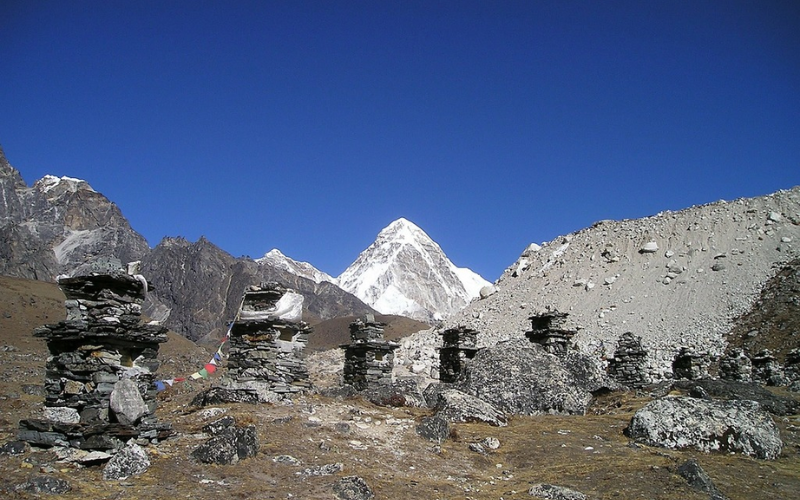
The journey typically begins with a flight from either Kathmandu or, during peak seasons, from Ramechhap (Manthali Airport) to Lukla. From there, trekkers follow well-established trails through Sherpa villages such as Namche Bazaar and Dingboche before reaching higher altitudes near Everest Base Camp.
Although the region is remote, it is not untouched wilderness—there is a well-developed trekking infrastructure, including teahouses and guides, making it accessible to prepared travellers.
Practical Travel Advice
Acclimatise properly: Allow time to adjust to the altitude to reduce the risk of altitude sickness
Be physically prepared: The trek is demanding despite being non-technical
Use local expertise: Hiring experienced guides and porters enhances both safety and cultural insight
Respect local customs: The Khumbu region is home to the Sherpa community, whose traditions and hospitality are central to the trekking experience
Although it does not attract the same attention as Everest, Mount Pumori possesses a charm entirely of its own. Its striking form, combined with its proximity to some of the world’s most iconic trekking routes, makes it a highlight of any Himalayan journey.
For travellers seeking awe-inspiring scenery, cultural richness, and a sense of high-altitude adventure, Mount Pumori offers an experience that is both authentic and unforgettable.
PC: nirojsedhai, Wikimedia Commons, PICRYL
Also Read