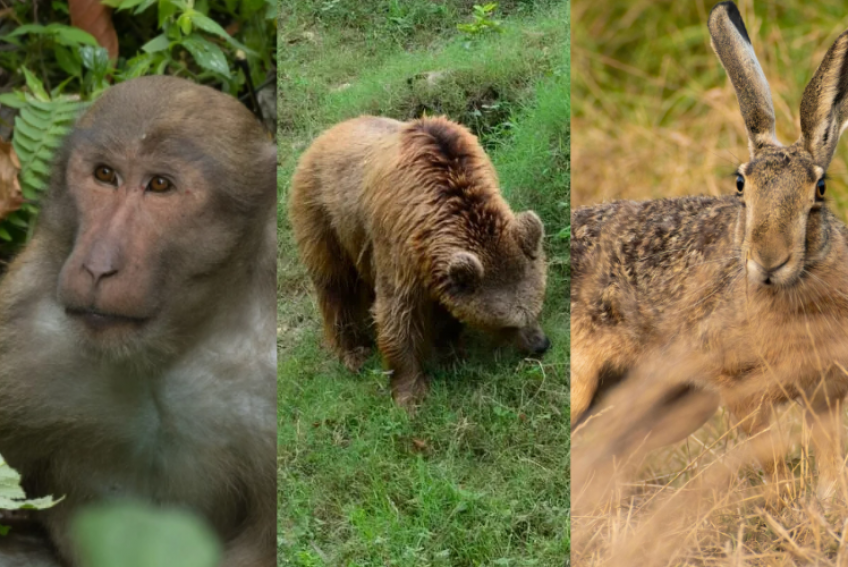
Assam Macaque, Hispid Hare and Himalayan Brown Bear
Nepal’s varied landscapes, from the subtropical Terai to the alpine Himalaya, support an exceptional diversity of wildlife. Among the country’s protected mammals are three species that rarely feature on mainstream safari itineraries but play a vital role in Nepal’s natural heritage: the Assam Macaque, the Hispid Hare, and the Himalayan Brown Bear. Their presence highlights why sustainable tourism is central to conservation in Nepal.
Assam Macaque: The Forest Sentinel of the Mid-Hills
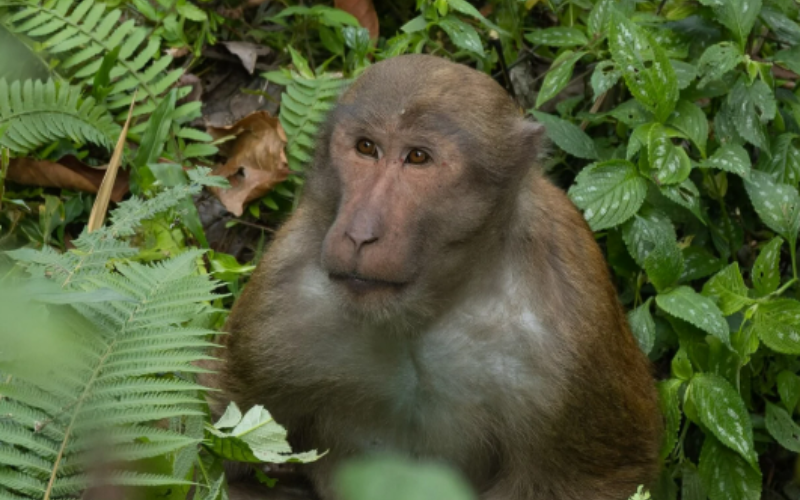
Often overshadowed by the more familiar rhesus macaque, the Assam Macaque (Macaca assamensis) inhabits Nepal’s subtropical and temperate forests, primarily east of the Kali Gandaki River.
Where It Lives
This species ranges from the lower foothills to elevations above 2,000 metres and is found in protected areas such as:
Listed as Vulnerable, the Assam macaque is sensitive to forest disturbance. Expanding settlements, road construction and forest fragmentation pose growing challenges.
Tourism Connection
For trekkers and hikers exploring Nepal’s mid-hill trails, particularly around Langtang and Shivapuri, sightings of Assam macaques are a reminder that trekking landscapes are also living ecosystems. Responsible trekking; staying on marked trails and respecting wildlife distance helps protect these forest primates.
Hispid Hare: The Ghost of the Terai Grasslands
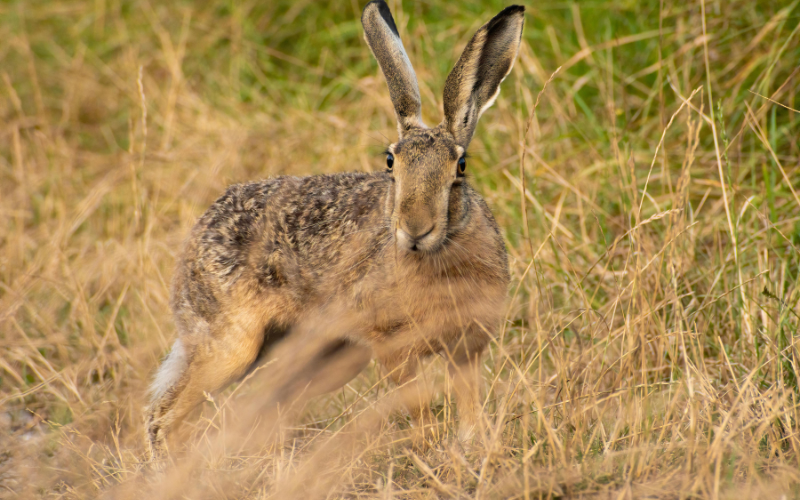
One of South Asia’s rarest mammals, the Hispid Hare (Caprolagus hispidus) is a true conservation enigma. With its coarse, bristly fur and secretive behaviour, it is seldom seen even by researchers.
Where It Lives
In Nepal, the hispid hare survives in tall grassland ecosystems of the western and central Terai, including:
Conservation Status
Classified as Endangered, the hispid hare is heavily dependent on intact grasslands: habitats increasingly threatened by land conversion, unmanaged burning and infrastructure development.
Tourism Connection
While visitors to Nepal’s Terai often focus on tiger safaris and rhino encounters, well-managed grassland tourism supports broader biodiversity. Conservation-led tourism revenue helps parks maintain grassland mosaics essential not only for large mammals but also for rare species like the hispid hare.
Himalayan Brown Bear: Guardian of the High Mountains

The Himalayan Brown Bear (Ursus arctos isabellinus) represents Nepal’s wildest and least explored frontiers. Adapted to extreme altitudes, it inhabits alpine meadows, cold deserts and rugged mountain terrain.
Where It Lives
Brown bears in Nepal are primarily found in:
Threats and Protection
Although brown bears are globally listed as Least Concern, Himalayan populations are locally vulnerable due to habitat fragmentation, climate change and human–wildlife conflict linked to pastoralism.
Tourism Connection
High-altitude trekking routes in Manaslu and Upper Mustang pass through potential brown bear habitat. Community-based tourism initiatives, homestays and conservation awareness programmes help local residents coexist with wildlife while benefitting economically from sustainable travel.
Importance of Responsible Tourism
Nepal’s protected wildlife survives not in isolation, but alongside people. National parks and conservation areas supported by tourism revenue play a crucial role in:
For travellers, choosing licensed guides, respecting park regulations and supporting local conservation initiatives ensures that encounters with Nepal’s wildlife remain possible for generations to come.
While Nepal is globally celebrated for Mount Everest, tigers and rhinos, species like the Assam Macaque, Hispid Hare and Himalayan Brown Bear tell a deeper story: one of fragile ecosystems, quiet resilience and the powerful link between conservation and travel. Exploring Nepal responsibly is not just a journey through landscapes, but an opportunity to contribute to the protection of some of Asia’s most extraordinary and endangered wildlife.
PC: Animalia, Pexels
Also Read
Bhairabkunda Trek in Sindhupalchowk: A Sacred Himalayan Journey