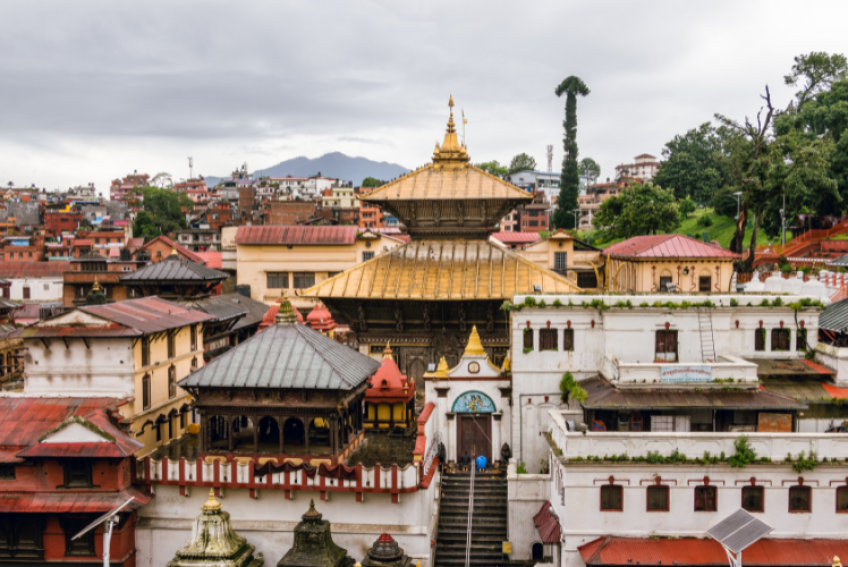
Standing on the sacred banks of the Bagmati River, Pashupatinath Temple is Nepal’s most revered Hindu shrine and one of the most important Shiva temples in the world. More than a monument, it is a living spiritual landscape where ritual, belief and daily life continue uninterrupted.
Recognised as a UNESCO World Heritage Site, the Pashupatinath area represents centuries of devotion, artistic excellence and Shaivite philosophy rooted in Nepal’s historical development.

Origins and Historical Background
The origins of Pashupatinath Temple are believed to date back to at least the Licchavi period (circa 5th century CE), supported by stone inscriptions and historical records found in the temple complex. Hindu mythology further associates the site with Lord Shiva, who is believed to have roamed the forested area in the form of a deer before manifesting as Pashupati: the Lord of all living beings.
Historical sources indicate that the temple flourished under the Licchavi and Malla dynasties, with successive rulers contributing to ritual organisation, land endowments and architectural refinement. The present pagoda structure is generally dated to the 17th century, following reconstruction after earlier temples were damaged by time and earthquakes.
Architectural Significance
Pashupatinath is a distinguished example of Nepalese pagoda-style architecture, characterised by harmony between structure, symbolism and natural surroundings.
Key architectural features include:
A two-tiered copper roof gilded with gold
Four silver-plated doors, each facing a cardinal direction
A sacred Shiva lingam with four faces, symbolising Shiva’s omnipresence and cosmic authority
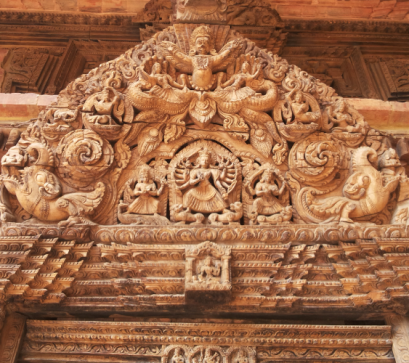
Intricately carved wooden struts depict deities, mythological narratives and celestial figures, reflecting the mastery of Newar artisanship developed during the Malla period.
Surrounding the main shrine are hundreds of subsidiary temples, shrines, ashrams and dharmashalas, forming a ritual landscape rather than a single monument: a defining feature of sacred urban planning in Kathmandu Valley.

Beliefs and Ritual Practices
Pashupatinath holds exceptional importance within Shaivism, where worship at the site is believed to assist devotees in attaining moksha (liberation). The temple attracts the largest number of pilgrims during Maha Shivaratri, when fasting, meditation and night-long vigils honour Lord Shiva.
The Arya Ghat cremation area along the Bagmati River is integral to Hindu funerary tradition, symbolising the cycle of life, death and rebirth. These rituals reflect core Hindu philosophical concepts of impermanence and spiritual continuity.
Cultural and Spiritual Importance
Beyond its religious role, Pashupatinath is central to Nepal’s cultural identity. Festivals such as Teej, Bala Chaturdashi and Maha Shivaratri transform the complex into a dynamic space of collective devotion, music and ritual expression.
The continuous presence of sadhus, priests and pilgrims reinforces Pashupatinath’s status as a living heritage site - not a preserved relic, but a functioning spiritual centre shaping daily life and belief in Nepal.
Visiting Pashupatinath Today
For travellers, Pashupatinath offers one of the most authentic spiritual encounters in Nepal. Early mornings and evenings provide the clearest insight into ritual life, accompanied by chanting, incense and river ceremonies. Visitors are encouraged to dress modestly and observe respectfully, particularly near cremation ghats.
A visit to Pashupatinath is not simply an architectural experience, it is an immersion into Nepal’s enduring spiritual traditions, where history, faith and contemporary life remain inseparable.
PC: Wikimedia Commons, WordPress.org
Also Read


.jpg)
.jpg)