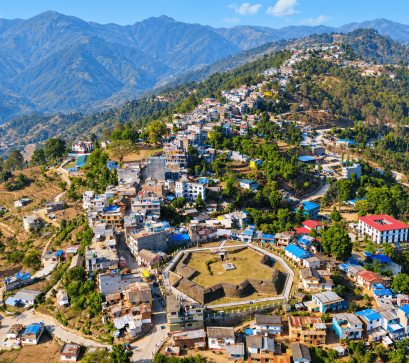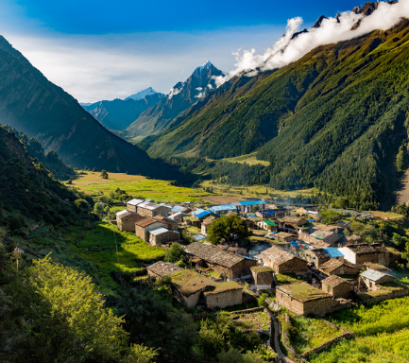
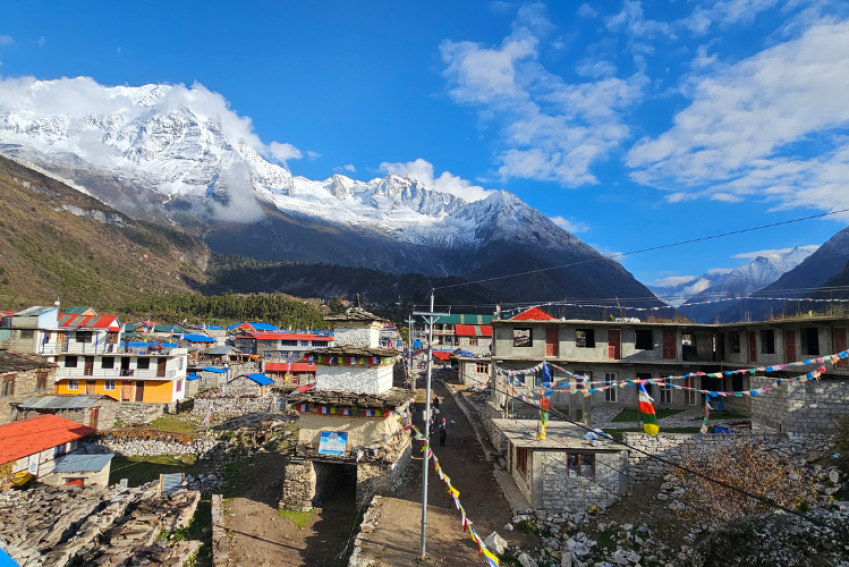
Tucked high in the Nubri Valley of Gorkha District, Samagaon sits at approximately 3,500 metres within the Manaslu Conservation Area, at the foot of the towering Mount Manaslu (8,163 m). More than a stop along a trekking trail, Samagaon is a living Himalayan settlement where culture, spirituality and ecology remain deeply intertwined.
Life in the Himalaya
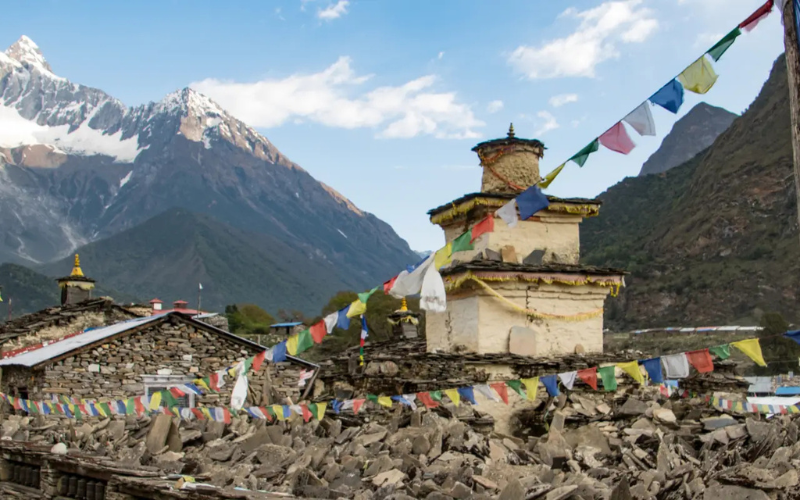
Samagaon is predominantly inhabited by the Nubri people, whose ancestry, language and customs are closely linked to Tibetan culture. Prayer flags ripple across stone houses roofed with timber and slate, while mani walls and chortens line the village pathways.
The nearby Pungyen Gompa, set against dramatic mountain backdrops, serves as an important spiritual centre. Monastic life continues much as it has for generations, with seasonal rituals, masked dances and communal gatherings reinforcing cultural identity in this remote landscape.
Agriculture at this altitude is limited but resilient. Potatoes, barley and buckwheat are cultivated during the short growing season, while yak and sheep herding remains central to livelihoods. These traditional practices are carefully adapted to the high-altitude climate and fragile terrain.
Attractions and Experiences
Visitors to Samagaon are drawn as much by its atmosphere as by its scenery. Days unfold at an unhurried pace, offering opportunities to:
The silence here is profound, broken only by wind across the valley or the distant chime of yak bells; an experience increasingly rare in a fast-modernising world.
Nature and Wildlife in the High Himalaya
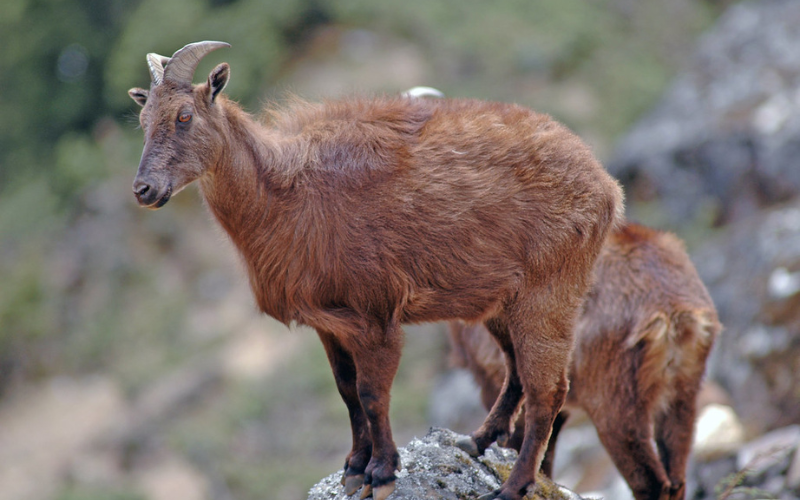
Situated within the Manaslu Conservation Area, Samagaon lies in a transitional ecological zone where subalpine forests give way to alpine meadows and glacial landscapes. The conservation area is known for its rich biodiversity, including Himalayan blue sheep (bharal), Himalayan tahr, musk deer and, in higher reaches, the elusive snow leopard.
Flora varies with altitude: rhododendron and pine forests appear at lower elevations, gradually thinning into juniper shrubs and hardy alpine grasses near Samagaon. Medicinal plants and lichens thrive in the crisp mountain air, forming part of traditional knowledge systems that have been passed down for centuries.
However, like many Himalayan settlements, Samagaon faces ecological pressures. Glacial retreat, shifting snowfall patterns and changing weather cycles linked to climate change have begun to alter water sources and seasonal rhythms. Community-based conservation initiatives within the Manaslu Conservation Area aim to balance tourism growth with environmental stewardship, encouraging sustainable waste management, controlled grazing and eco-sensitive infrastructure.
A Living Himalayan Landscape
Samagaon is not merely scenic; it is a high-altitude ecosystem sustained by human adaptation and spiritual reverence for the mountains. Here, culture is inseparable from landscape: monasteries rise against glaciers, yak pastures stretch beneath snow peaks, and daily life moves in rhythm with the seasons.
For those seeking an authentic Himalayan encounter, Samagaon presents a rare glimpse into a mountain society where ecological fragility and cultural resilience coexist beneath the shadow of Manaslu.
PC: Wikimedia Commons, What The Nepal, Flickr
Also Read