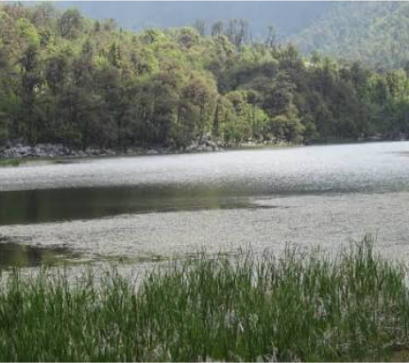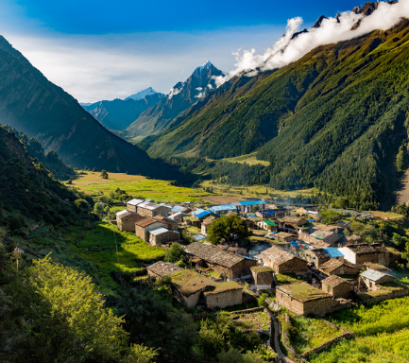
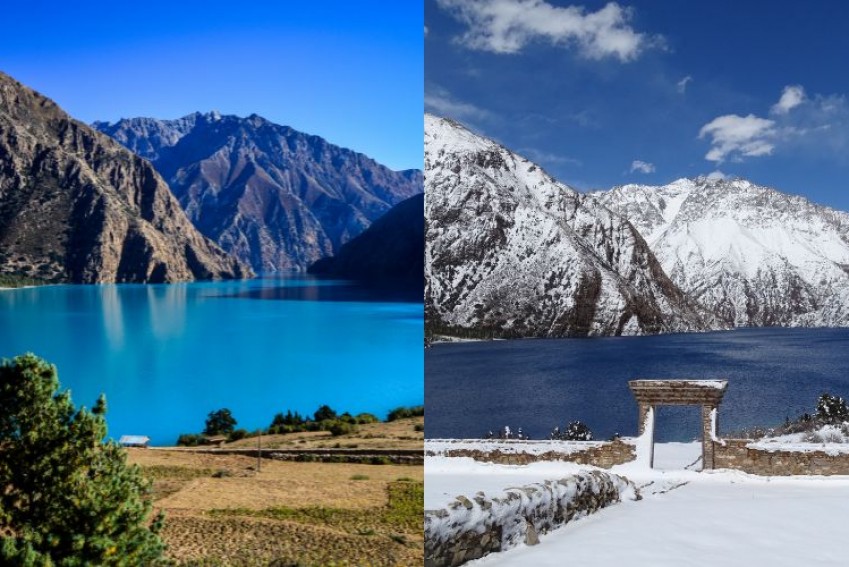
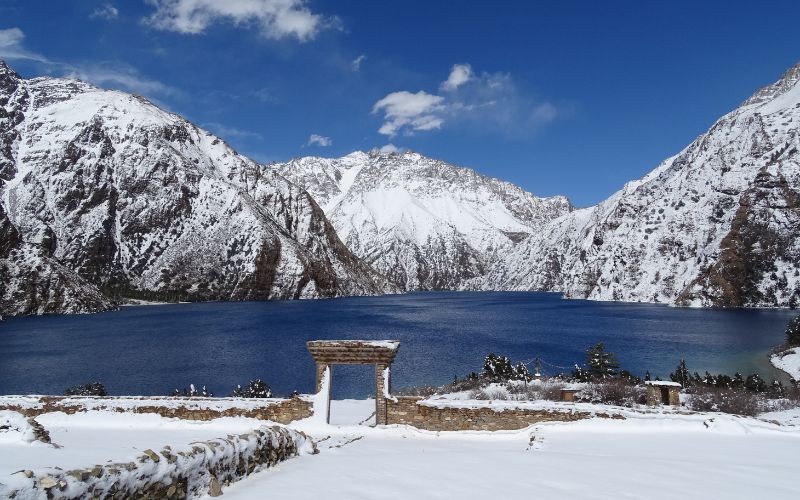
Hidden deep within the trans-Himalayan region of Dolpo, Shey Phoksundo Lake is a destination that feels almost otherworldly. Renowned for its vivid turquoise hue and untouched surroundings, it is the deepest lake in Nepal and a crown jewel of Shey Phoksundo National Park.
Beyond its visual allure, the lake is an ecological sanctuary, a cultural landmark, and a spiritual haven offering travellers a rare convergence of natural beauty and Himalayan heritage.
Geographic Setting and Formation
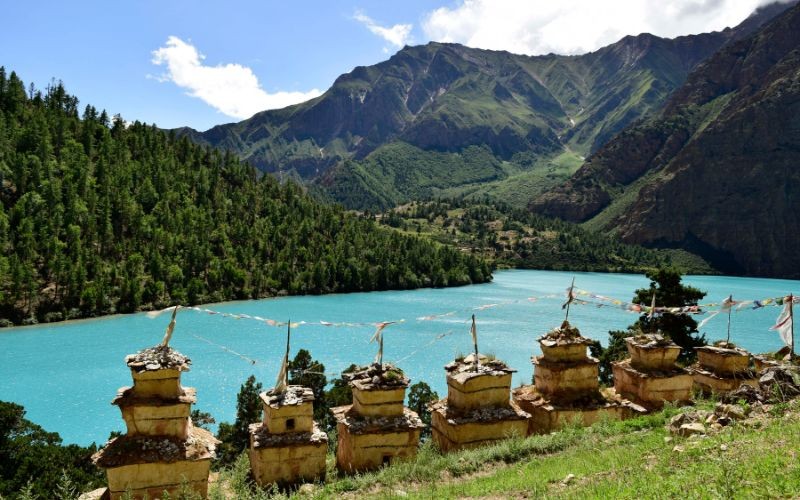
Situated at an altitude of about 3,611 metres, Shey Phoksundo Lake spans 4.85-4.94 km² and plunges to depths of 136-145 metres, making it Nepal’s deepest alpine lake. Formed by glacial and tectonic activity, it was designated a Ramsar Wetland in 2007. Its oligotrophic waters, vivid turquoise hue, and cultural sanctity set it apart as one of Nepal’s most pristine natural wonders.
Encircled by rugged cliffs and snow-draped peaks, the lake’s dramatic setting is enhanced by the absence of aquatic life, an unusual feature that contributes to its striking clarity and vivid colouration.
Ecological Significance: A Fragile Alpine Ecosystem
Shey Phoksundo lies within one of Nepal’s most ecologically diverse yet fragile regions. The surrounding national park encompasses a unique blend of alpine meadows, arid trans-Himalayan terrain, and coniferous forests.
Flora
Vegetation around the lake includes:
Seasonal wildflowers add bursts of colour to the otherwise stark terrain, supporting pollinators in a short growing season.
Fauna
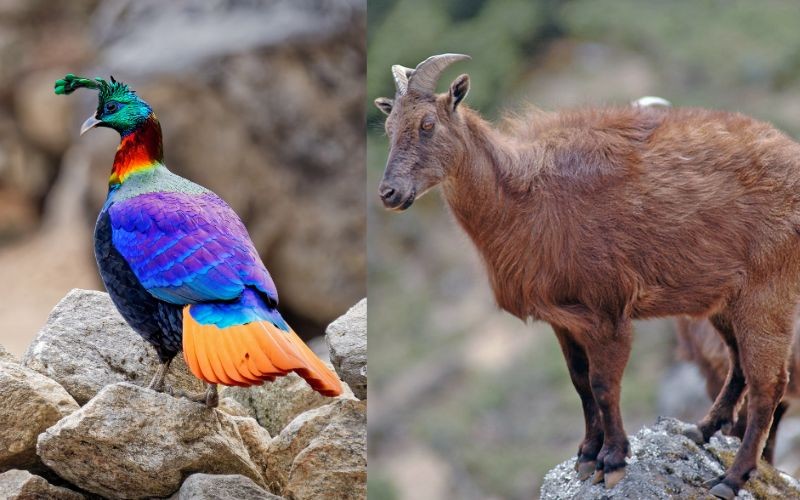
The region is home to several rare and endangered species, including:
These species rely on the delicate ecological balance of the park, making conservation efforts critical.
Hydrology and Water Characteristics
One of the lake’s most intriguing ecological features is its oligotrophic nature, meaning it is extremely low in nutrients. This results in:
The lake’s turquoise colour is caused by the reflection of light on suspended minerals and glacial sediments, combined with its depth and purity.
Cultural and Spiritual Importance
For local communities, particularly those following Tibetan Buddhism, Shey Phoksundo Lake holds deep spiritual significance. Nearby monasteries and prayer flags reflect centuries-old traditions, and the lake is often regarded as sacred.
The surrounding region is also culturally rich, with ancient trade routes and settlements that have preserved their way of life for generations.
Trekking and Travel Experience
Reaching Shey Phoksundo Lake is an adventure in itself. Most travel journey begin with a flight to Juphal, followed by several days of trekking through remote villages, forests, and high-altitude terrain.
Highlights of the Journey
The trek is moderately challenging but immensely rewarding for those seeking solitude and raw natural beauty.
Conservation and Sustainable Tourism
As part of Shey Phoksundo National Park, the lake is protected under Nepal’s conservation framework. Efforts are ongoing to:
Visitors are encouraged to follow responsible travel guidelines, including minimising waste and respecting local customs.
Best Time to Visit
Unlike many Himalayan lakes, Shey Phoksundo remains largely untouched by mass tourism. Its isolation, combined with its ecological purity and cultural depth, makes it a rare and invaluable destination.
For travellers seeking authenticity, tranquillity, and a deeper connection with nature, it offers an experience that is both humbling and unforgettable.
PC: Wikimedia Commons
Also Read