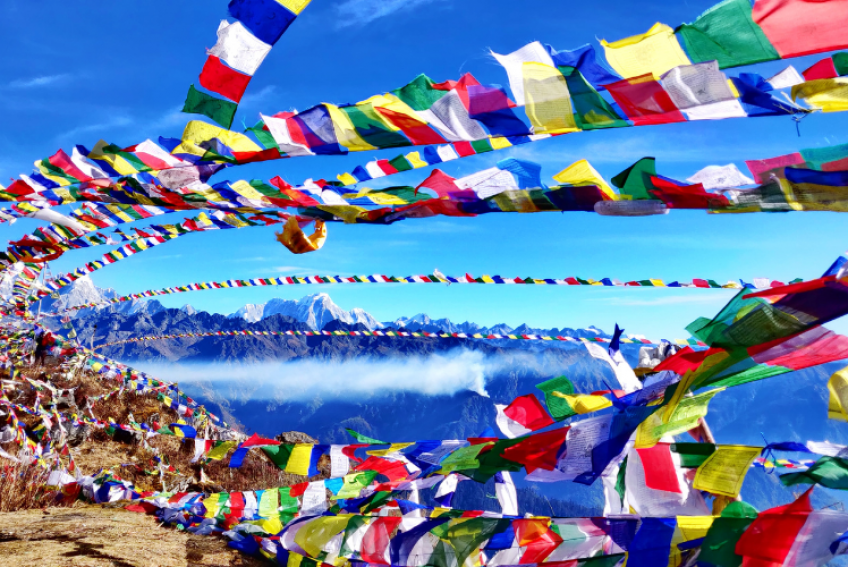
Scattered across the Himalayan skyline, colourful prayer flags ripple in the wind, marking trails, mountain passes, and sacred sites. For trekkers and pilgrims in Nepal, these banners are a striking visual, but they carry profound spiritual, cultural, and historical significance.
Prayer flags, known as “Lungta” (meaning “wind horse”) in Tibetan, are believed to have originated in Tibet over a thousand years ago within the Bon, the pre-Buddhist shamanistic tradition of the Himalayas. Bon shamans used colourful banners to invoke protection, maintain harmony with nature, and carry prayers to local spirits. When Tibetan Buddhism rose to prominence in the 7th-8th centuries, these flags were adapted to include Buddhist mantras and symbols, integrating spiritual teachings with the shamanic practice.
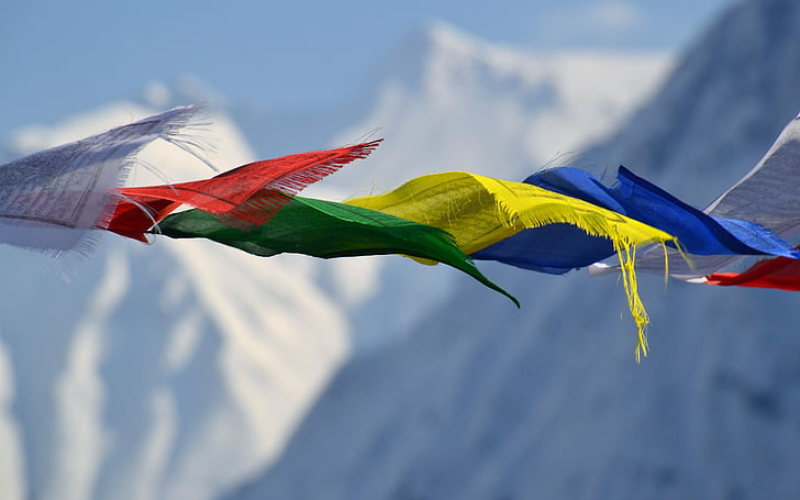
The five colours: blue, white, red, green, and yellow, each representing the five elements: sky, air, fire, water, and earth. Flags are inscribed with prayers, mantras such as “Om Mani Padme Hum”, and sacred symbols. It is believed that as the wind passes through the flags, the blessings are carried across the landscape, promoting peace, compassion, strength, and wisdom to all beings. The gradual fraying of the fabric also symbolises impermanence, a core Buddhist teaching.
Mountain passes are particularly significant locations for prayer flags. Historically, these routes connected villages, monasteries, and trade corridors across Nepal, Tibet, and India. Trekkers, traders, and pilgrims faced steep climbs, harsh weather, and dangerous conditions. Hanging prayer flags at high points was believed to protect travellers, ensure safe passage, and honour the mountains themselves, many of which are considered sacred abodes of deities in both Hindu and Buddhist traditions.
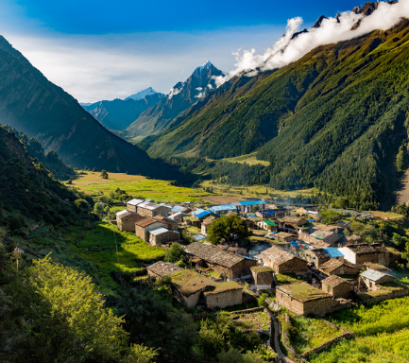
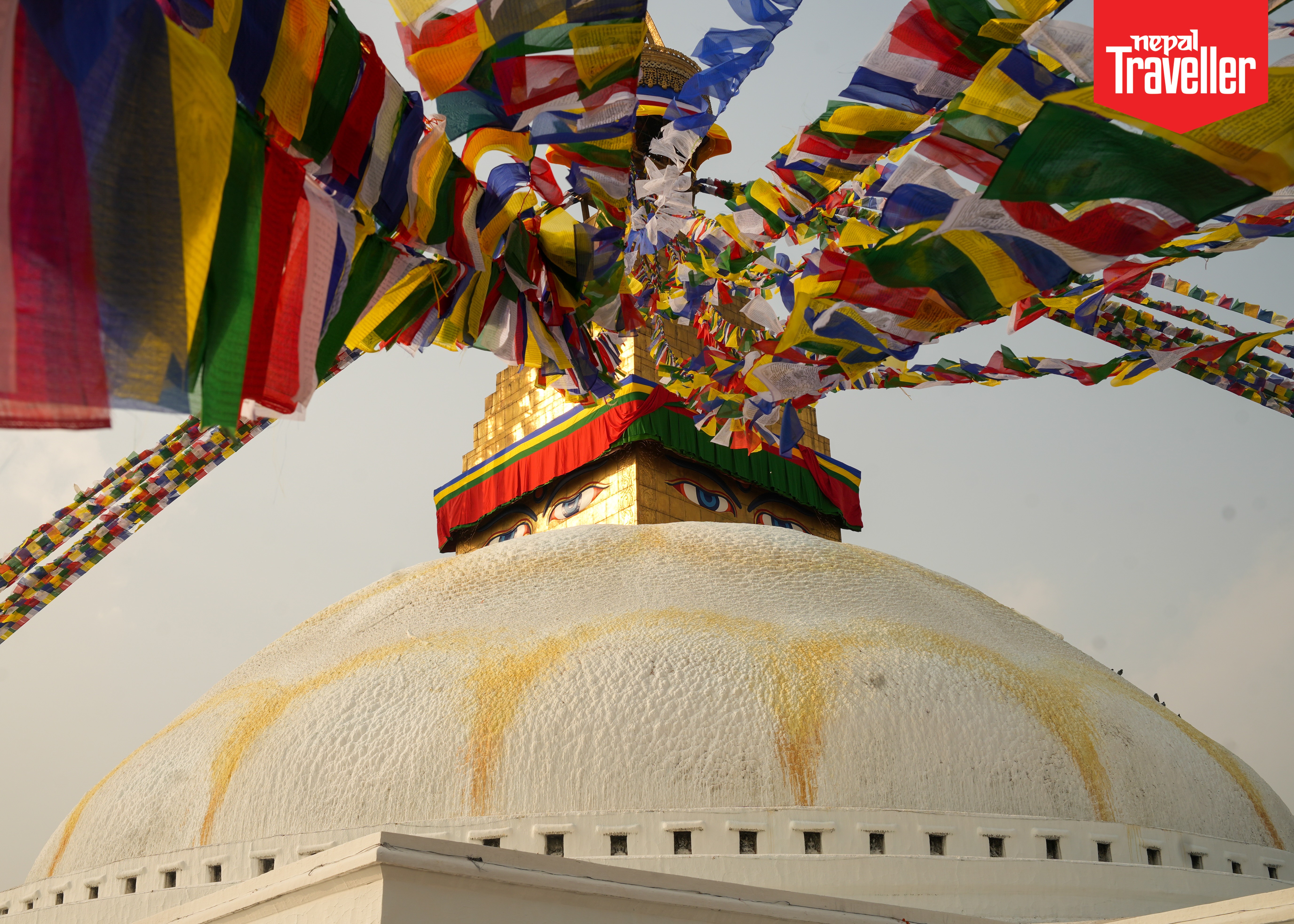
Today, prayer flags continue to adorn trekking routes such as the Annapurna Circuit, Everest Base Camp, and Langtang Valley, blending tradition with contemporary adventure. For travellers, they are a visual reminder of the interconnection between culture, spirituality, and the Himalayan landscape, carrying blessings and safeguarding those who journey through these majestic mountains.
PC: WordPress.org, Wikimedia Commons
Also Read
New Soaltee Westend Resort Elevates Hospitality in Manakamana