

 Source::AP
GJIROKASTRA, Albania
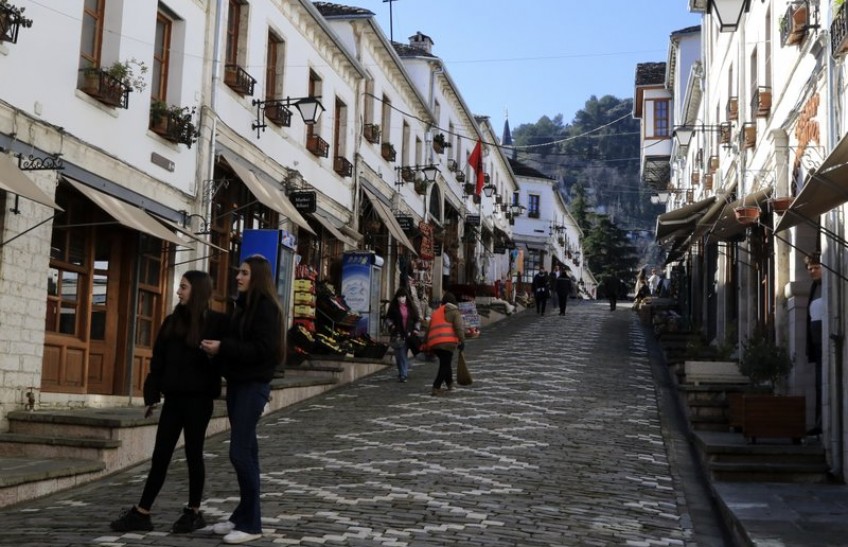
Seeing city streets in 2019 flooded by tourists enjoying its beauty was a dream come true for residents of Gjirokastra, a city in southern Albania recognized as a UNESCO World Heritage Site for its Ottoman-period architecture.
It ended precipitously when the world locked down. Called “the city of stone” due to its two-story houses with turrets dating back to the 17th century, Gjirokastra and a second Albanian town, Berat, were inscribed as a UNESCO Heritage Site in 2005 as “rare examples of an architectural character typical of the Ottoman period.”
Following renovation of the city’s center, Hysen Kodra was among locals who turned their 200-300-year-old houses with wooden facades and stone slabs roofs into a guest lodging. After all, the 700 tourist beds in the city center could hardly accommodate the 120,000 visitors to Gjirokastra the year before the coronavirus pandemic.
“The pandemic cut it abruptly, as if with a knife,” says Kodra, whose 13-room guesthouse on top of a hill stands empty. “Until 2019 we were so good, with more and more visitors every day, and in 2020 all the booked rooms were canceled.”
Kodra’s guesthouse overlooks Gjirokastra, which has a full-time population of 30,000, right at the place where a monument to Hoxha was placed after his death but removed in 1991 after the fall of the communist regime. For a few years after Hoxha’s death in 1985, Kodra’s family was moved away to leave space for the monument. After a students’ protest toppled the communist regime in 1990 the family got its property back.
ALSO READ
