Where Water Holds Memory
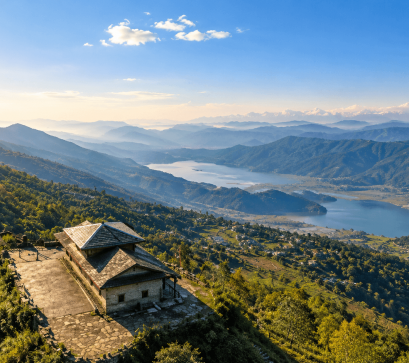
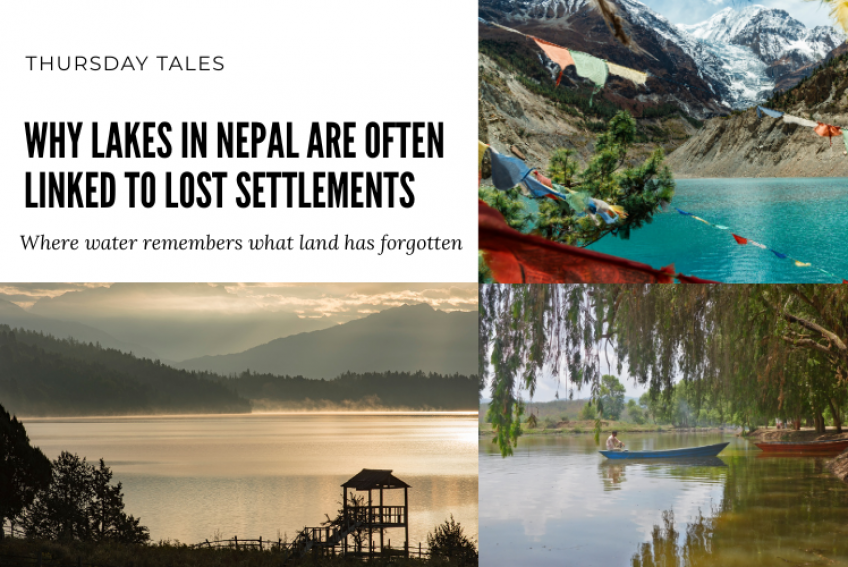
Across Nepal, lakes are rarely mere bodies of water; they are storied landscapes—still, reflective surfaces that seem to conceal entire worlds beneath them. From the remote serenity of Rara Lake to the sacred alpine waters of Gosaikunda, many are linked to evocative narratives of drowned villages, vanished communities, or landscapes transformed beyond recognition. Far from simple folklore, these stories arise at the intersection of geology, memory, and spiritual imagination, where natural change is interpreted through cultural storytelling, and lakes come to represent moments of transition—where land became water and history slipped quietly beneath the surface.
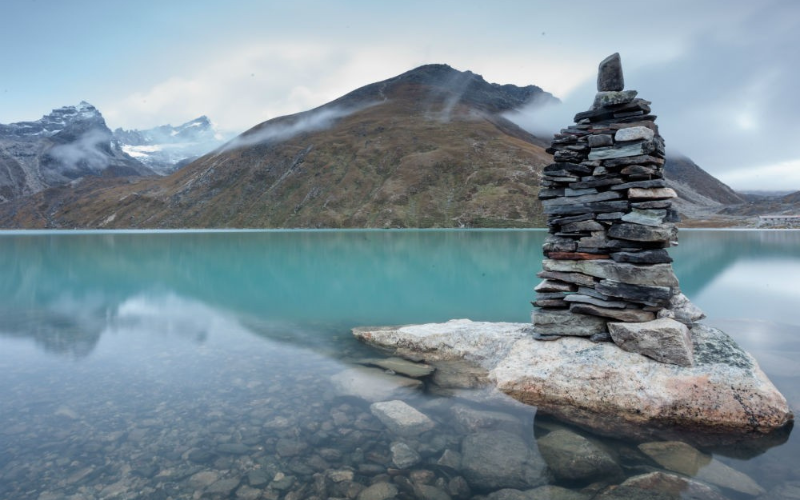
Landscapes in Motion: The Geological Backdrop
Nepal’s terrain is geologically young and remarkably dynamic. The Himalayas continue to rise, rivers shift course, and landslides regularly reshape entire valleys. Lakes form through a range of natural processes, including:
Scientific evidence confirms that the Kathmandu Valley was once a vast lake, which gradually drained through the Chobar Gorge. Intriguingly, this transformation is echoed in myth through the story of Manjushree, who is believed to have cut through the hills to release the water.
Rather than a literal record, such narratives can be understood as cultural reflections of environmental change—stories shaped by observation, memory, and belief.
Echoes of Displacement
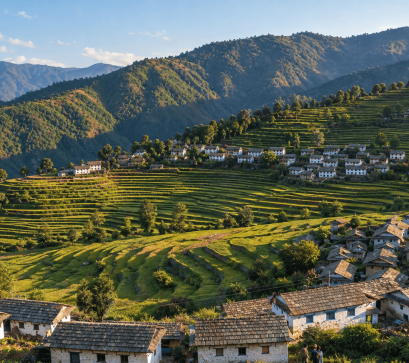
Several lake legends across Nepal speak of settlements submerged; sometimes overnight, sometimes as a result of divine intervention. While these accounts are dramatised, they resonate with lived realities in a fragile landscape.
Landslides can block rivers and create lakes with little warning. Flooding can render fertile land uninhabitable. Over time, entire communities may relocate, leaving behind only traces of their presence.
In predominantly oral societies, such events are not archived in written records but preserved through storytelling. A flooded settlement becomes a cursed village; an abandoned valley becomes a sacred lake. These narratives serve as repositories of collective memory, encoding experiences of loss and adaptation.

Sacred Waters and Mythic Meaning
Water occupies a powerful place in Nepal’s spiritual worldview. Lakes are often seen as sacred spaces, inhabited by divine or semi-divine beings such as Nagas—serpent spirits associated with water and protection.
The small but culturally significant Taudaha, for instance, is closely linked to such beliefs and is often regarded as a remnant of the ancient lake that once filled the Kathmandu Valley. While the exact origin of its name remains debated, its mythological associations are deeply rooted in local tradition.
Similarly, Gosaikunda is revered as a site created by Lord Shiva, who is said to have struck the ground to produce water. Here, the lake is not a symbol of destruction, but of divine intervention and renewal.
In such contexts, stories of submerged settlements are not simply tales of loss—they are moral, spiritual, and cosmological narratives, giving meaning to the landscape.
Rara: Beauty, Memory, and Absence
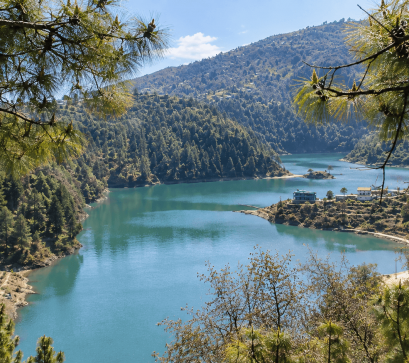
The tranquil expanse of Rara Lake, Nepal’s largest lake appears untouched, almost timeless. Yet even here, the theme of displacement lingers.
The establishment of Rara National Park in 1976 led to the relocation of local communities, adding a modern layer to the region’s history of human absence. Alongside this, temples such as Thakur Baba lend the lake a spiritual dimension, reinforcing its role as both a natural and cultural landmark.
Rara illustrates how myth, history, and lived experience intertwine, shaping how landscapes are remembered and understood.

Why the Pattern Persists
The recurring association between lakes and lost settlements in Nepal can be traced to three overlapping forces:
Environmental Reality
A volatile landscape where rivers shift and landforms change.
Oral Tradition
A culture where memory is preserved through narrative rather than written record.
Spiritual Interpretation
A worldview that frames natural events within divine or moral frameworks.
Together, these create a powerful narrative pattern—one in which lakes are not merely geographical features, but sites of transformation and remembrance.
Beneath the Surface
To stand beside a lake in Nepal is to stand at the edge of layered time. Beneath the still waters may lie geological histories spanning millennia, echoes of displaced communities, and myths shaped by faith and imagination.
The idea of “lost settlements” is not simply folklore. It is a cultural lens through which people have long understood change—its causes, its consequences, and its meanings.
In Nepal, lakes do not merely reflect the mountains.
They reflect memory itself—submerged, enduring, and quietly retold.
Also Read