

 Source::APN
AP/RSS
Four months ago, America’s most populous state was struggling to combat a surge in coronavirus hospitalizations that packed patients into outdoor tents and killed hundreds of people each day.
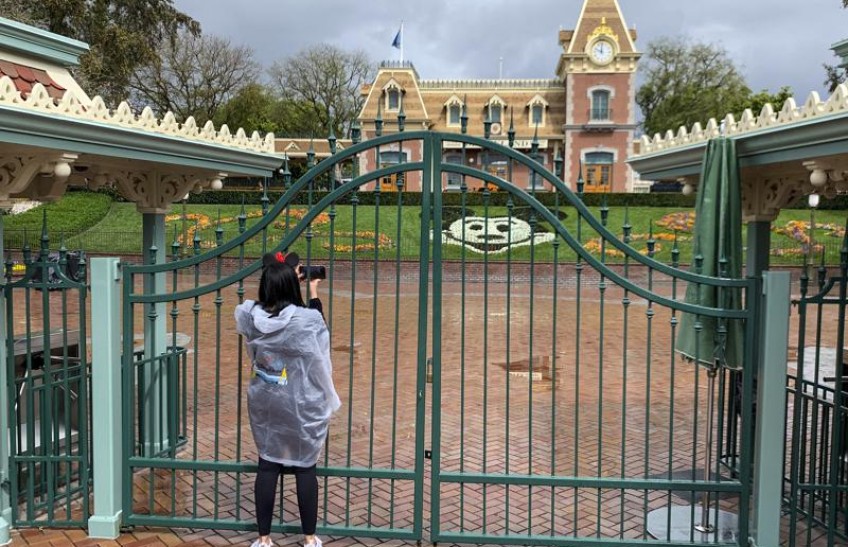
On Friday, Disneyland, California’s world-famous theme park, will reopen to visitors after an unprecedented 13-month closure in what tourism officials hope is a sign of the state’s rebound from the pandemic. For now, the park is allowing only in-state visitors and operating at limited capacity. “It has such a symbolic nature to really quantifying that we’re finally rolling out of COVID,” said Caroline Beteta, president and CEO of the state tourism agency Visit California.
The news comes as California boasts the country’s lowest rate of confirmed coronavirus infections and more than half of the population eligible for vaccination has received at least one dose of the shots. It’s a dramatic turnaround from December, when hospitals across the state were running out of ICU beds and treating patients at overflow locations. Now, children are returning to school, shops and restaurants are expanding business, and Gov. Gavin Newsom set June 15 as a target date to further reopen the economy, albeit with some health-related restrictions.
Theme parks were among the last businesses allowed to reopen in California, and Universal Studios and others have already thrown open the gates. That’s a contrast to states with fewer restrictions such as Florida, where Disney World’s Magic Kingdom resort has been up and running, though at lower-than-usual capacity, since last July. Another major U.S. amusement park, Ohio’s Cedar Point, opened last summer and will do so again for the upcoming season — only this time, it won’t require masks on rides or outdoors where crowds can be avoided.
While California continues to “strongly discourage” anyone from visiting the state as tourists, the travel industry is banking on pent-up demand from its own 40 million residents for a comeback. An advertising campaign encourages Californians to travel within the state, mirroring a pitch made after the terror attacks of Sept. 11, 2001. “We’re back to that playbook,” Beteta said. “It was very successful for us then, and we’re hoping it will be for us now.”
Disneyland is a major economic engine in California, drawing nearly 19 million in attendance the year before the coronavirus struck, according to the Themed Entertainment Association. It and other such attractions were shuttered in March 2020 as Newsom imposed the nation’s first statewide shutdown order.
ALSO READ
