

 Source::AP
VENICE,
In another year, masks would be a sign of the gaiety in Venice, an accessory worn for games and parties as big crowds parade about to show off their frivolous, fanciful costumes, especially ones with decorative face coverings.
The Italian canal city’s Carnival festivities should have started Saturday, but the COVID-19 pandemic has made its annual appointment for more than two weeks of merry-making impossible. Last year, with fears over the new coronavirus mounting, authorities abruptly shut down the Venice Carnival on its third day, just before Italy became the first country in the West to face an outbreak.
Back then, a “surge” meant crowds squeezing through Venice’s maze of carless streets, intent on meeting up in the vast St. Mark’s Square. The day that Carnival shuddered to a stop last year, the confirmed coronavirus cases in all of Italy numbered only 133. Now Italy has logged more than 2.5 million confirmed virus cases, including more than 88,000 deaths but not including thousands who died without being tested. A “surge” has taken on a different, more ominous context. Masks are worn now to protect, not amuse.
The Carnival’s appeal is rooted back centuries, when, for a brief stretch in the run-up to Lent, the Catholic period of penitence that begins on Ash Wednesday, ordinary Venetians would strut about masks, taking on temporary new identities, and for a few days become indistinguishable from members of the proud maritime city’s ruling class.
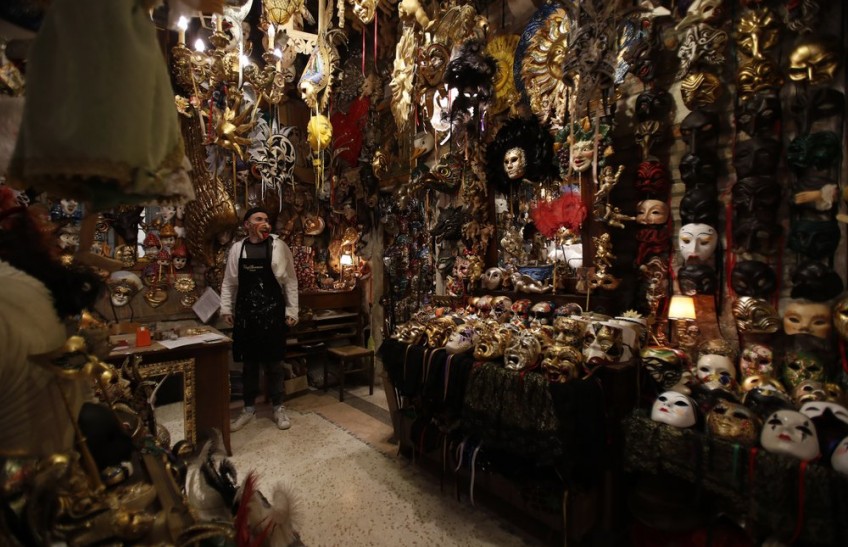
During Carnival, the mask served to “to protect, to reveal, and also to guarantee anonymity,” says Gualtiero Dall’Osto, who owns Tragicomico, an artisan’s shop making artistic masks. “Now, paradoxically, we are not able to experience the mask in this way, and we are forced to wear these (sanitary) masks that in some way block the liberation, the freedom, of our so-called senses.”
ALSO READ
