Barah Chhetra, also spelled Baraha Kshetra or Barahakshetra, draws thousands of devotees every year, and its name carries a story that stretches back through Hindu scripture to one of Vishnu's most dramatic transformations.
According to Puranic legend, the demon Hiranyaksha seized the earth goddess Bhudevi and dragged her into the cosmic ocean, threatening to submerge the world entirely. To stop him, Vishnu took the form of Varaha, a colossal boar, and plunged into the depths. After a fierce battle, Varaha defeated the demon and lifted the earth back into place on his tusks, restoring balance to creation. This episode is counted among the ten principal avatars of Vishnu, the Dashavatara, and it is worth noting that Hiranyaksha is a separate figure from his brother Hiranyakashipu, who was later killed by Vishnu's Narasimha avatar. The two demons are sometimes mixed up in retellings, but the Puranas are clear that Varaha's battle belongs to Hiranyaksha alone.
Once the earth was safe, tradition holds that Vishnu, still in his boar form, settled on the banks of the Koshi with his consort Laxmi, in the shadow of the Himalayas. That moment of arrival is said to have given the site its name, Barah Chhetra, meaning the field or domain of the boar.
The site's sanctity is not a modern claim. It appears in the Varaha Purana, the Skanda Purana, and the Brahma Purana, and it is referenced in the Mahabharata as well. Today it is recognized as one of Nepal's four Char Dham sites, alongside Pashupatinath, Muktinath, and Ruru Kshetra, placing it among the country's most significant religious destinations. Interestingly, the site predates its Hindu associations for many local communities. It also holds deep meaning for Kirat and Limbu groups, who consider the confluence sacred in their own traditions, making Barah Chhetra a rare meeting point of belief systems rather than a single faith's exclusive ground.
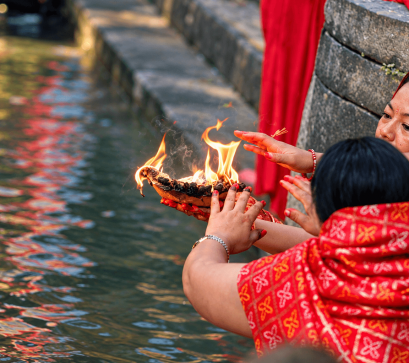
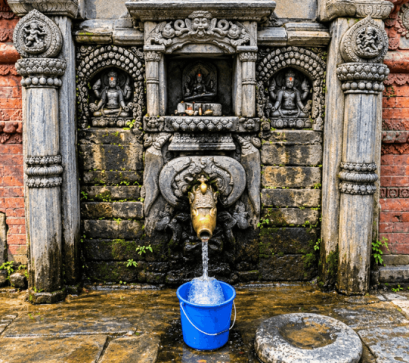
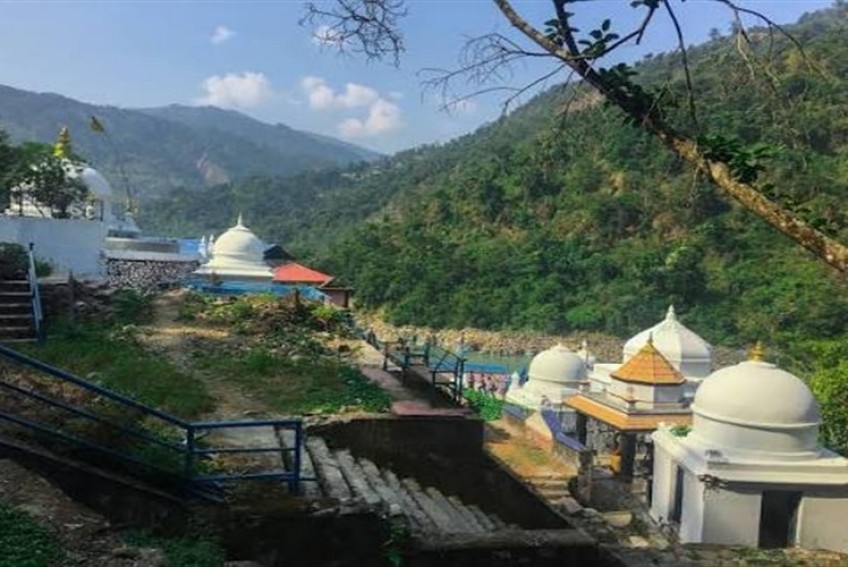
The current temple structure is not the original one. It was rebuilt in the 1930s by Juddha Shumsher after an earlier structure suffered damage, and its pagoda-style architecture still draws the eye with carved depictions of the Varaha legend. Pilgrims gather here in especially large numbers during Maghe Sankranti and during periodic Kumbha Mela observances, when the confluence becomes a site for ancestral offerings and ritual bathing. Sources vary on how often the larger Kumbha gathering falls, with some citing a six-year cycle and others a twelve-year one, so travelers planning around a mela year should confirm current dates locally before booking.
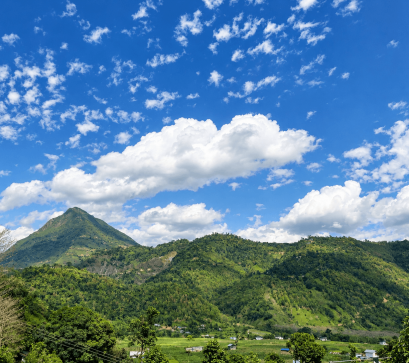
For visitors, Barah Chhetra offers more than a religious backdrop. The river confluence, the surrounding hills, and the quiet walk toward the temple make it a place where mythology and landscape genuinely reinforce each other, which is part of why the legend has held on so tightly for so many centuries.