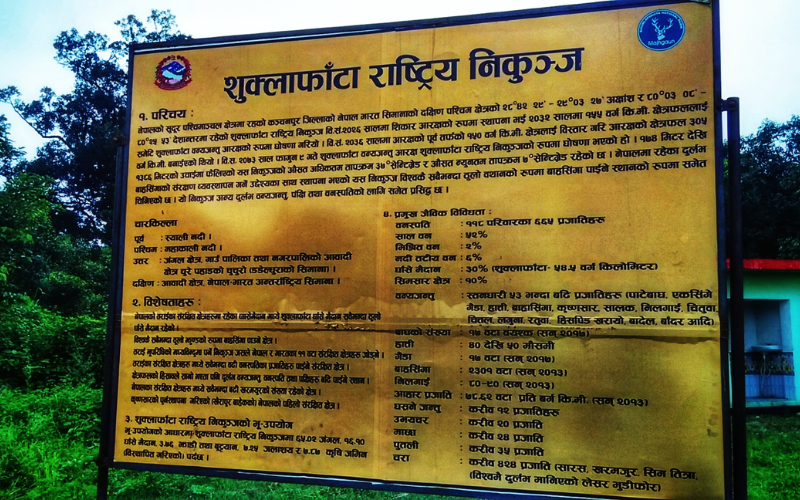
Shuklaphanta National Park covers roughly 305 square kilometers of open grassland, sal forest, riverine woodland, and wetlands, with a buffer zone adding another 243 square kilometers around it. The park sits at elevations between 174 and 1,386 meters, bordered by the Mahakali River to the west and south. Its name comes from the largest of its grasslands, known locally as a phanta, a roughly 16-square-kilometer expanse that forms the single biggest continuous patch of grassland anywhere in Nepal.
That grassland is also the reason the park exists in its current form. It was first designated a hunting reserve under King Mahendra in 1969, then declared a wildlife reserve in 1973, and was finally upgraded to full national park status in 2017. Every stage of that protection history was driven by the same animal: the swamp deer, locally called barasingha or bahrasingha, meaning roughly twelve-horned, for the elaborate branching antlers carried by mature stags.
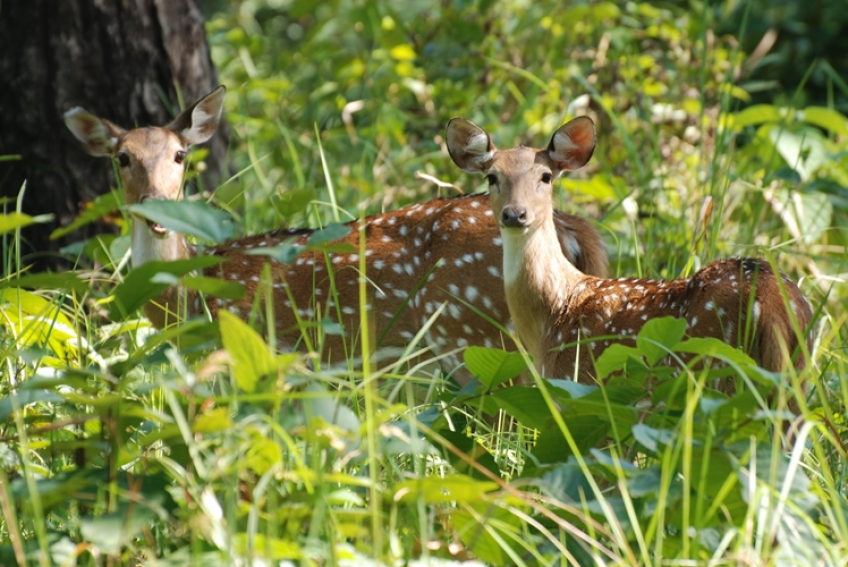
The swamp deer is unmistakable among Nepal's deer species. A male carries antlers with up to twenty tines, while females are smaller and paler in color than males. Mature stags typically grow ten to fourteen tines, occasionally reaching twenty, a trait distinct enough that it earned the species its name, bārah-singgā. Unlike chital or sambar, swamp deer prefer wide open floodplains and marshy grassland over forest cover, which is exactly the habitat Shuklaphanta was built to protect.
That habitat preference is also what made the species so vulnerable. Swamp deer were once common across large parts of the Indian subcontinent, but unregulated hunting and the conversion of grassland habitat through the mid-20th century fragmented the population so severely that the species is now regionally extinct across most of its former Indian range, surviving only in isolated pockets. Nepal's two populations, concentrated in Shuklaphanta and Bardiya, became globally significant simply by surviving.
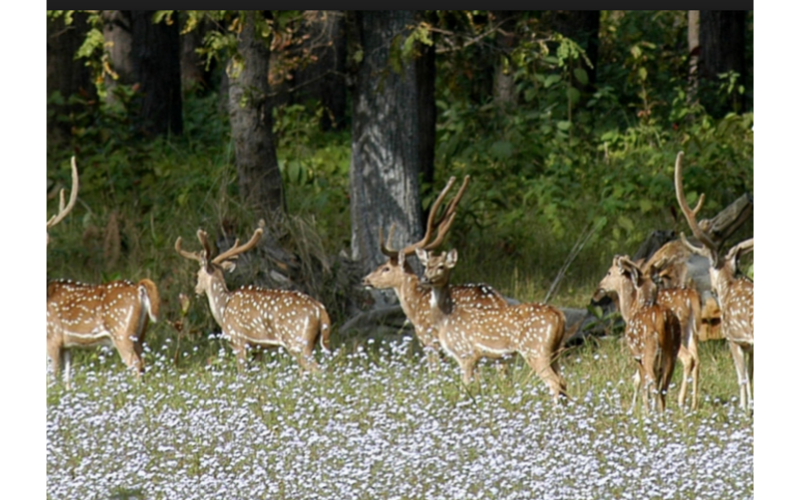
Population counts at Shuklaphanta tell the recovery story in numbers. An early 1990s estimate placed the Nepal population at 1,500 to 1,900 individuals within the Shuklaphanta reserve, and that figure had climbed to 2,170 individuals, including 385 fawns, by spring 2013. A 2007 estimate had already identified the park's grassland herd as the largest known concentration of barasingha in the world, at 1,674 individuals.
The growth has not been perfectly linear. Park records showed the population at 2,301 in 2014, dipping to 2,246 by 2019, a decline park officials attributed to natural mortality and tiger predation. But the longer trend has been upward. By 2023, the park's count had recovered to 2,313 individuals, up from 2,246 two years earlier, with conservationists tracking the population through an annual count conducted during Nepali New Year's wildlife week. The most recent reporting puts the figure even higher, with one 2026 source citing a stable population of around 2,323 swamp deer alongside a growing tiger population in the park.
Habitat expansion has driven much of the recent recovery. Park officials noted that grazing land for swamp deer has been gradually expanding within the national park, with increasing sightings reported in the Lalpani, Andai Pataiya, Hirapur, and Bhatpuri areas across the Chaudhar River, beyond the original core grassland. By 2026, annual census teams had formally extended their survey area to include these newer habitats, using machans, vehicle counts, elephant patrols, and drones to track the expanding herd.
Shuklaphanta's swamp deer success made it the obvious source population when conservationists tried to re-establish the species elsewhere in Nepal. Around two dozen swamp deer were translocated from Shuklaphanta to Bardiya and Chitwan national parks roughly six years before 2023, but the relocated animals could not survive in their new habitats, and park officials confirmed that all of the translocated deer eventually died. A 2017 attempt saw seven swamp deer moved from Shuklaphanta to Chitwan, only for six of them to die from stress within the following year, prompting the translocation program to be paused.
It is a sobering footnote to an otherwise hopeful story, and a reminder that Shuklaphanta's grassland is not easily replicated. The deer did not just need protection from hunting; they needed the specific combination of open floodplain, seasonal flooding, and grazing access that this one corner of Kanchanpur happens to provide.
Swamp deer remain Shuklaphanta's signature species, but they share the park with a wildlife list few other Nepali parks can match. Indian rhinoceros were translocated here from Chitwan to establish a third viable population in Nepal, growing from eight individuals in 2015 to seventeen by March 2021. Bengal tigers have rebounded too, with the population estimated at over forty adults in recent counts, a sharp recovery from earlier lows. The park also harbors elephants, blue bulls, hispid hares, and, according to surveys, 700 plant species, 456 bird species, 56 reptile species, and 15 amphibian species across its grasslands, forests, and wetlands.
Shuklaphanta sits near Mahendranagar in Kanchanpur, in Nepal's far west, a region most international visitors skip entirely in favor of Chitwan or Bardiya. That neglect is precisely what keeps the park quiet, affordable, and largely free of the crowds that now define safari mornings elsewhere in Nepal.
Picture Credits: Wikimedia Commons