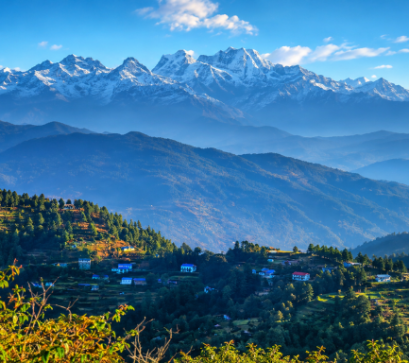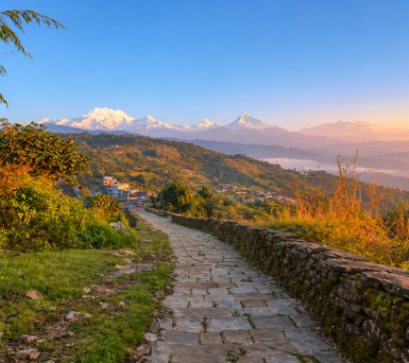
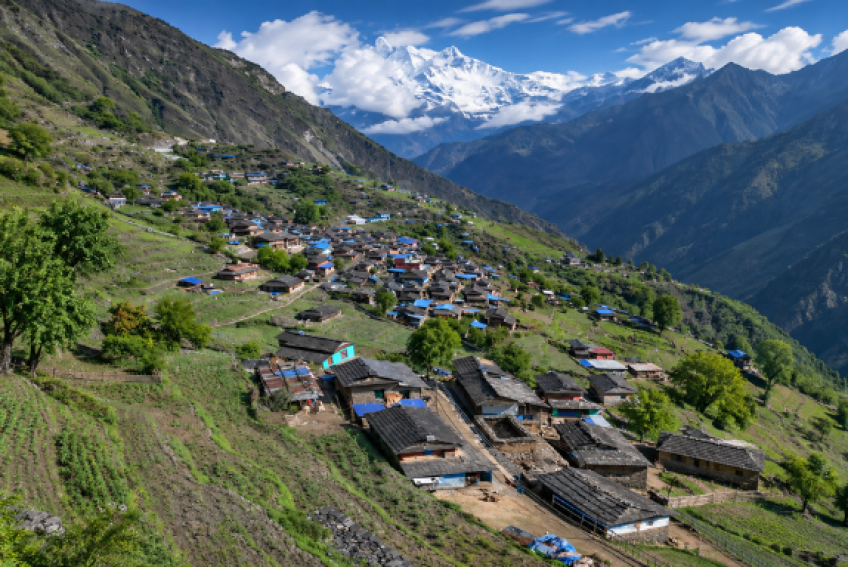
Stone houses cling to terraced hillsides, maize hangs beneath traditional rooftops, and the towering peaks of Dhaulagiri and Gurja shape the horizon. This is Mudi Gaun, a Magar-majority village in Dhaulagiri Rural Municipality–4, Myagdi, where mountain scenery, local traditions and rural life remain closely connected.
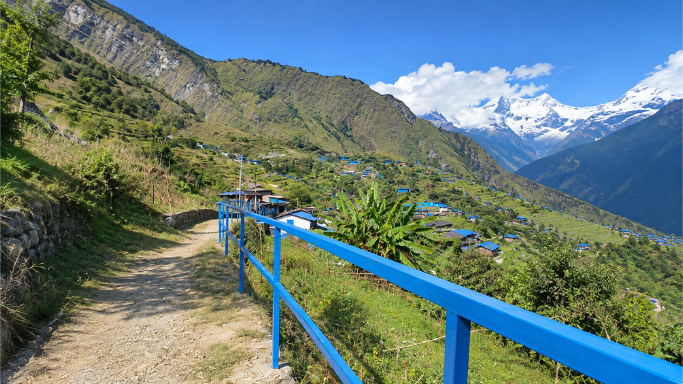
Located approximately 2,500 metres above sea level, Mudi Gaun, also known as Mudigaun, lies within the administrative ward that encompasses Mount Dhaulagiri, the world's seventh-highest mountain at 8,167 metres.
The settlement is known for its traditional stone-built houses, narrow stone-paved lanes and surrounding agricultural terraces. According to local reporting, the village has approximately 250 households, predominantly belonging to the Magar community, alongside Dalit and Gurung families.
Mudi also serves as an access point for trekking routes towards the Dhaulagiri Circuit and Gurja Himal, connecting village life with Nepal's mountaineering heritage.
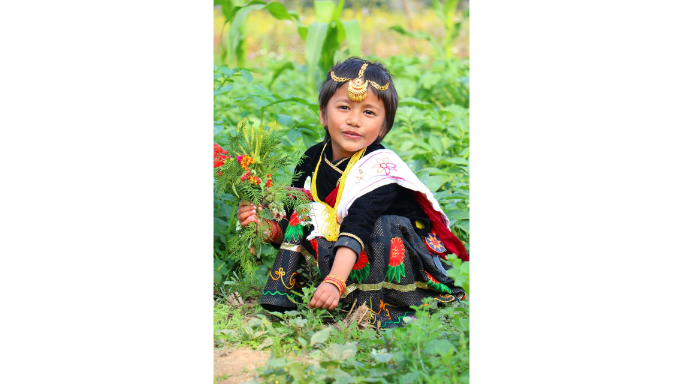
Beyond its scenery, Mudi preserves cultural traditions expressed through Purkhryauli, Madale and Maruni performances, alongside Yanimaya and Salaijo folk songs.
Seasonal livestock herding remains another distinctive feature. Traditionally, herders move cattle and buffalo towards lower valleys during winter and higher pastures during warmer, wetter months.
Local cuisine reflects this agricultural lifestyle, with reported homestay offerings including millet dishes, buckwheat porridge, mushrooms and locally prepared meals.
A roughly 30-minute walk from Mudi leads to Thaldada, a viewpoint overlooking mountain peaks, neighbouring settlements and the winding valleys of the Myagdi, Gurja and Darkhola rivers.
The village also holds a connection to mountaineering history. On 13 May 2026, Mudi hosted celebrations marking the 66th anniversary of the first successful ascent of Dhaulagiri on 13 May 1960. The event highlighted local tourism and trekking opportunities.
Visitors generally approach Mudi through Beni, Myagdi's district headquarters. However, flood and landslide damage affected the Beni–Darbang–Muna road in October 2026, making current road-condition checks essential before travelling.
Despite its connection to the Dhaulagiri Circuit, Mudi faces challenges as changing trekking routes and increased helicopter use reduce opportunities for some local tourism businesses.
Yet its stone architecture, Magar traditions and mountain livelihoods offer something valuable beyond a trekking stop: an opportunity to understand the people and communities whose lives are intertwined with the Himalayas.
For travellers, discovering Mudi means experiencing not just a landscape, but the living culture that gives it meaning.
Also Read