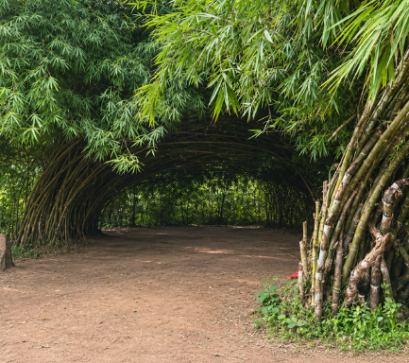
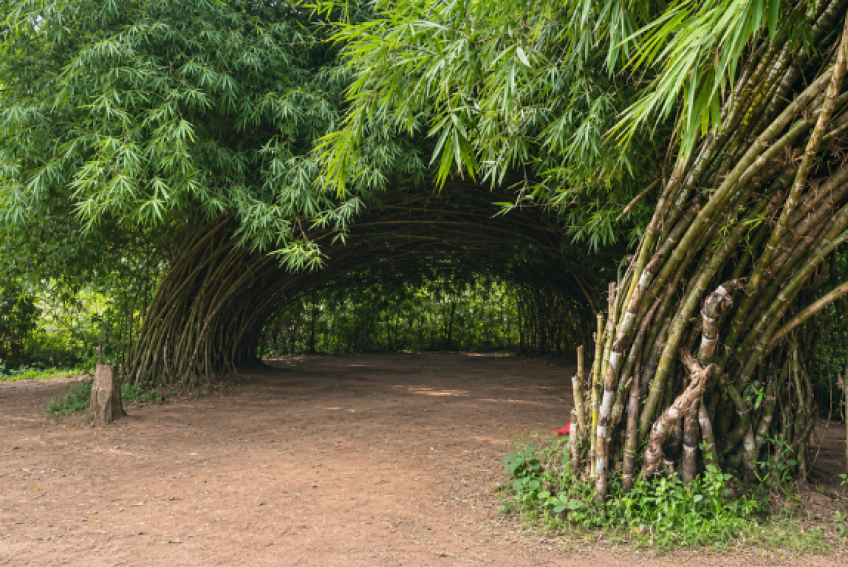
In Jhulkesuntali, Kanepokhari Rural Municipality-6, Morang, a dense bamboo grove has become one of the district's emerging nature-based attractions. Known as Banse Gufa (Bamboo Cave), this unusual destination features a tunnel-like passage formed by living bamboo, offering visitors a refreshing experience surrounded by greenery.
Unlike traditional caves carved into rock or formed underground, Banse Gufa consists of naturally grown bamboo carefully preserved and arranged to create a shaded walkway. Its distinctive appearance and growing popularity on social media have attracted visitors from across eastern Nepal.
The story of Banse Gufa begins decades ago when bamboo was planted across sections of the Jhulkesuntali Community Forest. Over time, the plants developed into dense groves, particularly in the forest's northern area.
Recognising their tourism potential, the Jhulkesuntali Community Forest User Committee decided to preserve the existing bamboo rather than clear it for construction. The vegetation was carefully managed to create a cave-like pathway while maintaining its natural character.
According to committee chairman Bhim Phago, the initiative focused on transforming existing forest resources into a visitor attraction without extensive artificial construction.
Banse Gufa gained widespread attention in 2026 as visitors began sharing photographs and videos on social media.
According to the community forest committee, approximately 400 to 500 domestic tourists visited daily in September 2026, with numbers reportedly more than doubling during holidays.
Visitors from Biratnagar, Pathari, Urlabari and Sundarharaicha have been among those exploring its bamboo-covered pathways. Photography, short walks and family outings are among the activities attracting visitors.
Located approximately five kilometres south of Kanepokhari Bazaar near the East-West Highway, Banse Gufa can be reached by travelling through Bihibare Bazaar towards Jhulkesuntali.
Another approach is from Pathari Bazaar through Pathari Shanishchare, making it accessible for short trips within Morang.
With visitor interest increasing, the community forest committee announced plans in September 2026 to develop a children's park and improve visitor facilities through coordination with local and provincial authorities.
The committee has emphasised preserving the bamboo grove's natural structure rather than replacing it with concrete development.
Banse Gufa demonstrates how community-led conservation can create tourism opportunities using existing natural resources. What was once a quiet bamboo grove has become an emerging destination, highlighting Morang's potential for environmentally conscious local tourism.