
Nepal’s culinary landscape is far more diverse than its globally known momo and dal bhat. Beyond these familiar flavours lies a world of unusual yet deeply traditional foods; dishes and practices that may appear “weird” to outsiders but are cherished local delicacies rooted in heritage, climate, and survival in some of the world’s most extreme landscapes.
From the bustling alleys of the Kathmandu Valley to the windswept highlands of Mustang and the remote Himalayan settlements, these foods tell powerful stories of culture, ritual, and resilience.
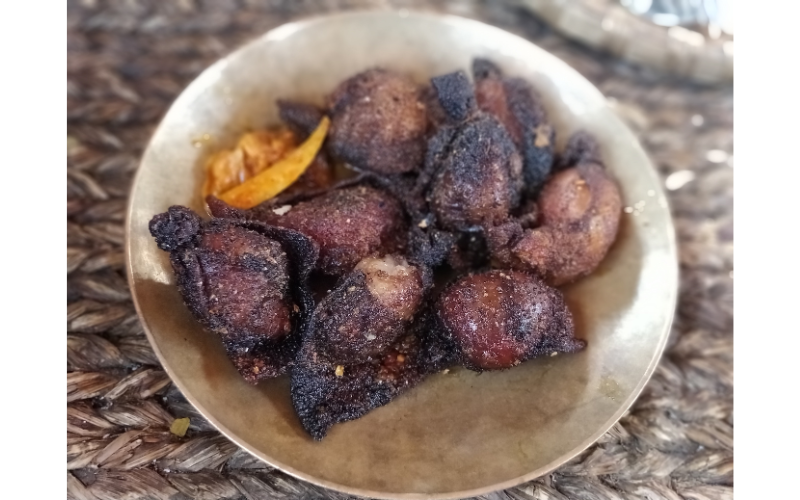
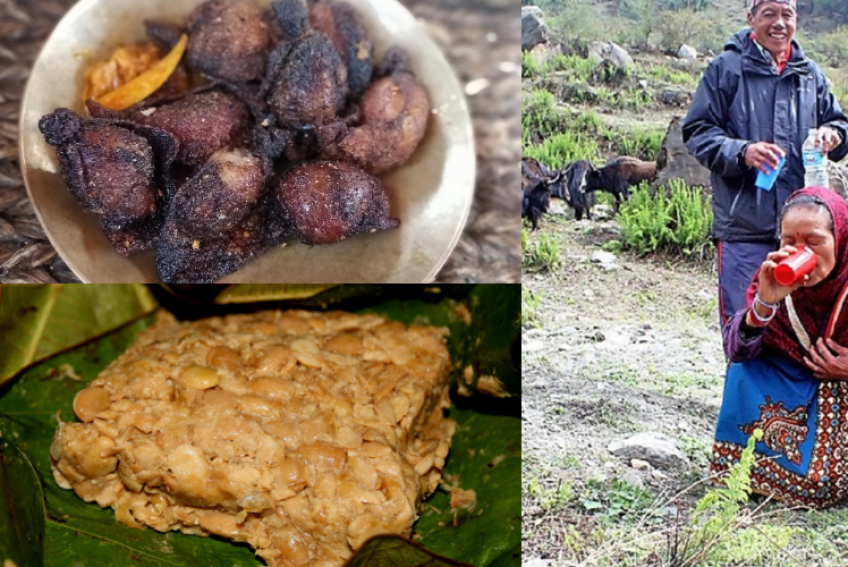
Sapu Mhicha is one of the most distinctive delicacies of Newar cuisine. Traditionally found in Newari households and often considered a special offering to a son-in-law during ceremonial feasts, it is now also served in select Newari restaurants across the Kathmandu Valley.
The dish is made from a delicate pouch of buffalo leaf tripe filled with rich bone marrow. Preparation is highly meticulous: the tripe is carefully cleaned, shaped into small pockets, filled, sealed, and then boiled or lightly fried.
What makes Sapu Mhicha especially fascinating is its texture, an almost delicate outer layer that gives way to a rich, buttery burst of marrow when bitten into. For the Newar community, it represents culinary precision, cultural pride, and a tradition of using every part of the animal with respect and skill.
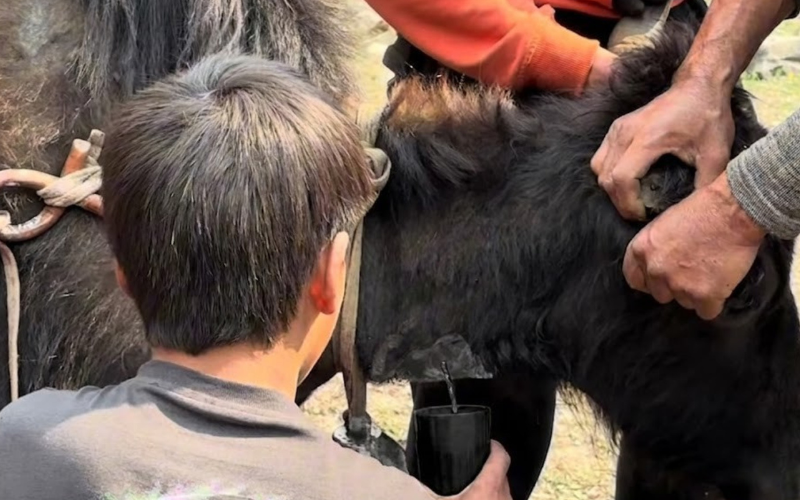
In the remote trans-Himalayan region of Mustang, yak herding is central to survival, and every part of the animal is traditionally utilised. Among these practices is the consumption of fresh yak blood, historically associated with pastoral life and high-altitude nutrition.
This is not a festival dish in the conventional sense, but rather a seasonal and situational practice linked to yak herding cycles and survival in extreme environments. In the thin air and freezing temperatures of the Himalayas, yak blood was once considered a quick source of warmth, strength, and sustenance.
Today, such practices are increasingly rare and largely confined to remote communities, reflecting both cultural continuity and the gradual influence of modern dietary norms and regulations.
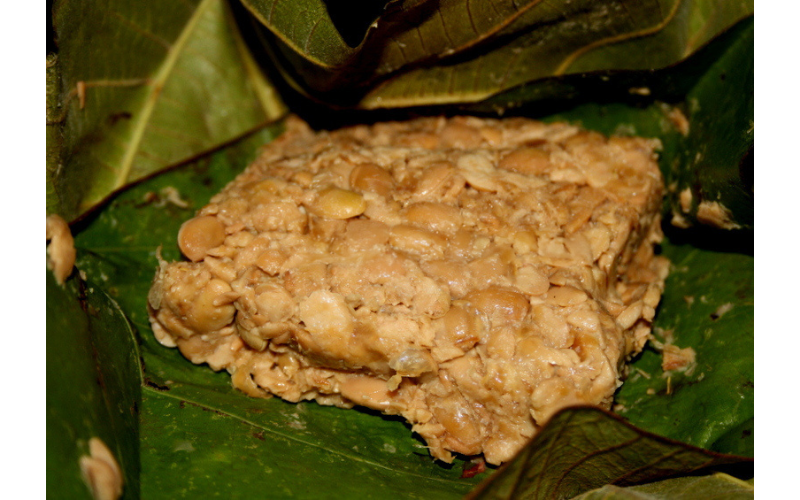
Kinema is a traditional fermented soybean delicacy widely consumed in the eastern hills of Nepal, particularly among the Limbu community.
Made by boiling soybeans and allowing them to ferment naturally in bamboo baskets or wrapped leaves, kinema develops a strong aroma and sticky texture. While its smell can be intense for first-time tasters, it is highly valued for its deep umami flavour and exceptional nutritional profile, especially its high protein content.
Typically eaten with rice or incorporated into curries, kinema is more than just a dish—it is an important part of Kirat culinary heritage and a sustainable protein source for rural Himalayan communities.
Although these dishes may appear unusual at first glance, they reflect Nepal’s extraordinary ecological diversity and cultural depth. High-altitude scarcity, indigenous knowledge systems, religious traditions, and centuries-old culinary practices have all shaped what ends up on the plate.
What may seem “weird” is, in reality, a living archive of Nepal’s food heritage. Here, nothing is wasted, everything has meaning, and every bite tells a story of adaptation and identity.
Also Read




.jpg)