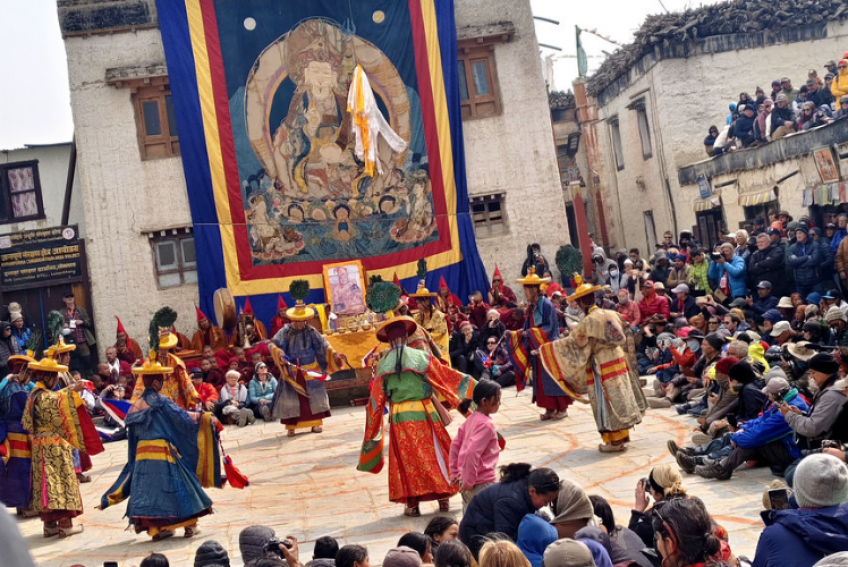
High in the arid trans-Himalayan landscapes of Upper Mustang, the ancient walled city of Lo Manthang awakens each spring with the sounds of chanting monks, ceremonial horns and masked ritual dances. For three remarkable days, the historic capital of the former Kingdom of Lo becomes the centre of one of Nepal’s most spiritually significant Himalayan festivals, the Tiji Festival.
Set against dramatic desert cliffs and centuries-old monasteries, Tiji is far more than a cultural spectacle. Deeply rooted in Vajrayana Buddhist tradition, the festival symbolises the triumph of harmony over chaos and compassion over suffering. For travellers journeying into Upper Mustang, it offers a rare opportunity to witness a living spiritual tradition that continues to shape the identity of the region.
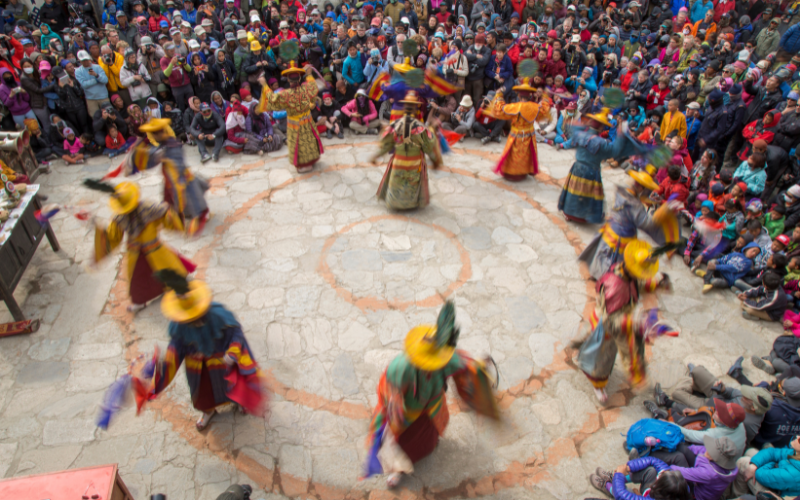
The word “Tiji” is widely believed to derive from the Tibetan phrase Tenpa Chirim, often interpreted as a prayer for peace, prosperity and the wellbeing of all beings. The festival centres around sacred monastic rituals and cham dances performed by monks of Chhode Monastery.
At its heart, Tiji symbolically re-enacts the victory of enlightened forces over destructive energies threatening the land and its people. Through ritual movement, elaborate masks and ceremonial music, the festival expresses themes of purification, protection and renewal within Vajrayana Buddhist philosophy.
The origins of Tiji are closely connected with Vajrayana Buddhist practices associated with Vajrakilaya, a protective tantric deity revered within Tibetan Buddhism. The festival has been observed in Mustang for centuries and remains among the most important communal and spiritual events in the region.
Historically, Upper Mustang maintained strong cultural and religious ties with Tibet due to its location along ancient Himalayan trade routes. Until the early 1990s, the region remained largely inaccessible to foreign visitors, allowing many of its traditions, architecture and monastic practices to remain remarkably preserved.
Today, Tiji continues to serve not only as a religious ceremony but also as a reaffirmation of cultural identity for the people of Mustang.
During Tiji, the usually quiet alleys of Lo Manthang fill with pilgrims, monks and local families dressed in traditional attire. Prayer flags flutter above whitewashed mud-brick homes while the royal courtyard transforms into a ceremonial stage for sacred performances.
The festival unfolds over three days, with monks performing ritual cham dances accompanied by drums, cymbals and long copper horns. The dancers wear elaborate masks representing protective deities, spiritual figures and symbolic forces within Buddhist cosmology.
Each dance carries ritual meaning, reflecting themes of purification, protection and the restoration of balance. The performances are not staged entertainment but sacred acts of devotion and prayer.
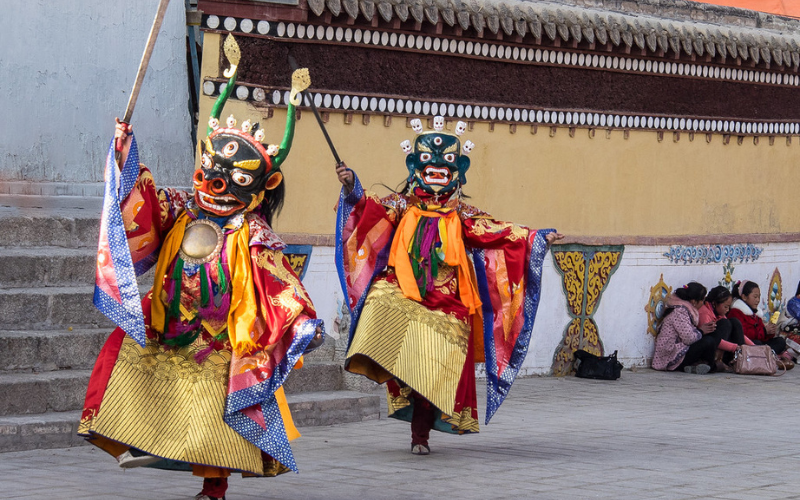
One of the most striking aspects of Tiji is the cham dance tradition. These masked ritual dances are integral to Himalayan Buddhist ceremonies and are believed to carry symbolic and spiritual power.
The rhythmic movements, ceremonial costumes and meditative choreography collectively represent the removal of negativity and obstacles. Through these rituals, communities pray for peace, good harvests, protection and wellbeing for the coming year.
Reaching Lo Manthang remains part of the adventure. Located at an altitude of approximately 3,840 metres, Upper Mustang lies within Nepal’s rain-shadow region beyond the Annapurna and Dhaulagiri ranges.
Most travellers begin from Pokhara before travelling north through Kagbeni and the dramatic Kali Gandaki valley. Depending on time and preference, the journey can be undertaken by jeep or multi-day trek.
Because Upper Mustang is a restricted region, visitors require:
Travellers are encouraged to plan well in advance during festival season, as accommodation in Lo Manthang is limited.
What makes Tiji extraordinary is not simply its visual spectacle, but its enduring spiritual presence. In an era of rapidly changing mountain cultures and expanding tourism, the festival remains deeply connected to the beliefs, rhythms and collective memory of Upper Mustang.
Amid the windswept landscapes of the Himalayas, Tiji continues to embody a timeless prayer for harmony; echoing through monastery walls, ancient alleyways and the desert silence of Lo Manthang.
PC: Flickr, Wikimedia Commons
Also Read