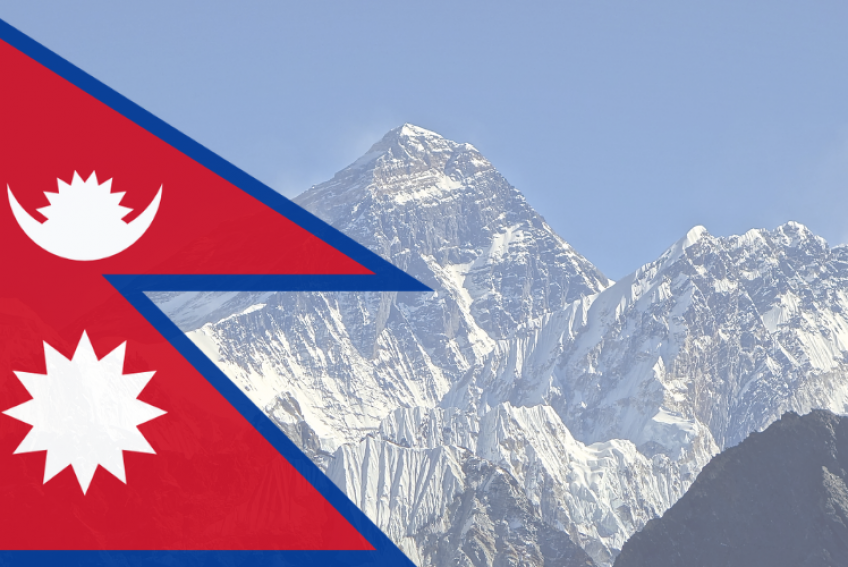
Nepal’s flag is one of the most recognizable national symbols in the world because it is the only national flag that is not rectangular or square. Its two stacked triangular forms immediately set it apart, and its symbolism gives the design even greater meaning. The flag combines tradition, identity, and history in a way that makes it a powerful topic for readers searching for the meaning of Nepal’s flag or the symbolism behind Nepal’s national emblem.
The flag’s crimson red color represents bravery and the rhododendron, Nepal’s national flower, while the blue border symbolizes peace and harmony. The triangular shape is commonly understood as a combination of two pennons and is often interpreted as representing the Himalayas or Nepal’s two major religions, Hinduism and Buddhism. These meanings make the flag visually distinctive and culturally rich at the same time.
The upper triangle bears a white moon, and the lower triangle bears a white sun. These celestial symbols express the hope that Nepal will endure as long as the sun and moon continue to exist. They also reflect qualities associated with the Nepalese people: calmness, serenity, strength, and resilience. Earlier versions of the flag included human faces on the sun and moon, but those were removed in 1962 during modernization of the design.
The flag is more than a national identifier; it is also a historical artifact. The basic design has existed for centuries, and its structure preserves older state traditions while still functioning as a modern national emblem. Nepal was never colonised by any European country. The rectangular flag trend is mostly driven by European nations. Almost every contemporary country was later inspired by this while designing their modernised flags. But, Nepal continues to have and flaunt the original. That historical continuity helps explain why the flag remains so emotionally important to Nepalis at home and abroad.
In the end, Nepal’s flag is not just a piece of cloth. It is a visual summary of the country’s landscape, beliefs, resilience, and identity.