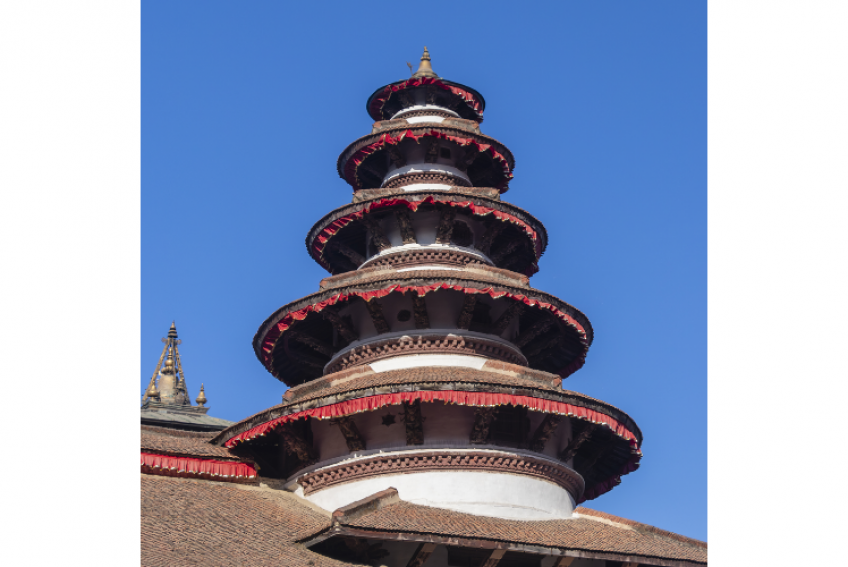
Walk through Kathmandu, Patan, or Bhaktapur and you're surrounded by architecture that predates most European cathedrals: tiered temples, carved windows, and courtyards that have absorbed a thousand years of earthquakes, monsoons, and history without losing their character.
It's one of the most surprising facts about traditional Nepali architecture: the multi-tiered pagoda roof, now associated with East Asia, is widely credited to a Nepali architect. Arniko, a 13th-century craftsman from the Kathmandu Valley, is said to have introduced the pagoda style to Tibet and China after being invited by Kublai Khan. The temples of Kathmandu's Durbar Squares – Nyatapola, Taleju, Pashupatinath – are the originals this style flowed outward from.
Traditional Nepali architecture, especially in its Newari form, relies on an interlocking wood-and-brick system passed down through generations of craftsmen rather than written plans. Struts (called tundal), carved with deities and intricate patterns, do double duty – decorative and structural, transferring the roof's weight down through the frame. This flexible timber-brick construction is also a big reason many older structures have survived centuries of seismic activity better than expected.
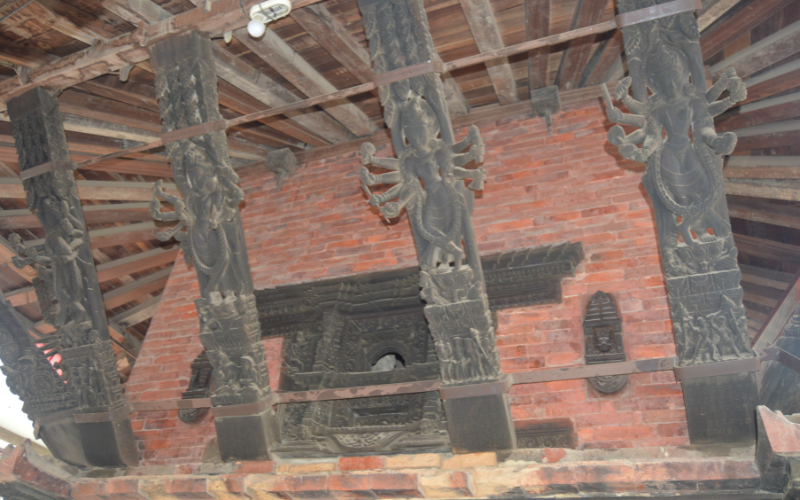
Nothing in a traditional Nepali building is purely decorative:
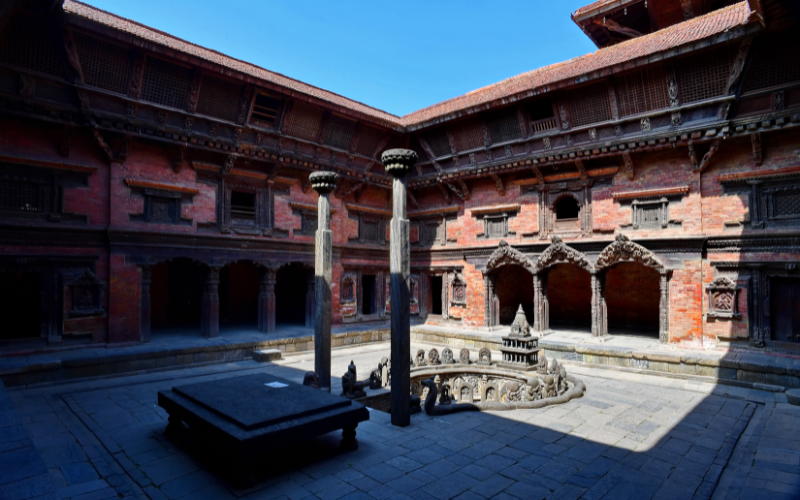
This is functional design first, ornamental second – the beauty grew out of solving real problems.
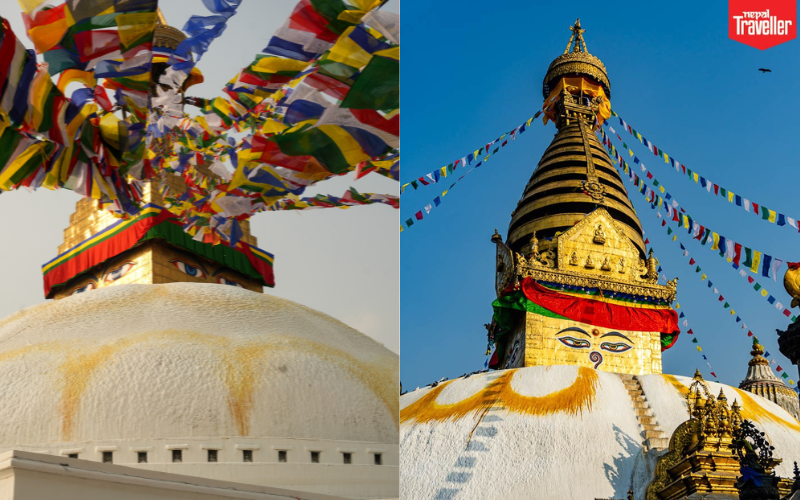
The Kathmandu Valley UNESCO World Heritage Site is actually a cluster of seven monument zones: the three Durbar Squares (Kathmandu, Patan, Bhaktapur), Swayambhunath, Boudhanath, Pashupatinath, and Changu Narayan. Together, they form one of the densest concentrations of traditional architecture anywhere in the world – a genuine open-air record of how Nepali building styles evolved across the Licchavi, Malla, and early Shah periods.
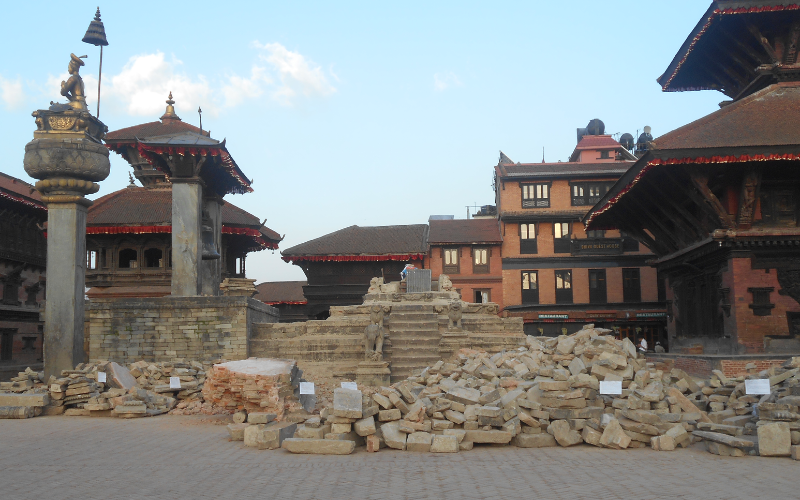
After the 2015 earthquake damaged or destroyed a significant number of historic structures, traditional Nepali architecture faced a real threat: the artisans who knew the old techniques were aging, and reconstruction pressure favored concrete. Since then, heritage rebuilding projects have deliberately trained a new generation in traditional joinery, brick-laying, and wood carving, so the same methods used centuries ago are once again shaping new (and restored) buildings in the valley.
Traditional Nepali architecture isn't a museum piece – it's a working design philosophy: build with what the land gives you, let form follow climate, and make every carved beam mean something. Next time you walk past a tiered temple roof or a carved window in Kathmandu, you're looking at one of the oldest continuously practiced building traditions in Asia.