
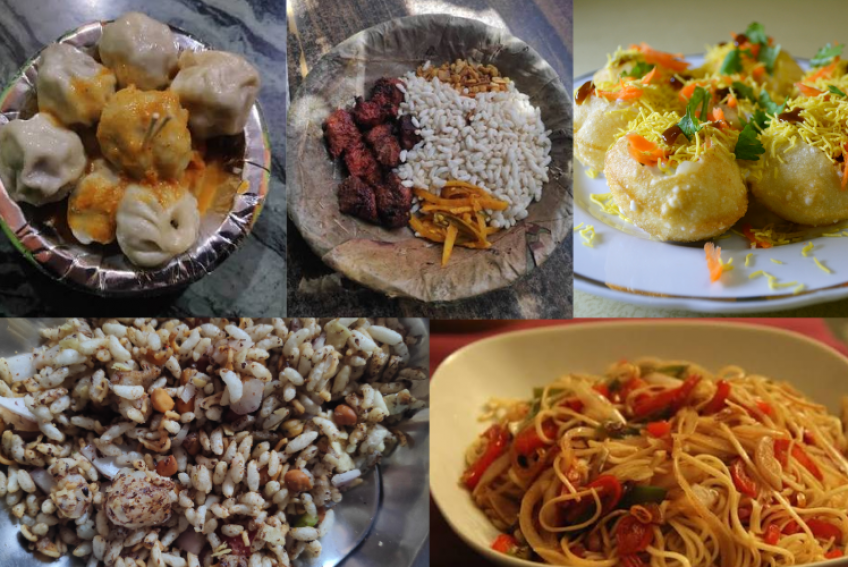
Ask any traveler who has spent time in Kathmandu, Pokhara, or Chitwan what they remember most, and street food usually comes up before the mountains do. Steaming momo wrapped in butter paper, tangy chatpate eaten standing up on a street corner, sekuwa smoking over open coals – this is where Nepal actually tastes like itself. It's also the part of the trip most people worry about.
The good news: Nepal's street food doesn't have to be a gamble. Getting sick almost never comes down to bad luck. It comes down to a handful of specific, learnable habits – the same ones locals use without thinking twice. Here's how to actually tell a trustworthy stall from one worth skipping, dish by dish.
High customer turnover. This is the single best predictor of safety. A cart with a constant stream of customers is cooking fresh, cycling stock quickly, and has no time for food to sit around at room temperature. A stall with a queue of locals, not just tourists, is doing something right.
Food cooked to order, in front of you. Momo steamed or fried while you wait, sekuwa grilled fresh over coals, chatpate assembled on the spot: these are inherently safer than anything pre-made and left sitting out. Watch for a vendor separating raw ingredients from cooked ones and handling cash and food with some awareness of the difference.
Steaming hot, not lukewarm. Freshly cooked, properly hot food is one of the most reliable safety signals there is, since harmful bacteria multiply fastest in food sitting in the lukewarm "danger zone." If a momo or thukpa isn't visibly steaming, be more cautious.
Boiled tea and thoroughly cooked broths. Masala tea, thukpa, and jhol-style dishes are all boiled at some point in preparation, which makes them meaningfully safer than raw or cold preparations.
Clean-looking utensils and a tidy prep area. You're not expecting a five-star kitchen from a roadside cart, but basic order – clean cutting surfaces, covered ingredients, a vendor who isn't handling raw meat and change with the same unwashed hands – is a fair thing to look for.
Anything with ice. Ice is frequently made from unfiltered tap water, and it's one of the easiest ways to undo every other precaution you're taking. Skip iced drinks and juices from street stalls unless you know the source.
Pre-cut fruit and raw salads. A plate of chopped fruit or shredded salad sitting out looks refreshing, but it's often been washed in tap water and handled repeatedly – and washing alone doesn't reliably remove contamination. If you want fruit, choose something you can peel yourself, like a banana or orange.
Chutneys, sauces, and condiments left uncovered. These are often made from raw ingredients and can sit at room temperature for hours, making them a quieter but real risk factor next to the main dish.
Anything visibly reheated or held for a long time. Buffet-style street setups, or food that's clearly been sitting for a while, lose the "fresh and hot" protection almost entirely.
Unpasteurized dairy. Fresh curd, paneer, or milk-based sweets from informal vendors carry a higher risk if the milk hasn't been properly pasteurized or boiled.
Wash or sanitize your hands before you eat, every time. Hand hygiene is one of the most effective, most overlooked precautions travelers can take, especially when soap and water aren't available and you're relying on a 60%+ alcohol sanitizer instead.
Drink only boiled, filtered, or sealed bottled water. Check that bottle seals are intact — a smooth twist-off cap with no resistance can mean a bottle has been refilled and resold. When in doubt, boiling water for about a minute (three minutes above 2,000 meters) neutralizes essentially everything.
Start slowly if you're new to Nepali food. Let your system adjust over the first day or two rather than sampling everything from every cart on arrival.
Carry oral rehydration salts, just in case. They're inexpensive, weigh nothing, and are genuinely the most useful thing in a travel first-aid kit if things do go sideways – dehydration, not the bug itself, is what actually causes serious problems.
Trust your nose and your eyes over a recommendation. A stall recommended in a guidebook three years ago may not be run the same way today. Judge what's in front of you.
Picture Credits: Wikimedia Commons



.jpg)