
Nepal’s appeal as a travel destination lies not only in its mountains, temples and wildlife, but also in the remarkable plant life that thrives across its varied landscapes. From alpine meadows high above the tree line to mid-hill forests and village woodlands, Nepal is home to medicinal plants that have supported traditional healing practices for generations. Some of these plants are now protected nationally because their populations in Nepal are declining, even though they may not be globally endangered.
For travellers walking through these landscapes, recognising these plants adds a quieter, more meaningful layer to the journey: one rooted in ecology, culture and conservation.
Understanding conservation in Nepal
Globally, the IUCN Red List evaluates plants based on their risk of extinction across their entire natural range. Nepal, however, protects plants according to local population trends, harvesting pressure and ecological vulnerability. This means a plant may still be encountered in the wild, yet remain under national protection due to its fragile status within the country.
This distinction is important for understanding why certain medicinal plants are safeguarded in Nepal, particularly those found in slow-growing alpine environments.
Panchaule (Dactylorhiza hatagirea): a rare orchid of alpine meadows
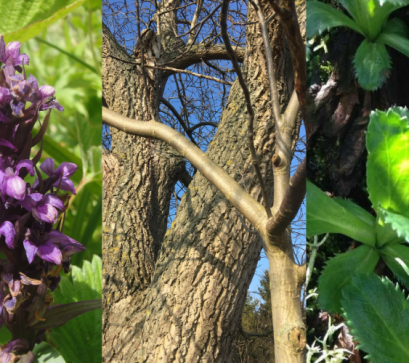
Panchaule is one of Nepal’s most distinctive alpine orchids, found in open grasslands between 3,000 and 4,500 metres, especially in central and eastern Himalayan regions. During the short summer season, usually from June to August, the pl--ant sends up a slender stem topped with a dense cluster of pink to purplish orchid flowers, standing out briefly against the muted tones of alpine meadows.
The plant’s medicinal value lies in its underground tubers, traditionally used as a strength-enhancing tonic, particularly in high-altitude communities. However, because harvesting the tuber destroys the entire plant, Panchaule has declined rapidly in Nepal. Although it is not listed as Endangered by the IUCN, its slow growth and limited habitat have made it increasingly rare in the wild, leading to strict national protection.

Himalayan walnut (Juglans regia): a familiar tree with local pressure
The Himalayan walnut is a large, graceful deciduous tree commonly seen in mid-hill forests and village landscapes between 1,000 and 2,500 metres. It is easily recognised by its broad spreading canopy, long feather-like compound leaves and round green fruits, which mature into walnuts by late summer. Flowering occurs in April and May, signalling the start of the growing season.
Traditionally, the walnut has been valued both as a nutritious food source and for medicinal uses, including the use of bark in remedies associated with skin care and oral health. While the species is globally listed as Least Concern by the IUCN, unsustainable bark harvesting in some areas has weakened mature trees and affected forest health in Nepal. Protection therefore focuses on preventing localised degradation rather than species-level extinction.

Kutki (Neopicrorhiza scrophulariiflora): a small plant of great medicinal value
Kutki is a low-growing medicinal herb found in alpine and subalpine regions between 3,500 and 5,000 metres, often growing among rocks and gravel on exposed slopes. The plant forms a compact rosette of elongated leaves close to the ground and produces small bluish-purple flowers from July to September, during the brief Himalayan summer.
Despite its modest appearance, Kutki holds a significant place in Himalayan and Ayurvedic medicine, particularly for liver-related ailments, fevers and digestive disorders. Unlike Panchaule and the Himalayan walnut, Kutki is globally listed as Vulnerable by the IUCN, reflecting widespread population decline across the Himalaya due to intense demand and slow natural regeneration. In Nepal, its collection and trade are regulated to address this pressure.

Medicinal plants in Nepal grow slowly and depend on very specific environmental conditions. Loss at a local level can mean permanent disappearance from individual valleys or trekking regions. Nepal’s approach to protecting these species reflects an effort to preserve not only biodiversity, but also traditional knowledge and ecological balance.
For travellers, encountering these plants is part of experiencing the Himalaya beyond its dramatic scenery: an opportunity to notice the small, seasonal forms of life that quietly shape Nepal’s landscapes.
PC: CreativeCommons.Org, Wikimedia Commons
Also Read