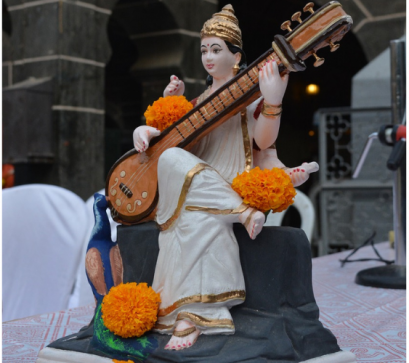

Saraswati Puja, widely known in Nepal as Shree Panchami or Basanta Panchami, is a festival that reveals the country’s enduring reverence for knowledge, learning and cultural refinement. Observed across Nepal, it honours Goddess Saraswati, the embodiment of wisdom, speech, music and the arts, while also marking the transition from winter to spring.
Unlike large public festivals, Saraswati Puja unfolds through schools, homes and local temples, making it a particularly revealing experience for travellers interested in Nepal’s everyday cultural life.

Timing and Seasonal Meaning
The festival is celebrated on the fifth day of the bright lunar fortnight (Panchami) in the Nepali month of Magh, typically falling in late January or early February. This timing aligns with Basanta Ritu, the beginning of spring in the Himalayan region.
In agrarian and ritual calendars alike, this moment signals renewal: longer daylight, flowering fields and the symbolic reawakening of intellect after winter’s dormancy. The seasonal context is central to the festival’s meaning and is reflected in the predominance of yellow flowers, garments and offerings.
Significance in Nepal
In Nepali society, knowledge is regarded as both a spiritual and social virtue. Saraswati Puja is observed to seek clarity of thought, discipline in learning and refinement in creative pursuits. Students, educators, musicians, artisans and scholars all take part, reinforcing the belief that intellectual growth underpins collective wellbeing.
A distinctive practice is Akshar Aarambha: the ceremonial introduction of children to writing. Many families and schools choose this day for a child’s first letters, reflecting a deeply held conviction that education should begin under divine guidance.
Historical and Cultural Roots
The veneration of Saraswati in Nepal draws from ancient Hindu philosophical traditions that associate speech and consciousness with cosmic order. Over time, the festival became integrated into Nepal’s diverse cultural landscape, shaped by local customs and community-based observance rather than grand spectacle.
This continuity, from classical belief to contemporary practice explains why Saraswati Puja remains culturally relevant rather than ceremonial alone.
Observance
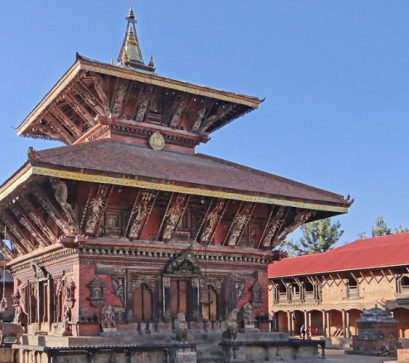
On Saraswati Puja, temples such as Swayambhu Saraswati in Kathmandu and Lele Saraswati in Lalitpur draw devotees from early morning. Books, pens, musical instruments and art tools are ritually placed before the goddess, temporarily set aside from use as a sign of reverence.
Schools organise collective prayers, and classrooms are transformed into spaces of worship. The atmosphere is contemplative rather than festive; marked by quiet devotion, soft chanting and community participation.
PC: Needpix.com, PickPik
Also Read