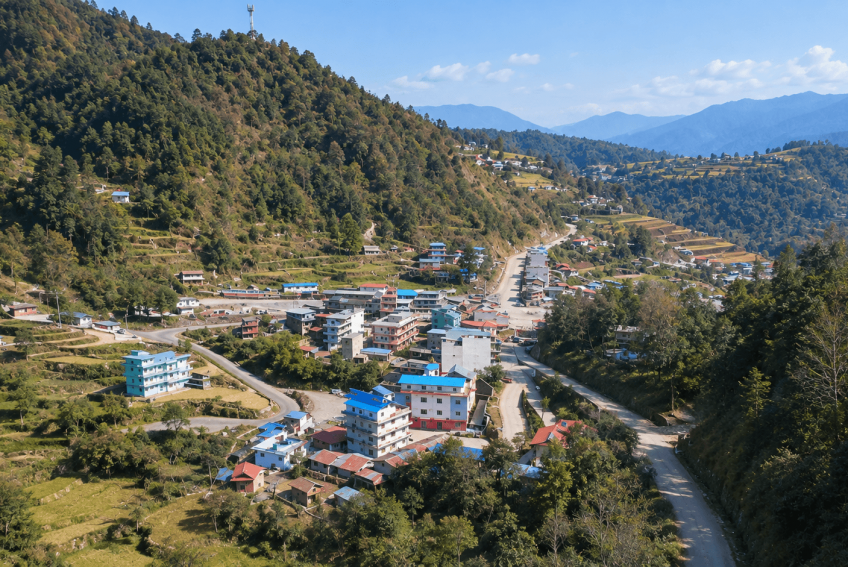
Most visitors to Karnali head straight for Rara or Jumla, bypassing Salyan District entirely. Kapurkot, however, functions as the district's commercial engine rather than a tourist stop. The rural municipality sits along the Rapti Highway, which connects Tulsipur and Salyan, at an elevation of roughly 1,551 metres.
It covers 119.21 square kilometres and is divided into six wards. According to the 12th National Population and Housing Census (2021), published by Nepal's National Statistics Office, Kapurkot has a population of 17,526 8,369 male (47.8%) and 9,157 female (52.2%) giving a population density of 147 people per square kilometre across 3,974 households, with an average household size of 4.41.
This is a slight decrease from the 2011 census figure of roughly 18,200, reflecting an annual growth rate of -0.36% attributed to rural-to-urban out-migration. Literacy stands at 79.75% overall (86.28% male, 73.89% female). Ethnic and religious composition data from the 2011 census, the most recent breakdown available, showed Chhetri (42.4%) and Magar (35.5%) as the largest groups, with Hinduism practised by 93.4% of residents.
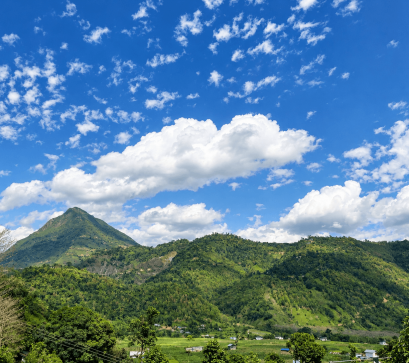
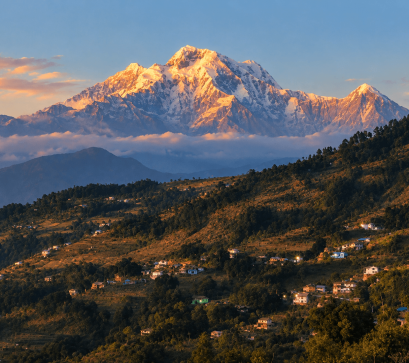
Salyan District as a whole spans hill terrain that ranges from lower Siwalik hills in the southwest to subtropical and temperate zones further north, drained by the Sharad Khola and Bheri rivers. Kapurkot's own microclimate, spanning river valleys to mid-hill elevations, allows near year-round cultivation. A local survey of 170 households found a clear warming trend between 1981 and 2022, with winter temperature increases outpacing summer ones, alongside declining monsoon rainfall, a pattern farmers in the area are already adapting to.
Agriculture is Kapurkot's defining feature. It operates one of the busiest rural markets in the district and is the site of Nepal's National Ginger Research Programme, run under the Nepal Agricultural Research Council (NARC), which developed the Kapurkot-1 and Kapurkot-2 ginger varieties for export.
Farmers also grow turmeric, garlic, Timur (Szechuan pepper), off-season cauliflower, cabbage, tomatoes, radish, and citrus fruits. Produce reportedly supplies cities including Dang, Nepalgunj, and Pokhara, with some exported to India [specific export volume of "5,000 metric tons" appears in only one source and could not be cross-verified].
Culturally, the area is largely Khas-dominated, with Nepali spoken as a first language by over 98% of the district. Nearby attractions include the Mulpani Botanical Garden, home to native sub-tropical and temperate flora and medicinal herbs; Kupinde Lake, a forest-ringed lake sometimes called Salyan's "Mini Rara"; and two hilltop temples, Chhatreshwari (where animal sacrifice is prohibited) and Khairabang, dedicated to Goddess Bhawani Bhuwaneswari. The area has 28 schools, mostly public, according to CEHRD data.
Travellers passing through should carry cash, as Kapurkot functions primarily as a market town rather than a tourist base, and expect limited formal accommodation. The source material does not specify permit requirements or a recommended visiting season, so those planning a trip should confirm current road and lodging conditions locally before travelling further into Karnali.