You've landed in Kathmandu, cleared immigration, collected your bag, and the first thing you want, before the taxi, before the hotel, before anything, is a working phone. Good news: getting connected in Nepal is one of the easiest parts of the whole trip. It's also cheap enough that most travellers spend less on a month of mobile data here than they would on a single coffee back home.
Here's everything you need to know before you land, written the way we'd tell a friend.
The fastest option is right there in the arrivals hall at Tribhuvan International Airport in Kathmandu. Once you're through customs, you'll find Ncell and Nepal Telecom (branded as NTC or "Namaste") counters sitting side by side, usually staffed for every international arrival, including the late-night ones. If you'd rather skip the post-flight queue, both operators also have stores scattered through Thamel and other tourist areas in the city, generally at slightly lower prices than the airport.
Pokhara's airport has counters too, if that's your entry point instead.
Nepal takes SIM registration seriously, so come prepared:
The registration form itself takes a few minutes to fill out, and Nepalese rupees are the safest bet for payment, though a Visa or Mastercard usually works too.
This is where Nepal genuinely surprises people. A SIM card itself runs to roughly NPR 100–150 (well under a dollar), and data packages built for short stays are similarly gentle on the wallet. Ncell's tourist-oriented plans, for instance, land somewhere around NPR 500 for about 10GB over a week, climbing to NPR 700 for 20GB over two weeks, with longer 30- and 90-day packages available if you're staying a while. NTC's own tourist packs sit in a comparable range. Either way, you're looking at a few dollars for enough data to navigate, map your trek, and post the odd photo home.
This is the real question, and the honest answer is "it depends on where you're going."
Ncell is Nepal's largest private operator and generally the stronger performer in cities: Kathmandu, Pokhara, and Chitwan see reliable 4G and, increasingly, 5G coverage. If your trip is mostly urban sightseeing, Ncell is the simpler choice.
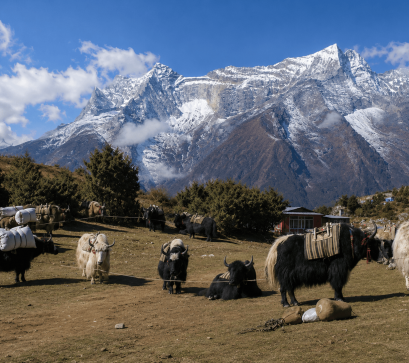
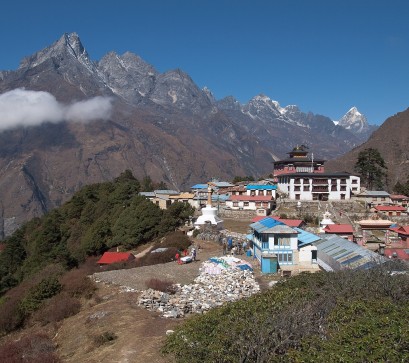
NTC (Nepal Telecom), being the state-backed network, tends to reach further into the hills where commercial coverage would otherwise be thin. If you're heading toward Everest Base Camp, the Annapurna Circuit, or anywhere signal becomes a genuine question rather than an assumption, NTC's network typically holds on longer at altitude.
Plenty of trekkers simply buy both – the cost is so low that carrying two SIMs (or using a dual-SIM phone) is a common, sensible hedge rather than an extravagance.
Both major carriers now offer eSIM options for compatible phones, which spares you the fuss of swapping physical cards and losing your home SIM in a jacket pocket somewhere over the Himalayas. Ncell's tourist eSIM can be requested directly at the airport counter, and activation is generally straightforward if your device is unlocked and eSIM-capable. It's worth checking compatibility before you fly, since not every phone, particularly some regional or budget models, supports it.
Top-ups are easy to find once you're set up – scratch cards at almost any small shop, the operator's own app if you have an international card, or any authorised retailer. If you're trekking, buy your data package before you leave the last big town, since prices and availability thin out fast once you're on the trail. And keep your passport handy for the first day or two – Nepal's registration process is simple, but it is consistent, and nobody wants to be that person holding up the queue.
Connectivity in Nepal used to be something travellers braced for. These days, it's one less thing to worry about – which, frankly, leaves more headspace for the mountains.