Thawang sits at 2,724 meters in Rolpa District, far from Nepal's usual trekking circuits, yet it holds a place in the country's history as the birthplace of the 1996–2006 Maoist insurgency. Today it is opening up as a destination in its own right, drawing travellers curious about both its past and its mountain culture.
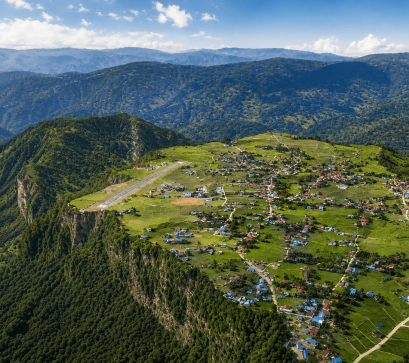
The village is the administrative center of Thabang Rural Municipality, formed in 2017 from the merger of the former Thawang, Mirul, and Uwa VDCs, spanning 191.07 square kilometers. It lies about 74 kilometers northeast of Liwang, the district headquarters, and is reached on foot via the Guerilla Trek. In the local Kham language, "Thva" means meadow and "wang" means open plain, describing the settlement's position in the hills.
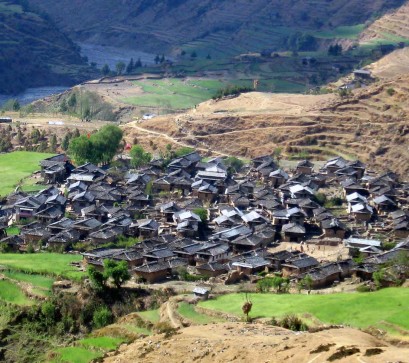
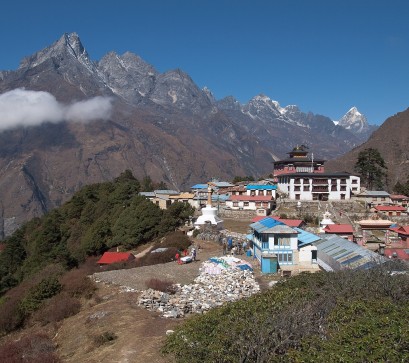
The village itself is a tight cluster of around 300 houses, built from local stone, timber beams, and heavy wooden-plank roofs on the mountain slope. From Thawang, the trail continues toward Jaljala Pass, a 3,100-meter ridge known for the Lord Baraha temple and open Himalayan views, giving trekkers a natural next stop after visiting the village.
Thawang is home to the Kham Magar community, an indigenous mountain people with their own language and traditions distinct from lowland Magar groups. Visitors can experience this firsthand during Bhume Puja, an Earth Worship festival held in mid-June with offerings to soil, water, and forest, accompanied by days of tribal dancing. Local women continue to weave cloth from Allo, or Himalayan giant nettle fiber, a craft that can be seen up close in the village homestays.
The insurgency is what put Thawang on the map, and its scars are still visible. Almost every household in the village served as a rebel shelter during the war, and Thawang paid for it with 33 local deaths and the burning of 21 traditional homes, including during a 2002 military crackdown. Nearby Jelbang, about 70 kilometers from Liwang, suffered even more, losing 73 residents believed to be the highest toll of any single community in the conflict. Traditional tools and wooden-roofed houses from that period remain part of both villages' everyday landscape.
For travellers, the appeal today is the Guerilla Trek itself: multi-day hiking through Rolpa's hill villages, community homestays, and simple local food like millet and buckwheat. There are no hotels here, accommodation runs through homestays and small local eateries, and the rural municipality's literacy rate stands at 73.33%, with 24 schools serving the area.
Anyone heading to Thawang should carry cash, sturdy trekking gear, and clothing suited to high-altitude weather, and should check trail and homestay conditions locally before setting out, since the region remains remote and infrastructure is still developing.

.jpg)