Kathmandu Durbar Square's pagodas draw most of the attention, but a handful of Krishna temples scattered across the valley get comparatively little notice despite their age and craftsmanship. Five stand out, ranging from a 17th-century stone monument to a modern devotional complex:
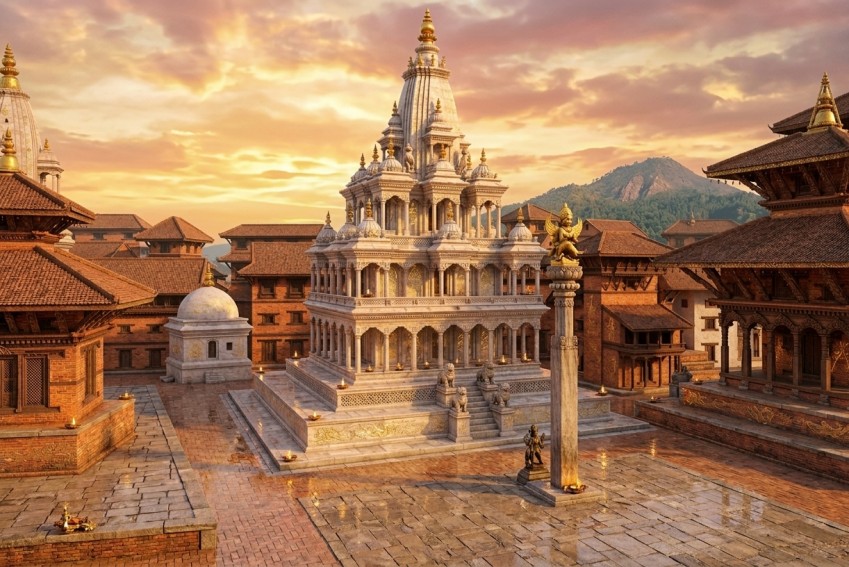
Built entirely from carved stone in 1637, unusual for a valley where most temples rely on brick and timber. It carries 21 golden pinnacles, with pillars carved with scenes from the Mahabharata and the Ramayana running along its tiers. The temple reflects the artistic spirit of Lalitpur, a region known for craftsmanship, where the carving works as decoration and as a way of honoring Krishna's presence at once.
One of the oldest Krishna shrines in the city core, dating to the 16th century and predating the Patan temple by roughly a hundred years. Built in the wooden style typical of the old city, it's known for intricate craftsmanship, including erotic carvings on the roof struts a feature repeated on several temples in that square.
Known locally as Hare Krishna Dham, this is a modern complex tied to the international Hare Krishna movement rather than a historic monument. It runs a daily schedule of kirtans and spiritual classes, and functions less as a heritage site and more as an active community hub for Krishna consciousness and devotion.
An ancient neighborhood shrine open around the clock for local devotees, tucked into one of the valley's old localities. Its heritage feel comes from generations of continuous, everyday worship rather than any single architectural claim, and visiting it gives a quieter, more contemplative picture of neighborhood devotion, away from the crowds at the Durbar Square temples.
Rooted in the Krishna Pranami tradition and recognizable by its distinct golden roof. It's quiet for most of the year, with its courtyard used for meditation and small spiritual gatherings, but draws large crowds during the annual Janmashtami festival, when the same courtyard fills with devotees marking Krishna's birth.

.jpg)