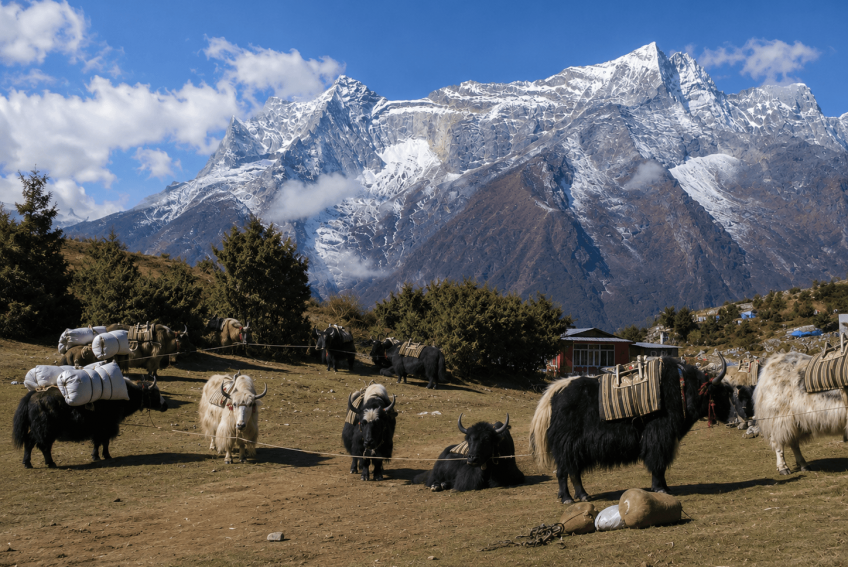
Numbur Cheese Circuit, a newer route established inside the Gauri Shankar Conservation Area of Ramechhap District. The trail takes its name from Mount Numburchuli (6,959m) and from the yak cheese factory built at Loding, near Thodung, in 1957.
Most itineraries run 13 to 15 days between Shivalaya and Those, though it can be compressed to around 10 days or extended toward nearby glaciers and peaks; total distance varies from roughly 75 to 150 km depending on the exact route and side trips taken, with maximum elevations reaching 4,515–4,880m at Panchpokhari and Gyajo La.
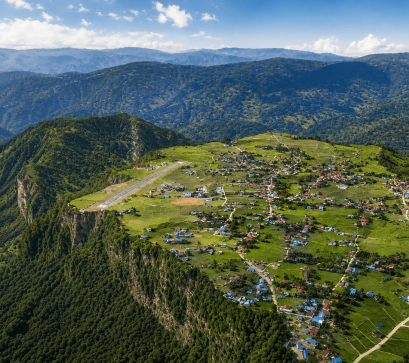
The route climbs from terraced fields and subtropical forest near the Khimti River through rhododendron forest and alpine pasture, passing glaciers including Likhu, Likhu Nup, Bigphere Go, and Surmoche.
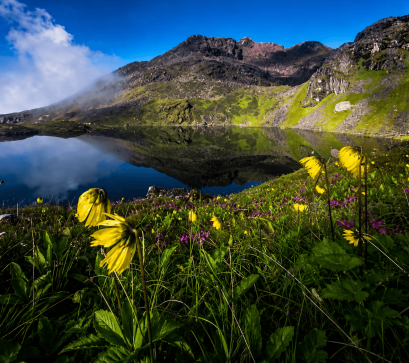
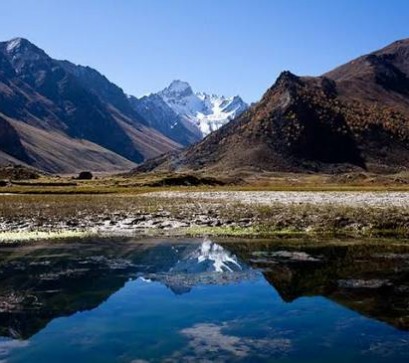
It connects a string of sacred, high-altitude lakes Jata Pokhari, Panch Pokhari, Dudh Pokhari, Bhale Pokhari, and Baula Pokhari set beneath peaks such as Gauri Shankar, Numburchuli, and Ramdung. Weather turns quickly above 4,000m, and the monsoon months (June to mid-September) leave the road to Shivalaya closed and camp shelters muddy.
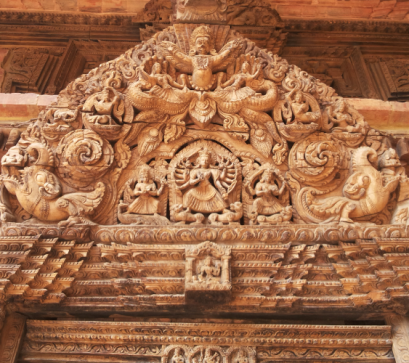
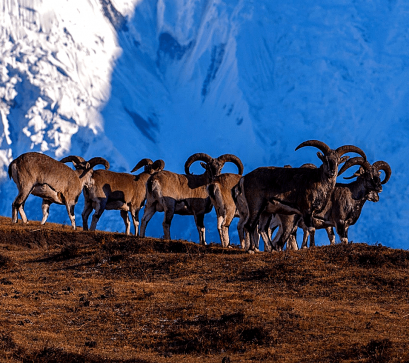
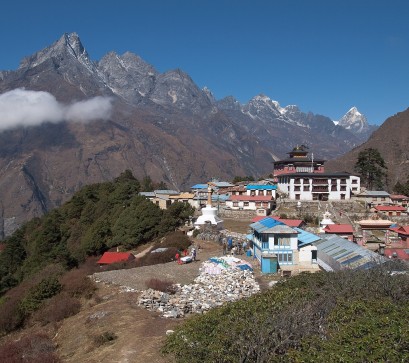
Rhododendrons bloom in April and May, and the conservation area supports musk deer, Himalayan tahr, eagles, and, occasionally, snow leopards. The trail passes through villages belonging to Sherpa, Tamang, Thami, Hyolmo, and Newar communities, and the sacred lake of Jata Pokhari draws an estimated 3,000 Hindu pilgrims during the Janai Purnima festival.
Lodges and teahouses serve Jiri, Shivalaya, Deurali, Bamti-Bhandar, and Gumdel, while Kharare, Lahaksewar, and Kyam offer community-run homestays. Above Khahare, the land is uninhabited, and trekkers must camp for four to five nights at sites such as Panipakha, Maanedanda, Jata Pokhari, and Ngeju, using basic stone-and-timber shelters where available. No permits or fees are required.
The best trekking windows are March to June and September to December. Buses to Shivalaya leave daily from Kathmandu's Old Bus Park, taking 6–8 hours along the Arniko Highway and the Lamosangu-Jiri Road, with a lunch stop at Mude Bazaar.
Trekkers should carry enough Nepali cash for the entire route, as there are no ATMs beyond the main road, along with water purification tablets, layered clothing, strong sun protection, and a personal first-aid kit.
Anyone tackling the camping stretch needs a tent, sleeping bag, stove, and food for the section between Khahare and Ngeju, where no restaurants or permanent settlements exist. Comprehensive travel insurance covering altitudes up to 5,000m and helicopter evacuation is essential.

.jpg)
.jpg)