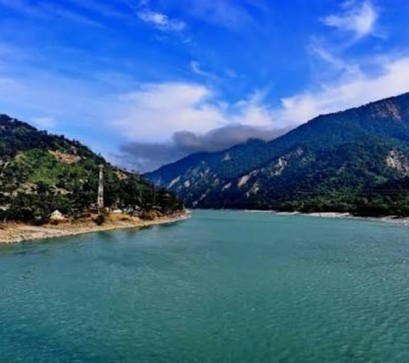
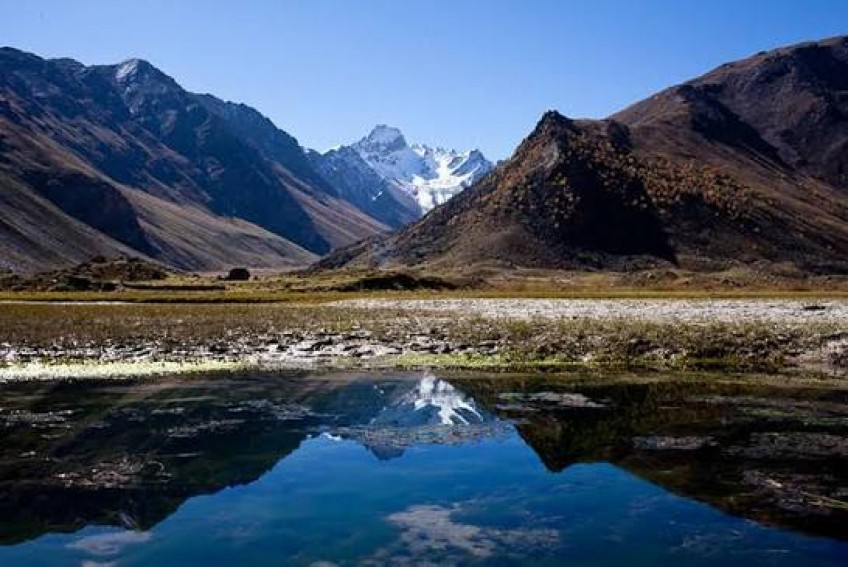
Located in the far northwestern corner of Humla District, Karnali Province, Limi Valley is one of Nepal’s most remote and untouched Himalayan treasures. Bordering Purang County in Tibet, China, its high altitude and isolation have preserved an ancient way of life, where time moves slowly and the landscapes feel almost frozen in time.
The name "Limi" comes from the Tibetan words Le (land between two rivers) and Mi (people) , a fitting description of the community that first settled here. Tibetan migrants from the plateau built three villages that still stand today: Halji (3,700m), Dzang or Jang (3,920m), and Til (4,100m), continuously inhabited for at least a thousand years.
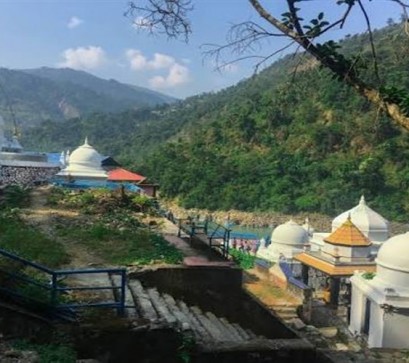
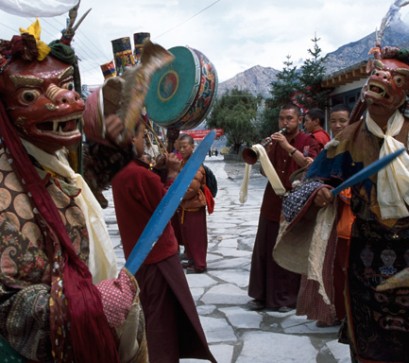
At the center of Limi's identity is the Halji Rinchenling Monastery, believed to have been built by the 11th-century Buddhist scholar Lotsawa Rinchen Zangpo. Following the Drikung Kagyu school of Tibetan Buddhism, it closely resembles the famed Tabo Monastery in India's Spiti Valley. The Limey people continue to practice Tibetan Buddhist and Bon traditions, with a small gonpa in each village.
Long before it became a trekking destination, Limi Valley was a vital trans-Himalayan trade route linking Tibet, Nepal, and India, with traders exchanging Tibetan salt, wool, and gold for Nepali grains. Herders practiced seasonal pastoralism across passes like Lapche La. Historically, the Limey paid land taxes to Nepal while keeping religious ties to monasteries in Ngari, Tibet, a rare dual allegiance shaped by geography rather than modern borders.
Reaching Limi Valley is an adventure in itself. Travelers first fly or drive to Simikot, the headquarters of Humla District, then trek for several days along one of two routes either via Hilsa along the Humla Karnali River (5–7 days), or over the dramatic 4,995m Nyalu Lagna pass (4–5 days).
Because it lies in a restricted border area, visitors need a special controlled area permit arranged through a registered trekking agency. The best time to visit is between May and mid-November, when the high mountain passes are free of heavy snow.
Limi is also a haven for rare Himalayan wildlife, including the snow leopard, Himalayan wolf, Tibetan gazelle, kiang, and even the wild yak once thought extinct in Nepal until it reappeared here in 2014. From the Lapcha La pass, clear-day views stretch across the border to Lake Manasarovar and Mount Kailash, a sight that has led travelers and spiritual teachers alike, including Zen teacher Joan Halifax and Indian guru Sadhguru, to describe Limi as a real-life Shangri-La.
For those seeking a Himalayan journey far from crowded trails, Limi Valley offers something increasingly rare: an ancient culture, sacred landscapes, and silence, all in one of the last hidden corners of Nepal.

.jpg)
.jpg)