Most people know Sherpas as the guides who make Everest expeditions possible. Fewer know that a Sherpa's own name can reveal the day they were born, or that their bodies carry a genetic trait inherited from an extinct human relative. Here are seven facts about Sherpa culture worth knowing before your next trip to the Khumbu.
Traditional Sherpa names often correspond to the seven days: Nima for Sunday, Dawa for Monday, Mingma for Tuesday, Lhakpa for Wednesday, Phurba for Thursday, Pasang for Friday, and Pemba for Saturday. A local lama traditionally confirms the name and the date, since it is believed to place the child under the protection of that day's deity.
The name comes from the Tibetan words "shar" (east) and "pa" (people). It reflects their migration route: Sherpa ancestors crossed from eastern Tibet into Nepal's Solu-Khumbu region roughly 500 years ago, settling in the valleys beneath Everest.
Sherpa society was traditionally organized around exogamous clans that held communal land under a system called kipat, which was dissolved in 1949. Many families used their clan name, such as Lama, as their surname. Over time, "Sherpa" itself became the near-universal family name, partly because it carried recognition and opportunity as trekking tourism grew.
Genetic studies have linked Sherpa high-altitude endurance to variants in the EPAS1 gene, which regulates how the body responds to low oxygen. Researchers believe this variant was inherited through Denisovans, an extinct hominin population, and was passed down through Tibetan ancestors.
Sherpas call the mountain Chomolungma, often translated as "Mother of the World." It is regarded as a sacred, living entity rather than simply a peak to be climbed, and many clans recognize their own protector mountain within the range.
Kami Rita Sherpa, born in Thame village in Solukhumbu, reached the Everest summit for the 32nd time in May 2026, extending a world record he has held since 2018. That same season, Lhakpa Sherpa reached the summit for the 11th time, the most of any woman in history.
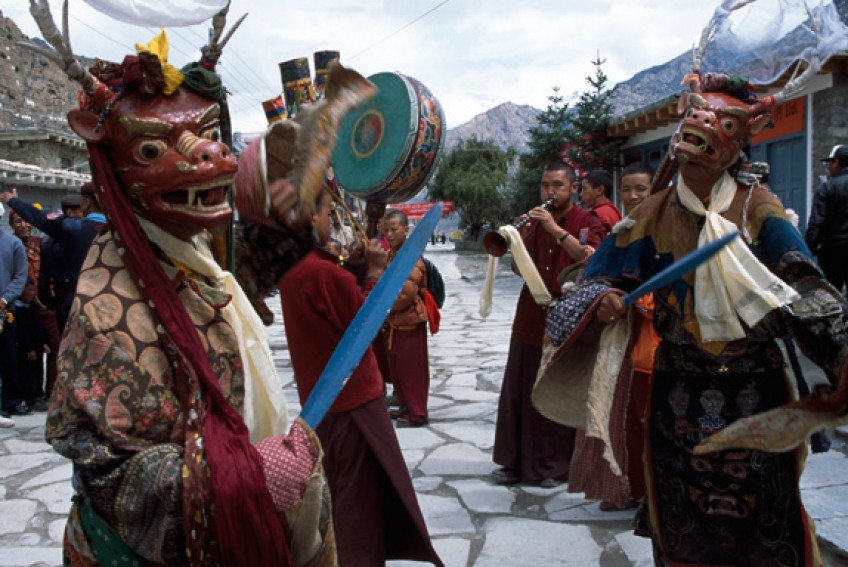
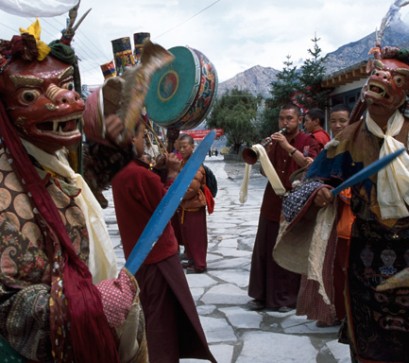
Major celebrations such as Losar, the Sherpa new year, and Mani Rimdu, a masked dance festival performed at monasteries like Tengboche, are timed to the lunar cycle rather than fixed calendar dates. That is why their dates shift slightly from year to year.
Sherpa culture carries far more depth than its association with mountaineering suggests. Their naming customs, clan history, and even their biology tell a story shaped by centuries in one of the world's harshest environments, long before Everest made the name famous worldwide.

.jpg)