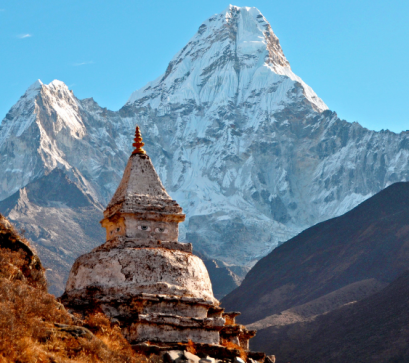
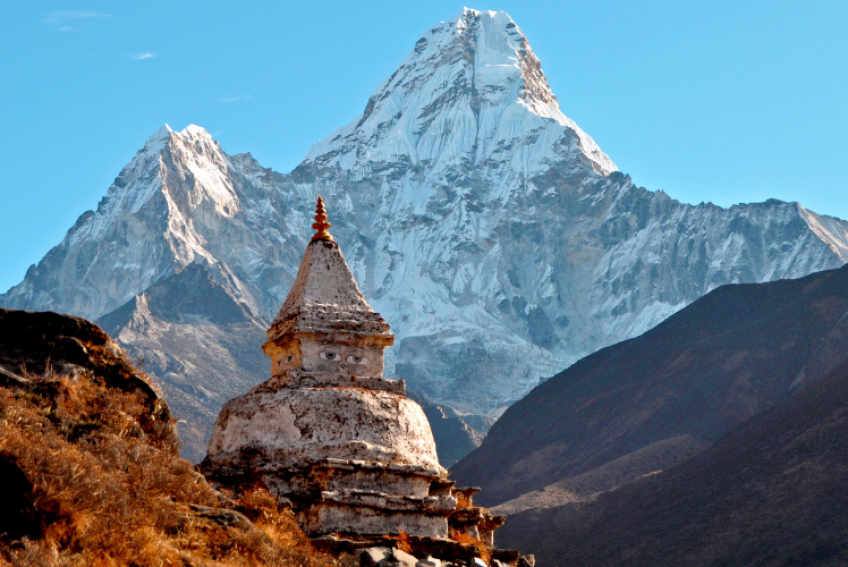
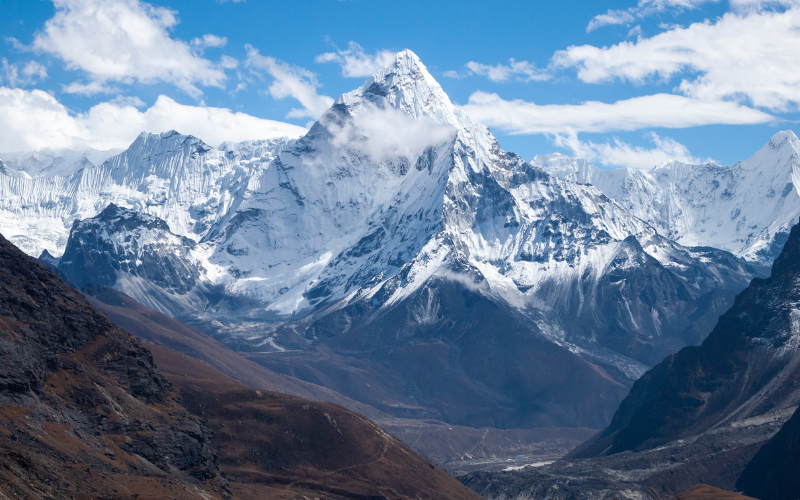
Standing tall in Nepal’s Khumbu region, Ama Dablam is often referred to as the “Matterhorn of the Himalaya” due to its striking, symmetrical form. At approximately 6,812 metres, it is not the highest peak in Nepal, but it is widely regarded as one of the most beautiful.
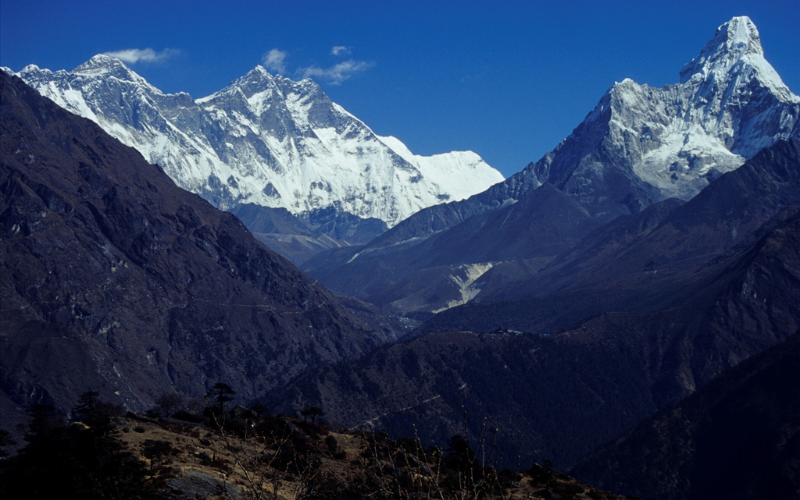
Located within the broader Himalayan range near the Everest region, Ama Dablam dominates the skyline of trekking routes leading towards Everest Base Camp, making it a constant visual companion for travellers exploring the eastern Himalaya.
Geographical Significance
Ama Dablam rises sharply above the Dudh Koshi Valley and is part of the Mahalangur Himal sub-range. The mountain’s distinctive shape is formed by a long ridgeline with a hanging glacier on its southwest face—often described as the “dablam” or “mother’s necklace,” which inspired its name.
Its prominence makes it a key landmark for trekkers moving through the Khumbu region, especially within the boundaries of the culturally and ecologically significant Himalayan conservation landscape.
Climbing Ama Dablam
Ama Dablam is considered a technical peak rather than a trekking mountain. Climbers face steep rock, ice, and mixed terrain, requiring advanced mountaineering skills.
Key aspects of the climb include:
Despite its difficulty, it remains a sought-after objective due to its aesthetic appeal and rewarding summit views.
Cultural and Spiritual Context
For local Sherpa communities, Ama Dablam is more than a physical landmark—it holds cultural and spiritual importance. The mountains of the Khumbu are often seen as sacred, and climbers are expected to show respect for local traditions and beliefs while undertaking expeditions.
The surrounding villages, monasteries, and prayer flags contribute to a deeply spiritual trekking experience that blends nature and culture.
Best Time to Visit or Climb
The most favourable seasons are:
Also Read