Long before electricity illuminated the attics of Kathmandu Valley and modern apartments replaced traditional Newar homes, people believed they shared their houses with an unseen resident.
Not a ghost.
Not a god.
But something in between.
It was called the Khyak.
A mysterious, hairy, ape-like spirit deeply woven into Newar folklore, the Khyak is believed to inhabit households throughout the Kathmandu Valley, quietly influencing the fortunes of the families within. Even today, stories of Khyak continue to be passed down through generations, surviving in whispered tales, rituals, temple art, and cultural memory.
Known as Khyāh, Khya, or Khyak, this mythical being occupies a unique place in Newar belief. Unlike many supernatural creatures that are exclusively benevolent or malevolent, the Khyak exists in dual forms—one blessing and the other cursing. It is often described as short, stout, hairy, and human-like, lurking in dark corners, storerooms, and attics.
For centuries, Newars have believed that every household possesses either a White Khyak or a Black Khyak, but never both at the same time.
The nature of the Khyak determines the fate of the home it inhabits.
The White Khyak is considered a guardian spirit of abundance.
In traditional belief, it protects the household's wealth, blessings, and wellbeing. Families blessed with a White Khyak are said to enjoy "dhan aarjan"—the accumulation of wealth, successful harvests, healthy family members, and overall prosperity. The spirit is often associated with fortune and is believed to watch over grain stores, valuables, and household treasures.
Many elders would say that a hardworking, harmonious household naturally attracts the favour of a White Khyak.
Its presence is rarely seen, but its blessings are felt.
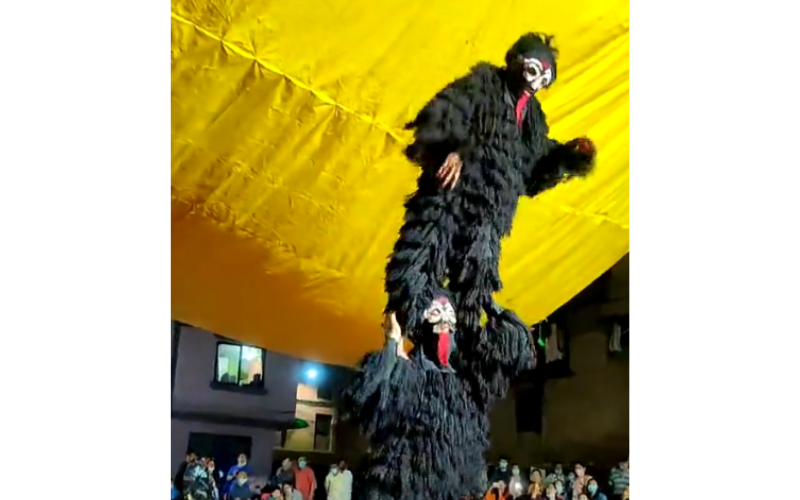
In contrast, the Black Khyak embodies "dhan naas"—the loss of wealth and fortune.
Homes inhabited by a Black Khyak are believed to suffer recurring hardships, illness, financial difficulties, family disputes, and persistent bad luck. Unlike the White Khyak, which nurtures prosperity, the Black Khyak slowly drains the household of its wellbeing.
Yet despite its feared reputation, the Black Khyak is not considered evil in the conventional sense.
It is regarded as a sacred spiritual force—a reflection of imbalance within the household itself.
One of the most fascinating aspects of Khyak lore is the belief that these spirits are shaped by the actions of the people living in the house.
According to traditional understanding, the habits, rituals, morality, and conduct of household members determine which Khyak resides there. A family that honours traditions, maintains harmony, and fulfils religious obligations may invite the blessings of a White Khyak. Neglect, discord, greed, or improper conduct may attract the Black Khyak instead.
In this sense, the Khyak becomes more than a supernatural being.
It serves as a moral mirror, reflecting the collective behaviour of the household.
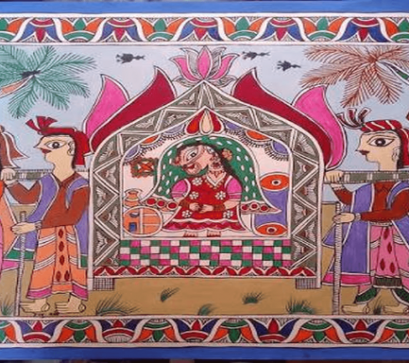
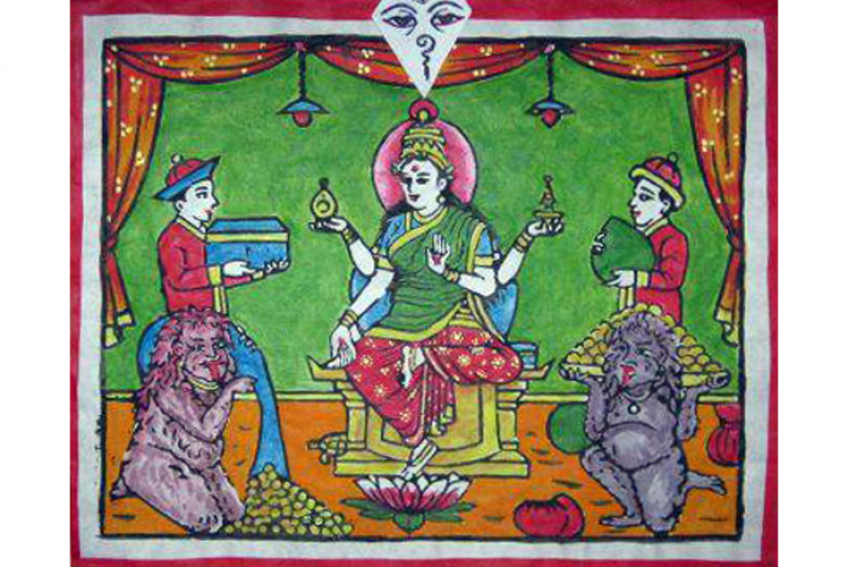
In Newar culture, Khyaks are also linked to Lakshmi, the goddess of prosperity. Traditional paintings often depict Khyaks guarding bags of coins and treasures, symbolising their role as protectors of wealth. Household Khyaks are said to dwell near places where valuables and grains are stored, reinforcing their association with abundance and fortune.
This connection explains why many families viewed the presence of a White Khyak not with fear, but with reverence.
Traditional stories describe Khyaks as nocturnal beings that avoid bright light. They are believed to inhabit dark storerooms, attics, and hidden corners of old Newar houses. Some legends even suggest that the spread of electric lighting drove many Khyaks deeper into hiding.
Perhaps that is why sightings became rarer as Kathmandu modernised.
Or perhaps the Khyaks simply learned to stay out of sight.
Whether one believes in spirits or not, the Khyak remains one of the most enduring symbols of Newar folklore.
It represents an ancient worldview where prosperity and hardship were not merely matters of chance but were tied to the moral and spiritual health of a household. The White Khyak and Black Khyak remind us that fortune can be nurtured, misfortune can be invited, and every home carries an unseen energy shaped by the people who live within it.
So the next time you walk through an old Newar courtyard house and notice a dark attic above, remember the stories of the elders.
Perhaps the house has a Khyak.
And if it does, one can only hope it is the White one.
According to Newar folklore, every household is believed to be inhabited by either a White Khyak or a Black Khyak—and rarely both at the same time. The White Khyak is associated with dhan aarjan (wealth, prosperity, and good fortune), while the Black Khyak is believed to bring dhan naas (financial loss, hardship, and misfortune).
It is further believed that the Khyak's influence is stronger when it resides on the upper floor of a house. Thus, a White Khyak dwelling upstairs is considered especially auspicious, amplifying prosperity and blessings within the household. Conversely, a Black Khyak residing upstairs is regarded as highly inauspicious, as its negative influence is thought to be more powerful and far-reaching.
PC: Wikimedia Commons, Internet
Also Read