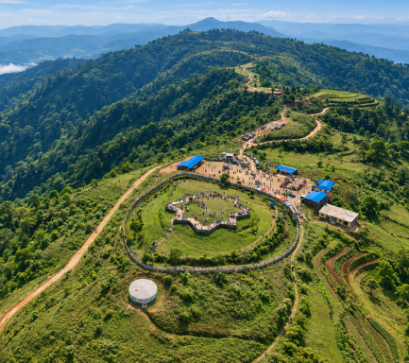
Hidden in the remote landscapes of Darchula in far-western Nepal, Uku Mahal is an ancient site whose ruins have fascinated locals for generations. Long believed to be the remains of a royal palace, the site is now revealing a different possibility. Recent archaeological discoveries suggest that Uku Mahal may have been a medieval Hindu temple complex rather than a king's residence.
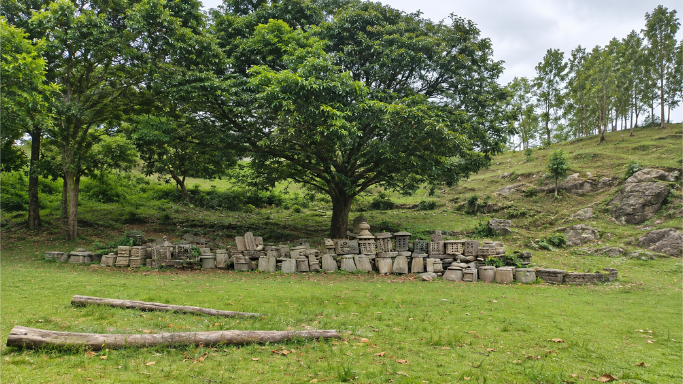
Located in Malikarjun Rural Municipality, Sudurpashchim Province, Uku Mahal is traditionally associated with the Katyuri and Pal rulers, who influenced parts of the western Himalayan region.
According to local historical accounts, Uku once served as an important political centre, while King Rajbar Bharati Pal is believed to have established a palace there before the 12th century.
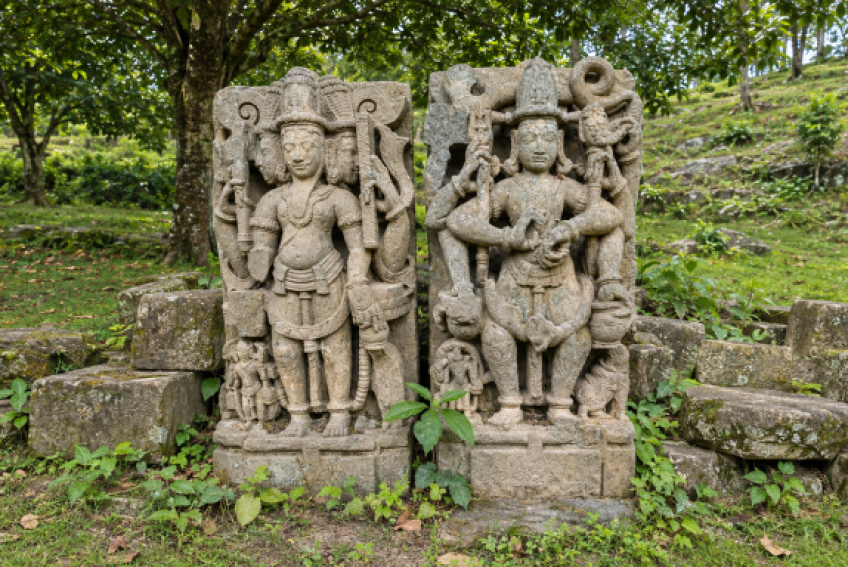
However, the identity of its original builders and the exact construction period remain uncertain. The scattered stone structures, inscriptions and carved sculptures offer valuable clues to the region's medieval history.
Nepal's Department of Archaeology has undertaken investigations at Uku Mahal since at least 2024, with a new excavation phase beginning in January 2025.
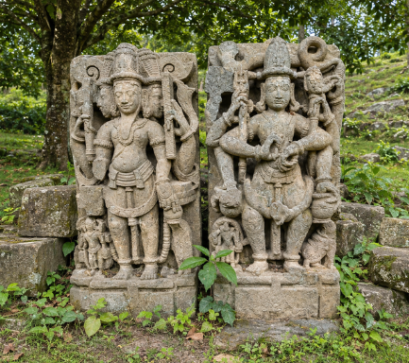
In April 2026, archaeologists reported discovering carved stone slabs, religious sculptures, fragments of temple spires, traditional stone water spouts, and stone figures depicting lions and Nandi bulls.
Most importantly, researchers identified foundations resembling the Shikhara architectural style, commonly associated with Hindu temples.
These discoveries have raised questions about the site's original purpose.
According to archaeological officials, the structures may belong to a medieval temple complex dating approximately to the 14th or 15th century. Further research is required to establish their age and historical function.
Conservation efforts have gained attention as researchers work to document and protect the surviving remains.
In August 2026, Gorkhapatra reported that the Department of Archaeology had spent approximately NPR 26 lakh investigating the site over two years, with another NPR 12 lakh allocated for further work.
Local authorities have also expressed ambitions to develop Uku Mahal as a cultural tourism destination and pursue future UNESCO World Heritage recognition. However, the site does not currently hold UNESCO World Heritage status.
For travellers interested in Nepal's lesser-known heritage, Uku Mahal offers a fascinating connection to the country's medieval past.
Unlike established tourist attractions, the site remains an area of archaeological research. Visitors should confirm access conditions and photography permissions with local authorities before travelling.
Whether Uku Mahal was once a royal palace, a sacred temple complex, or a combination of both, its surviving ruins hold important clues to Darchula's history.
As investigations continue, this forgotten heritage site may reveal more about the civilisations that shaped far-western Nepal.