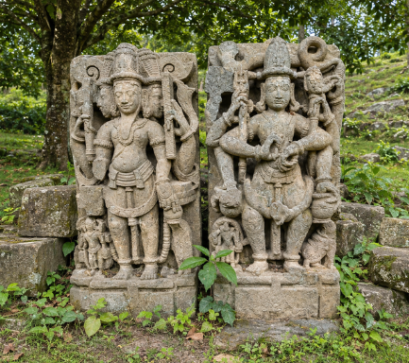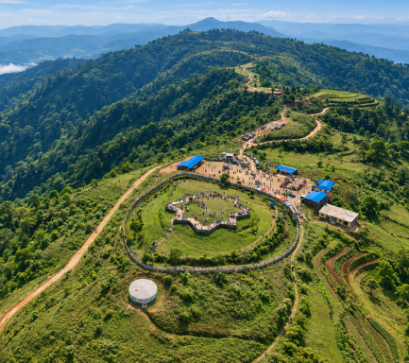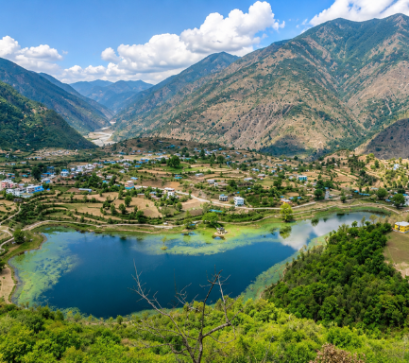
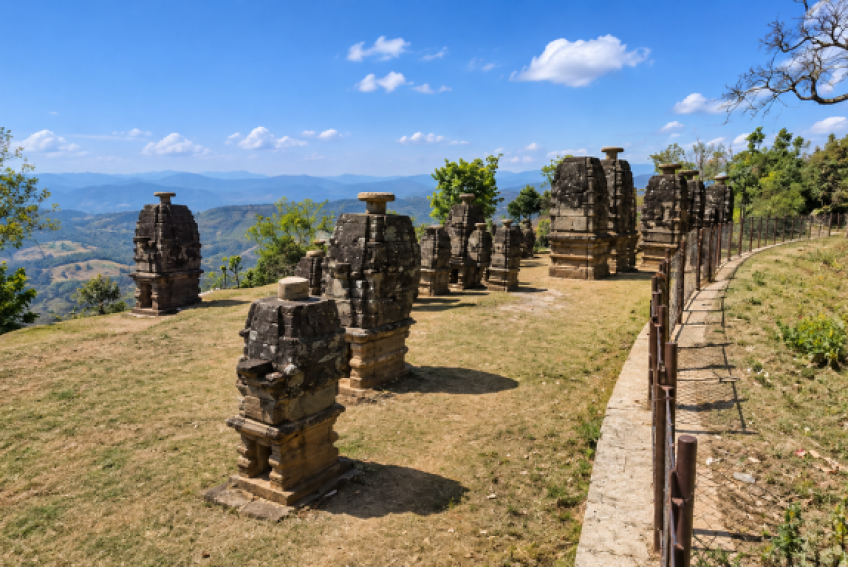
In the hills of Dailekh district in Karnali Province, 22 ancient stone monuments stand as reminders of a history that remains partly unexplained. Known as Bhurti Deval or the Bhurti Temple Complex, this archaeological site is located approximately three kilometres north of Narayan, the district headquarters. Although the monuments have survived for centuries, the identities of their builders and the exact circumstances of their construction remain unknown.
According to archaeological documentation by the Nepal Heritage Documentation Project, the Bhurti monuments were constructed between the 13th and 15th centuries, during the later Khasa Malla period and the early Raskoti dynasty.
Despite this historical context, no conclusive evidence identifies who commissioned or built the structures. Their arrangement and regional historical background suggest they may have served as memorial monuments, although their original purpose has not been definitively established.
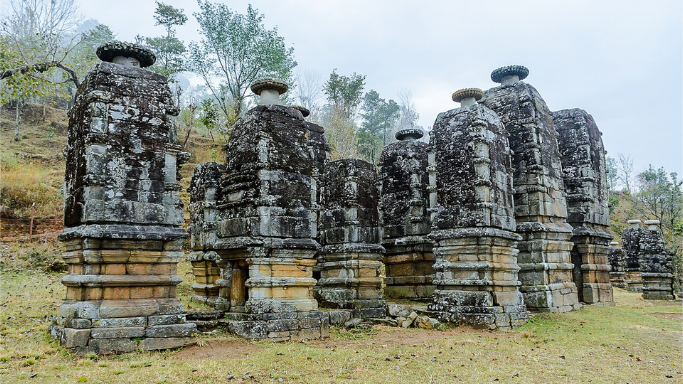
The complex contains 22 shikhara-style stone temples and a stone fountain. Built using dry-stone masonry, the monuments reflect the Western Malla architectural tradition associated with the medieval Khasa Kingdom.
The structures appear individually, in pairs and in groups of five, known as Panchadevala. Only one complete Panchadevala group survives, while two others have lost some of their original towers. Another distinctive feature is a pair of temples connected by a central pavilion, an uncommon arrangement in the Karnali region.
Their relatively simple, tower-like designs belong to a regional form of North Indian Nagara architecture known as simplified latina.
Unlike many ancient temples in Nepal, Bhurti Deval is not currently a place of regular worship. Researchers have not established a definite religious affiliation for the monuments, although similar structures elsewhere have associations with Shaivism.
On 30 January 2008, Nepal's Department of Archaeology submitted the Bhurti Temple Complex for inclusion on UNESCO's World Heritage Tentative List. It remains a tentative site rather than an inscribed World Heritage Site.
Beyond its architectural beauty, Bhurti Deval provides valuable evidence of medieval craftsmanship and the cultural history of western Nepal. Its similarities with monuments in Dullu and the Sinja Valley suggest wider historical connections across the former Khasa Kingdom.
For visitors interested in archaeology, history and lesser-explored destinations, Bhurti Deval offers a rare opportunity to discover a remarkable part of Nepal's past, where 22 surviving stone monuments still hold questions that historians have yet to answer.