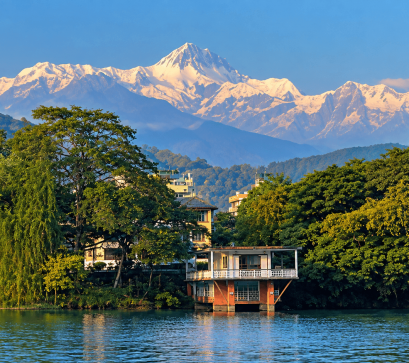
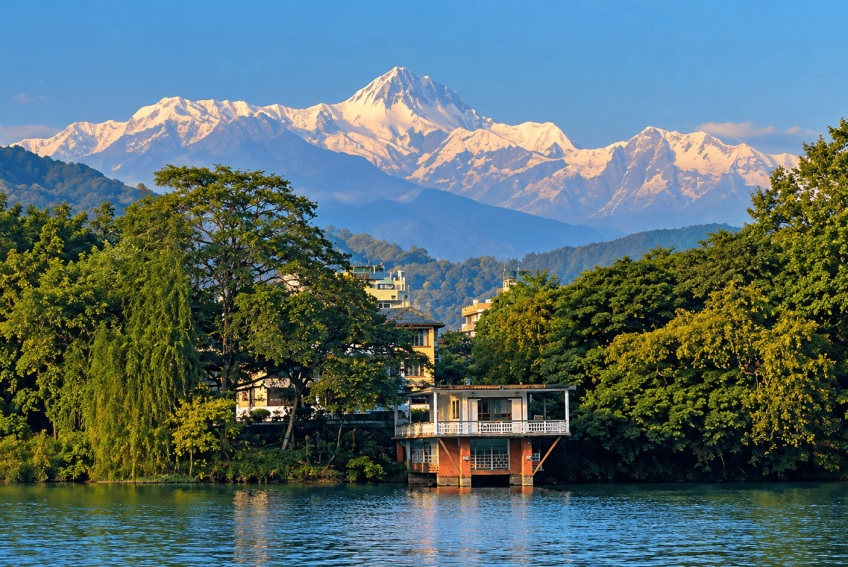
Sarangkot is Pokhara's best-known sunrise viewpoint, and mornings there often bring dense lines of spectators. Several other hills around the valley face the same peaks with far fewer people. The main subjects are Machhapuchhre (Fishtail) and the Annapurna massif, with Annapurna South, Hiunchuli and Dhaulagiri visible from some points.
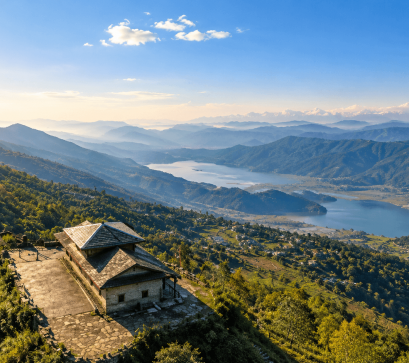
On the ridge just north of Lakeside, Methlang gives an angle similar to Sarangkot's. The frame takes in morning fog, the northern tip of Phewa Lake and Machhapuchhre above. It is a 20–30 minute drive via the Khapaudi/Methlang roads, or a short early hike from northern Lakeside.
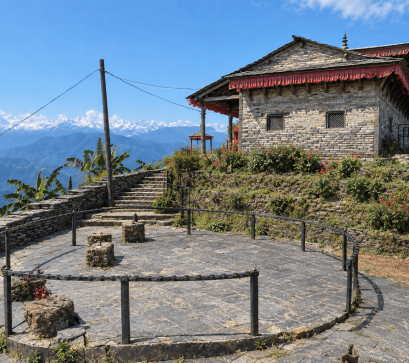
Northeast of the city, Kahun Danda has an old watchtower at the top with an open view of the Annapurna massif over terraced slopes. It is a 2.5-hour uphill walk from Mahendrapool or a 30-minute drive on a winding local road.
The ridge paths around the Shanti Stupa are busy by day but quiet at first light. Early mornings can bring reflections on Phewa Lake, with Annapurna South, Hiunchuli and Machhapuchhre behind. Cross the lake by boat at dawn or drive up the Raniban forest road, then climb a short flight of stairs.
Known for its giant Shiva statue, Pumdikot (about 1,500 m) is a 35–45 minute drive south-west of Lakeside, or a day hike via the Peace Pagoda. Its 360-degree view includes Dhaulagiri to the west and the main Annapurna crest.
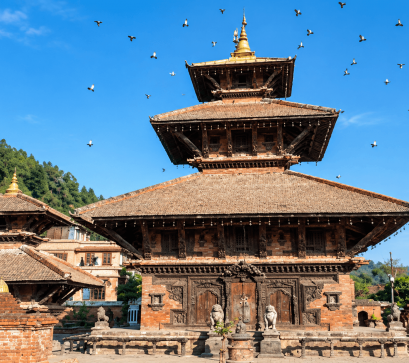
This historical village ridge (about 1,788 m) sits higher and further west than the traditional viewpoints. It is reached by road toward Naudanda and a short ridge walk.
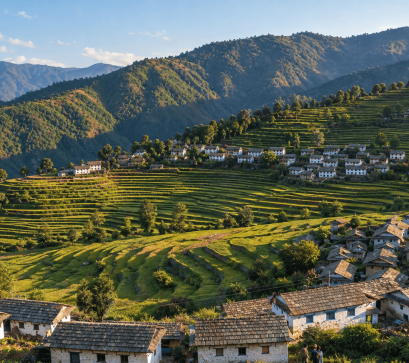
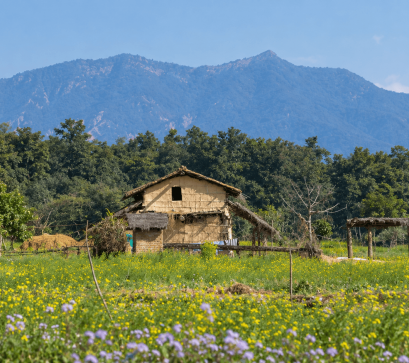
Outside the city basin, these spots sit on a ridge directly facing the Himalaya. Annapurna South and Machhapuchhre rise above stone-roofed Gurung homes. Getting there takes a one-hour drive to Kande or Phedi, then a 1.5-hour trail climb, so these spots are usually visited overnight. Ask permission before photographing villagers.
Mornings are most reliably clear in October–November and March–April. Conditions change quickly, so check Department of Hydrology and Meteorology forecasts. Arrive about 45 minutes early. In the pre-dawn blue hour, the snow peaks turn pink and magenta before direct light arrives.
A graduated neutral density filter balances dark valley foregrounds against bright snow. Bring a lightweight tripod, spare batteries and a power bank, as cold mornings drain batteries quickly. A wide-angle lens (16–35 mm) suits the panoramas, and a telephoto (70–200 mm) works for closer peak shots. On a smartphone, clean the lens and use HDR or panorama mode.