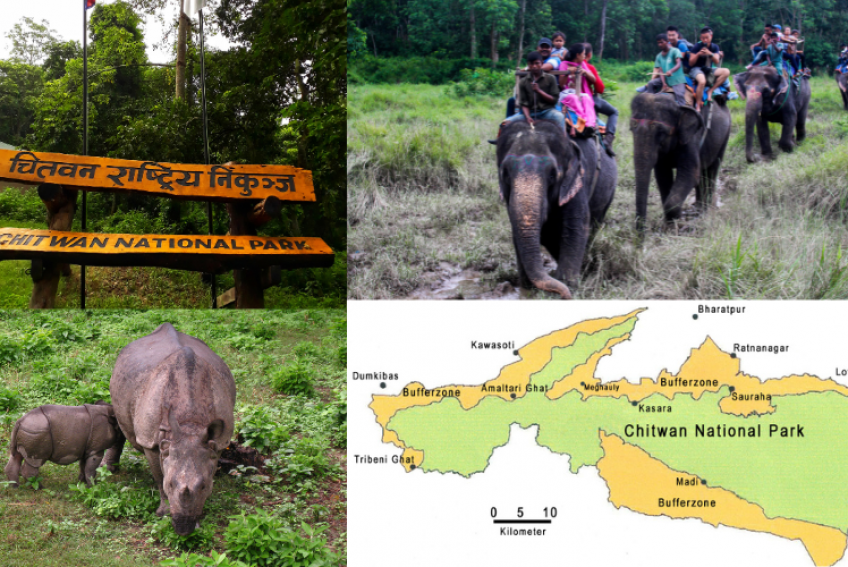
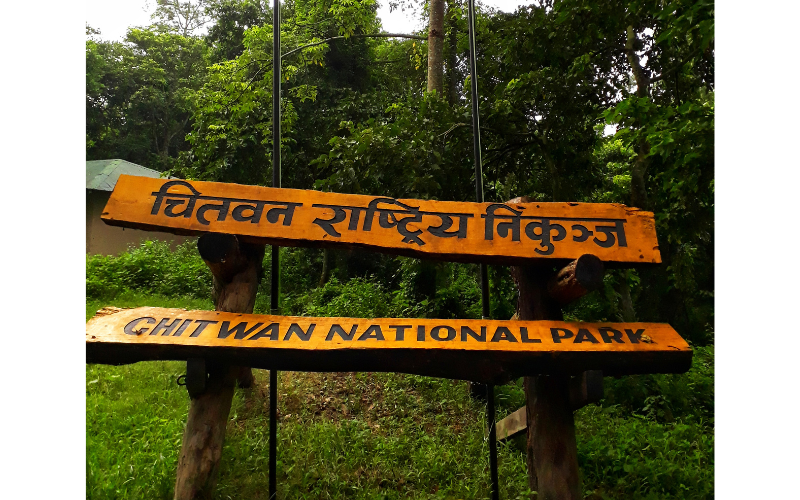
Established in 1973, Chitwan National Park is Nepal’s first national park and a UNESCO World Heritage Site. It lies in the subtropical lowlands of the Terai, forming one of the last remaining large tracts of natural floodplain ecosystems in the region.
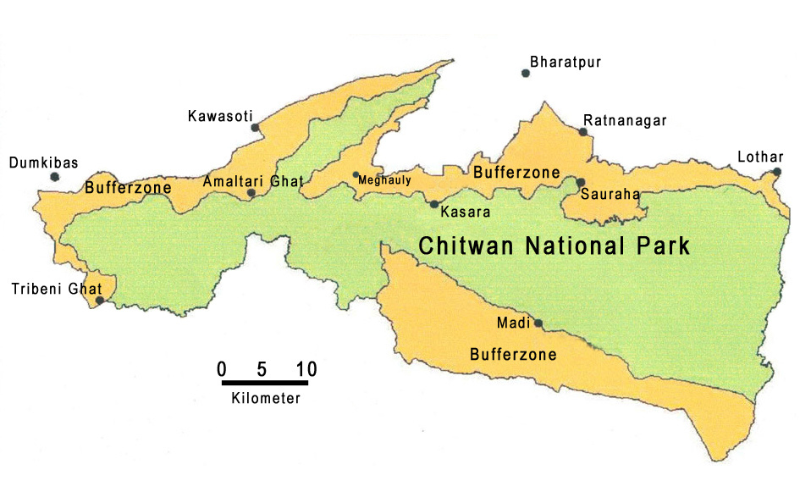
Covering about 932 sq. km (acc. to UNESCO data) while some local sources state 952 sq. km , the park protects a mosaic of forests, grasslands, rivers, and wetlands that support an exceptionally high level of biodiversity.
What makes Chitwan globally significant is not just its wildlife presence, but its role as a refuge for endangered species and a model for conservation success in South Asia.
Habitat Diversity: The Foundation of Life
Chitwan’s biodiversity is rooted in its varied habitats:
This habitat diversity creates ideal conditions for a wide range of mammals, birds, reptiles, amphibians, and fish.
Mammals: A Stronghold for Iconic Species
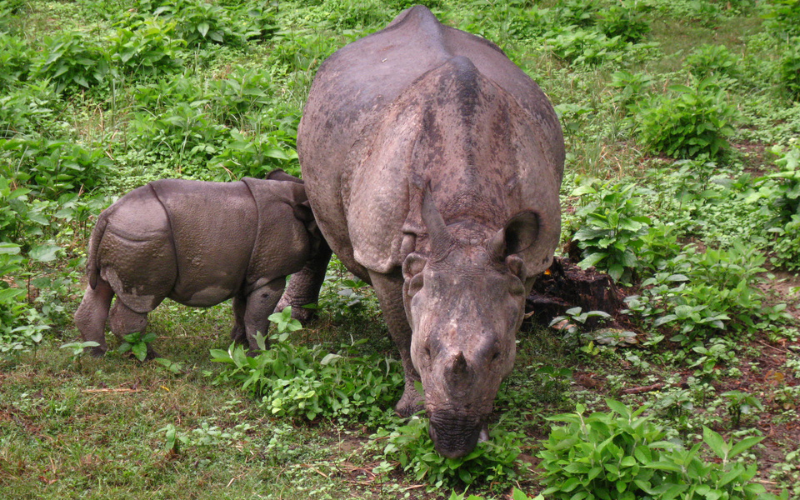
Chitwan is internationally recognised for protecting some of Asia’s most iconic mammals:
Key mammal species recorded:
The park supports around 68 mammal species, making it one of Nepal’s richest terrestrial wildlife zones.
Among them, the rhino population is one of the largest in the world, following decades of intensive conservation efforts.
Birds: One of the Richest Avifauna Regions in Asia
Chitwan is a globally important bird habitat with:
The mix of grassland and wetland ecosystems makes it one of the most important birdwatching destinations in South Asia.
Reptiles, Amphibians & Aquatic Life
Chitwan’s river systems and wetlands support diverse aquatic and reptilian life:
The Rapti, Narayani, and Reu river systems are critical ecological corridors.
Fish and Wetland Biodiversity
Chitwan also supports over 120 fish species, making its aquatic ecosystems highly diverse for a protected lowland park.
Floodplain dynamics and seasonal water flow create habitats that sustain both resident and migratory aquatic species.
Grasslands: The Engine of the Ecosystem
The park’s grasslands are not secondary landscapes, they are ecological engines:
Species like elephant grass can grow several metres tall, shaping visibility and movement patterns of wildlife.
Conservation Significance
Chitwan is globally recognised for:
It is also one of the most successful examples of wildlife recovery in South Asia, despite ongoing human-wildlife interface challenges in buffer zones.
Human-Wildlife Interface: A Modern Reality
Recent reports highlight increasing interaction between wildlife and nearby communities due to rising populations of rhinos and other large mammals. This reflects conservation success but also ongoing management challenges in surrounding buffer zones.
A Living Biodiversity Landscape
Chitwan National Park is not a static reserve but a living, evolving ecosystem where forests, rivers, grasslands, and wildlife interact continuously.
Its biodiversity is defined not only by species counts, but by ecological balance, seasonal rhythm, and long-term conservation resilience.
For Nepal, Chitwan remains both a success story and a reminder: biodiversity conservation is not preservation alone, it is coexistence.
Also Read