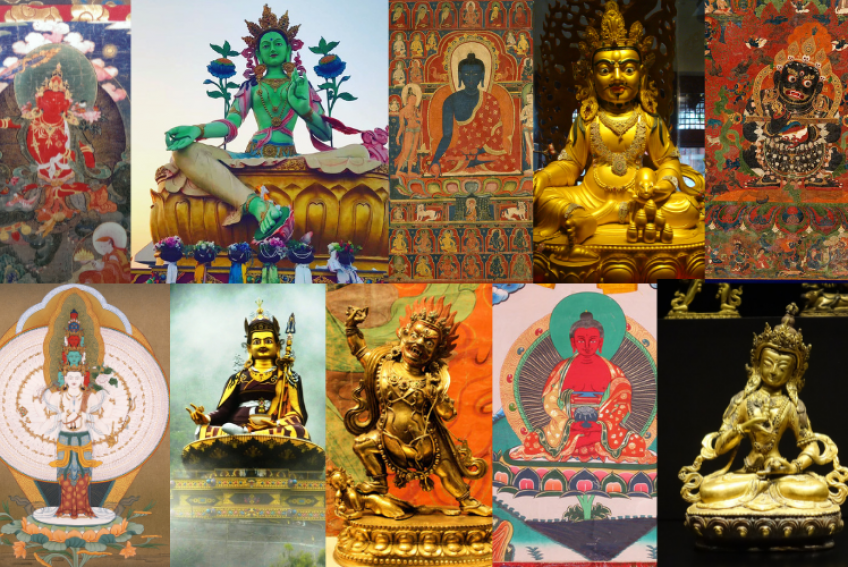
In the monasteries of the Himalayas, beneath the fluttering prayer flags and the scent of juniper incense, a rich spiritual universe unfolds through sacred figures that have guided Buddhist philosophy, ritual and daily life for centuries. From the wisdom-bearing Manjushree to the compassionate Green Tara, the deities of Himalayan Buddhism are deeply woven into the cultural and spiritual identity of Nepal.
To travellers wandering through the ancient courtyards of Boudhanath, the hidden bahals of Patan or the mountain monasteries of Mustang, these figures appear everywhere; painted on thangkas, carved into temple walls, spinning in prayer wheels and echoed through chants. Yet these beings are not “gods” in the conventional Western sense. In Vajrayana and Mahayana Buddhism, they are enlightened manifestations embodying compassion, wisdom, healing, protection and transformation.
The spiritual imagery of Tibetan and Himalayan Buddhism evolved through centuries of exchange between Indian Buddhism, local Himalayan traditions and Vajrayana philosophy. Nepal played a vital role in this evolution, particularly through the Newar Buddhist communities of the Kathmandu Valley, whose artisans, scholars and priests shaped sacred Buddhist iconography across the Himalayas.
In Buddhist thought, these deities are often understood as symbolic expressions of enlightened qualities. Some are peaceful and serene; others appear wrathful and fierce, symbolising the destruction of ignorance and ego.
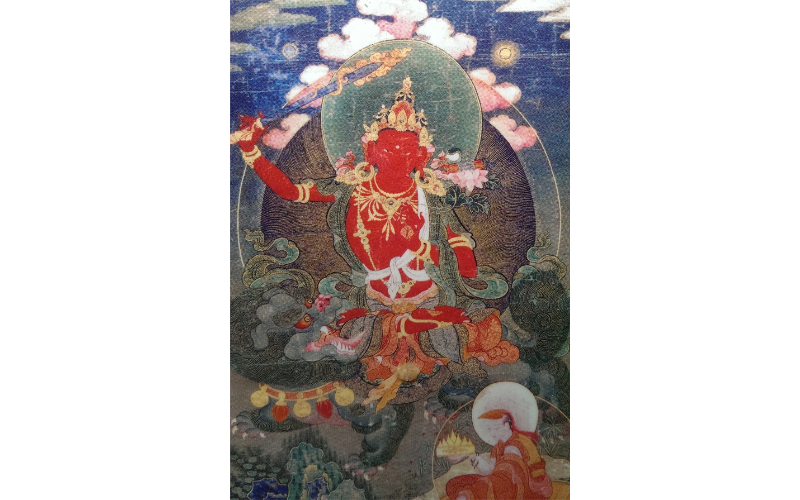
Among Nepal’s most cherished legends is that of Manjushree, the Bodhisattva of transcendent wisdom. According to local lore, the Kathmandu Valley was once an enormous lake. Manjushree is believed to have cut through the hills at Chobhar with his flaming sword, draining the waters and making the valley habitable.
He is usually depicted carrying a sword of wisdom in one hand and a sacred scripture resting upon a lotus in the other. His symbolism represents the cutting away of ignorance and illusion.
Even today, the story of Manjushree remains deeply embedded within Nepal’s cultural memory, connecting mythology with the physical geography of the valley itself.
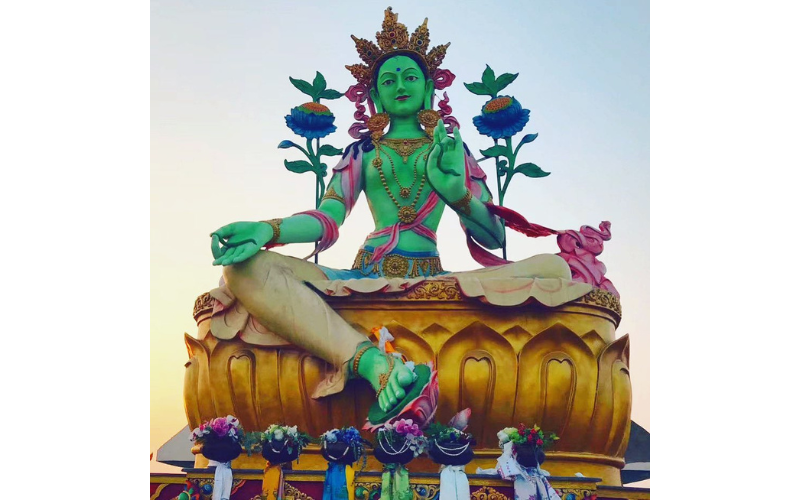
Green Tara is among the most beloved female deities in Himalayan Buddhism. Known as the goddess of swift compassion and protection, she represents active mercy and fearlessness.
Unlike meditative Buddhas seated in stillness, Green Tara is often portrayed with one foot extended forward, symbolising her readiness to aid those in suffering. Travellers exploring Tibetan monasteries in Nepal will frequently encounter her serene green form surrounded by lotus petals and sacred mantras.
Her counterpart, White Tara, represents healing, serenity and long life. White Tara is traditionally depicted with seven eyes: one on the forehead, palms and soles signifying compassionate awareness in every direction.
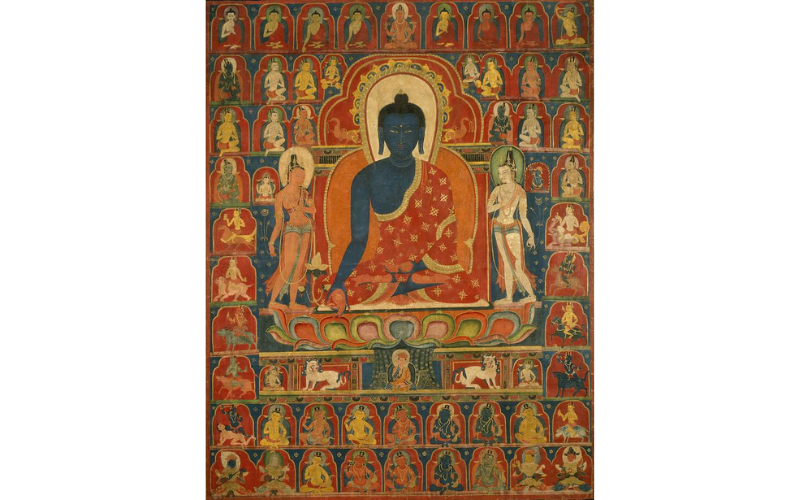
Deep blue in colour and holding a medicinal herb, Medicine Buddha symbolises healing of both body and mind. Monasteries across Nepal conduct prayers and rituals dedicated to him, especially during times of illness or hardship.
His presence reflects Buddhism’s emphasis on balance, wellbeing and inner harmony rather than merely physical cure.
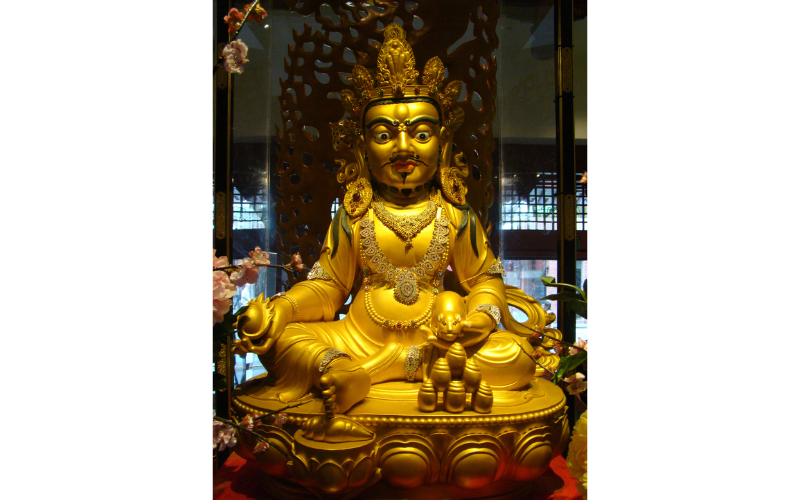
Often misunderstood as merely a deity of wealth, Dzambala symbolises abundance linked with generosity and ethical living. In Buddhist philosophy, prosperity is meaningful only when shared compassionately.
Golden in appearance and frequently shown holding jewels or a mongoose spouting treasures, Dzambala is widely revered in Himalayan Buddhist households and monasteries.
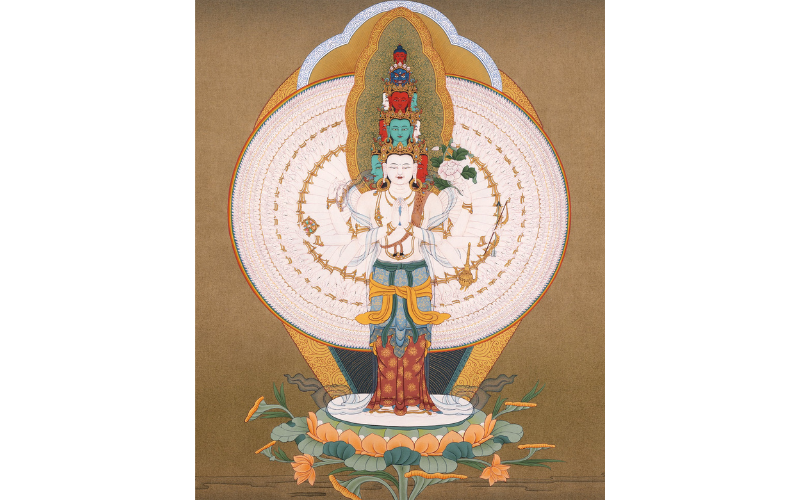
Perhaps the most universally adored Bodhisattva in Himalayan Buddhism, Avalokiteshvara embodies boundless compassion. In Tibetan Buddhism, he is known as Chenrezig and is closely associated with the sacred mantra Om Mani Padme Hum.
Many believe the living Dalai Lamas to be manifestations of Avalokiteshvara. In Nepal, his compassionate presence is reflected in traditions surrounding Karunamaya and Machhindranath festivals.
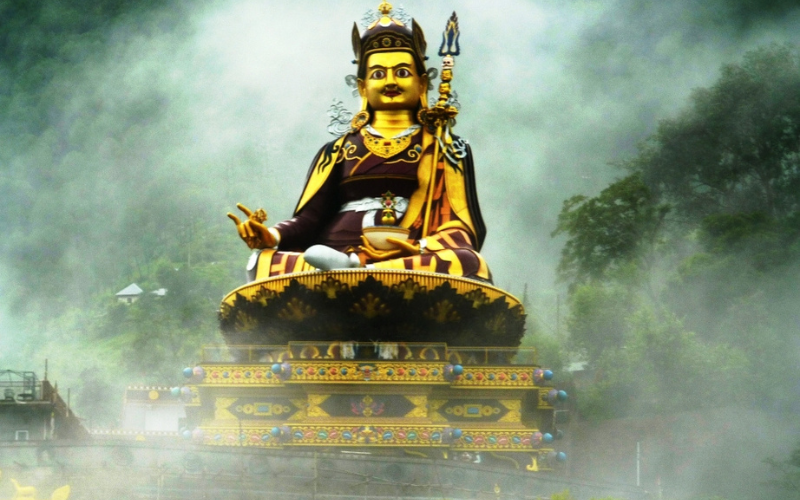
Known as Guru Rinpoche, Padmasambhava is revered as the spiritual master who established Vajrayana Buddhism in Tibet during the eighth century.
Legends portray him taming local spirits and transforming them into protectors of Buddhism. His image, adorned with lotus hats, ritual implements and penetrating eyes, is especially common in Himalayan monasteries.
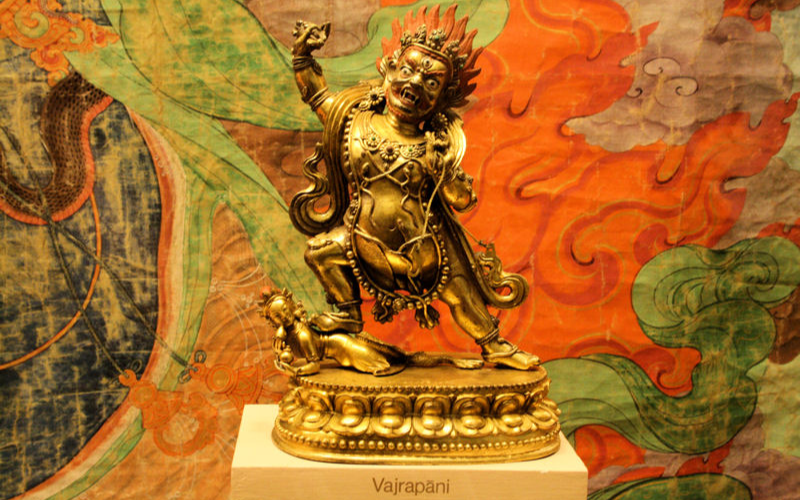
While Avalokiteshvara represents compassion and Manjushree represents wisdom, Vajrapani symbolises spiritual power. Often shown in wrathful form surrounded by flames, he embodies the force needed to overcome inner obstacles and fear.
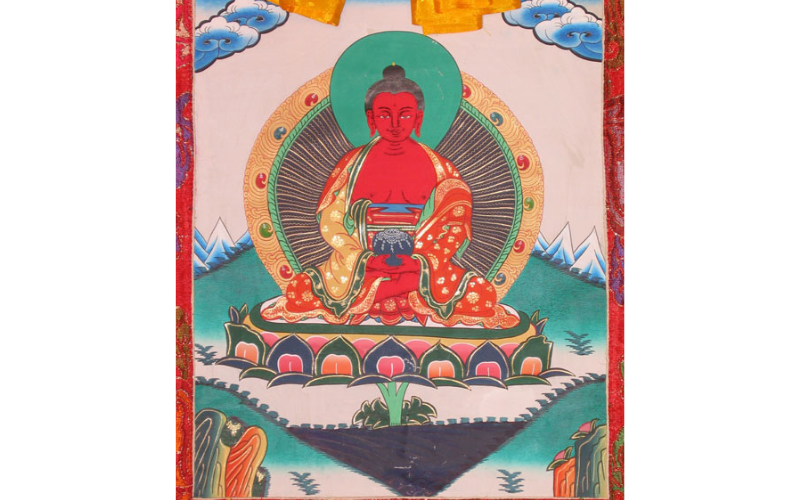
Amitabha Buddha is associated with infinite light and boundless compassion. He presides over the Pure Land, a realm believed to aid beings on the path towards enlightenment. His crimson-red imagery frequently appears in Himalayan thangka paintings and monastery murals.
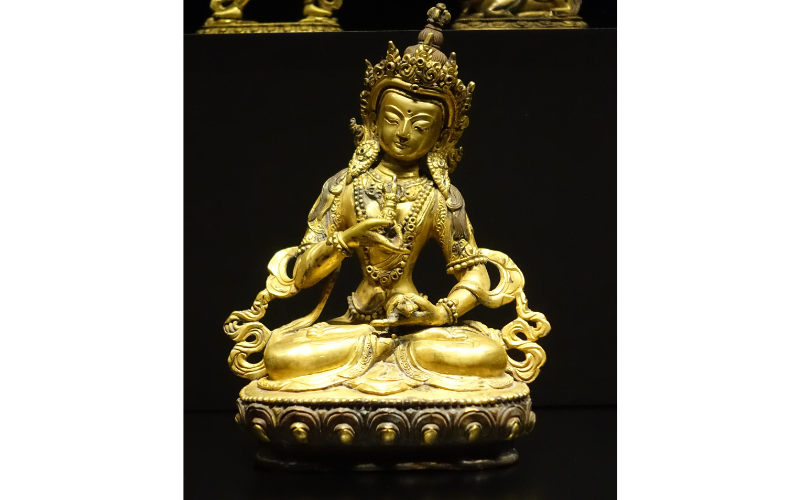
Vajrasattva represents purification of negative karma and spiritual cleansing. In Vajrayana traditions, practitioners recite his hundred-syllable mantra during meditation and rituals of renewal.
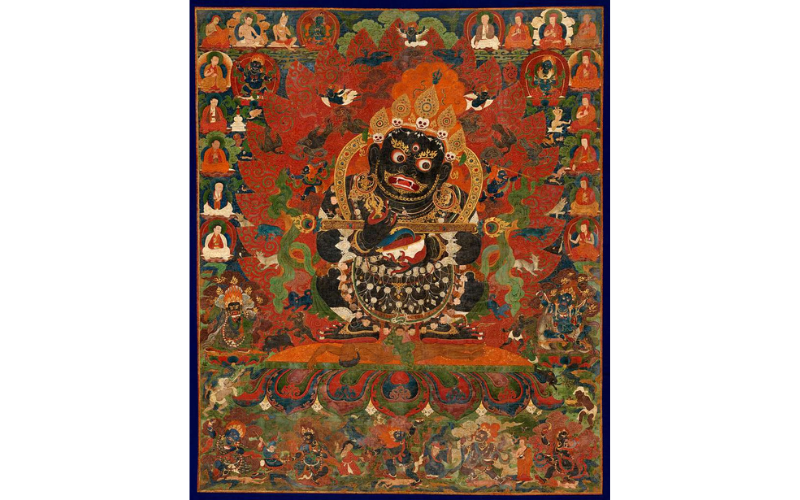
Unlike peaceful Buddhas, Mahakala appears terrifying - dark, wrathful and wreathed in flames. Yet his fierce appearance symbolises protection rather than violence. He is regarded as a guardian of Buddhist teachings and a destroyer of ignorance.
The Himalayan Buddhist pantheon is vast and layered. Other important figures include:
For travellers in Nepal, these sacred figures are far more than scripture or sculpture. They dance through festival streets in elaborate masks, flicker as butter lamps in darkened shrines, stare down from painted eyes above mountain passes, and echo through chants that spill from monastery walls into the valley mist.
Nowhere is this living presence more tangible than during Patan's Rato Machhindranath festival; one of the oldest and longest chariot processions in Nepal. Here, the deity Bunga Dyah (a form of Avalokiteshvara) is ceremonially paraded through the streets over several weeks, as communities pray for rain, harvest, and compassion. The festival vividly demonstrates that these beings are not distant myths but active, breathing forces in the daily and seasonal life of the valley.
Whether in the great prayer hall of Boudhanath, the windswept monastic villages of Upper Mustang, or the hidden bahal courtyards of Patan, the deities of Himalayan Buddhism are not relics of the past. They are living presences: shaping rituals, guiding daily life, and anchoring Nepal's spiritual landscape.
To understand them is not merely to learn mythology. It is to glimpse the philosophical heart of the Himalayas itself.
PC: Wikimedia Commons, PICRYL,
Also Read