Ramagrama Stupa is a Buddhist relic mound in Ramgram Municipality, Parasi District, on Nepal's Terai plain the only one of the Buddha's eight original relic stupas that Emperor Ashoka never opened. The road narrows into farmland well before any signage appears; rice paddies give way to a low green mound, egrets picking through the Jharahi River, cicadas doing most of the talking. Farmers here have long grumbled about one patch of soil where crops refuse to grow. A geophysical survey explained why: buried beneath it is a near-perfect quadrangular monastery from the Kushan era, its brickwork packed so dense that nothing can root above it. Locals call the spot the "unlucky field." Archaeologists call it one of Nepal's most important undisturbed sites.
Most ancient stupas in South Asia have been opened, excavated, or lost. Ramagrama's core has not. When the Buddha's remains were divided among eight kingdoms after his death, each built a stupa to house its portion. Ashoka later reopened seven of them to redistribute the relics but at Ramagrama, tradition holds that a Naga guardian and elephants blocked his way, and he left the shrine untouched.
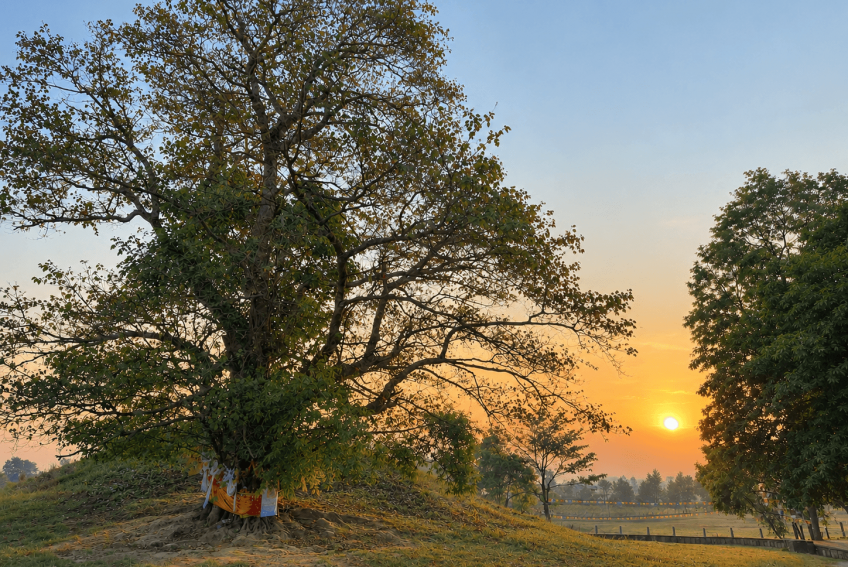
That restraint has held for over two thousand years. When Nepal's Department of Archaeology confirmed the site as a genuine stupa in 1997, and dated it to somewhere between the Mauryan and Gupta periods, the team deliberately left the inner core presumed to hold the relics unexcavated. The mound today stands about 10 metres high and 23.5 metres across, still mostly grass rather than exposed monument.Climb the packed-earth path to its crown and there's little of the polish of Lumbini or Bodh Gaya no marble, no gilding just prayer flags in the wind and a Bodhi Tree, its trunk actually four intertwined species, shading the mound.
Ramagrama joined UNESCO's Tentative World Heritage List in 1996 and sat quietly for decades. In October 2023, the Lumbini Development Trust partnered with the Promised Land organization to take up its conservation, and two months later, Italian architect Stefano Boeri unveiled a master plan at a World Peace Program event attended by then-Prime Minister Pushpa Kamal Dahal.
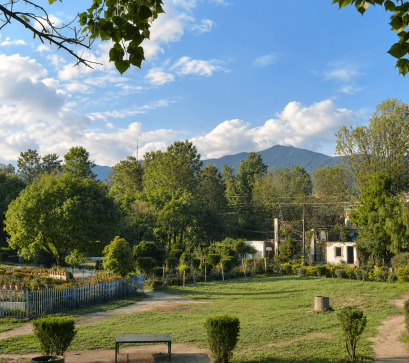
The plan centers on a 600-metre "Peace Meadow" around the stupa, a "Biodiversity Ring Garden" of roughly 80,000 plants across 70 native species, four monumental gateways, and a Prayer and Meditation Center built from local brick. The goal isn't to expose what's buried, but to shape how pilgrims approach it.
Ramagrama sits about 50 km east of Lumbini, reachable via Sunwal (13.5 km) and Bhumahi (11 km), with local buses to Parasi Bazaar and e-rickshaws locally. Expect a rougher, quieter approach than Lumbini's long stretches with no other visitor in sight, save the odd monk circling the mound in silent kora. Panditpur (13.5 km west) and Triveni Dham, a sacred river confluence, both pair well with the visit.
Ramagrama's real draw isn't a monument you can walk through it's the discipline of everyone who chose, for two millennia, not to.

.jpg)