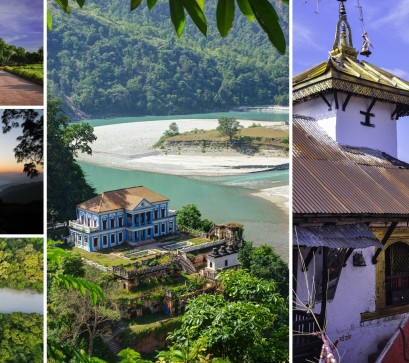
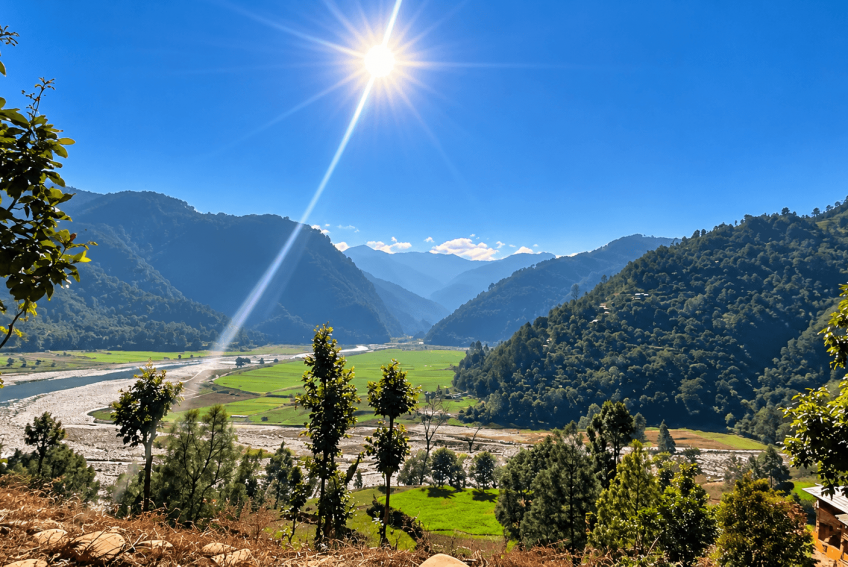
While Nepal’s popular destinations attract thousands of travellers, Jhimruk Valley in Pyuthan District offers a quieter experience of rural life in western Nepal. Named after the Jhimruk River, the valley is surrounded by hills, cultivated fields and traditional settlements.
The river forms part of the West Rapti River basin and has supported agriculture and local communities for generations. Unlike major tourist centres, Jhimruk remains closely connected to its agricultural heritage and everyday village life.
The valley lies within Nepal’s Middle Hills and experiences a subtropical climate. Its fertile alluvial plains support intensive farming, with rice cultivated during the summer monsoon and wheat and other crops grown during cooler months.
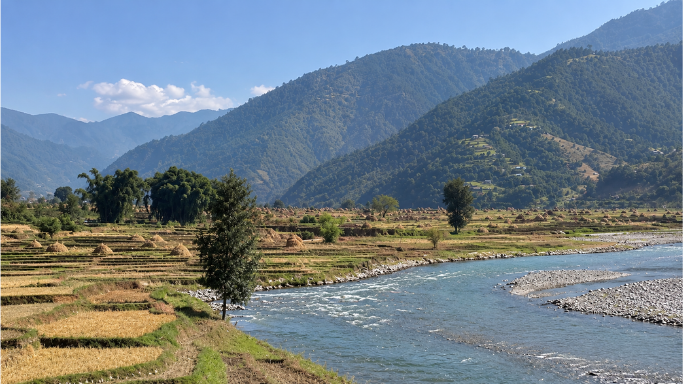
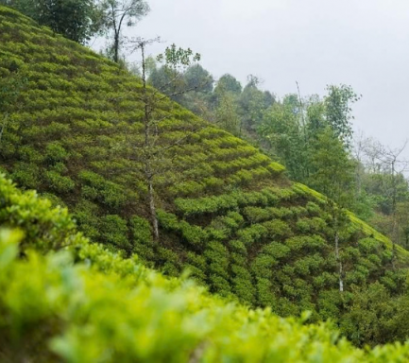
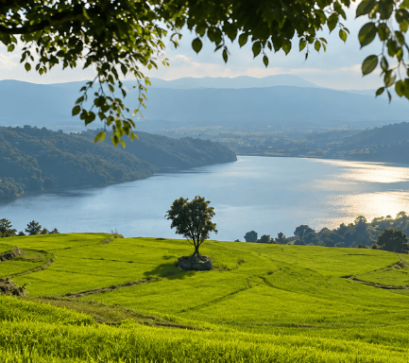
Terraced hillsides, riverside fields and scattered settlements shape the surrounding landscape. Summers can be particularly hot, while winter brings cooler temperatures. The changing agricultural seasons give visitors different views of the valley throughout the year.
Jhimruk’s history is connected to the wider political and cultural development of Pyuthan. The surrounding region preserves traces of older settlements, traditional forts and local administrative centres.
Okharkot, known for its historic fort site and elevated position, offers views across the surrounding hills and cultivated land. The wider area is home to communities including Chhetri, Brahmin, Magar and Newar, whose farming practices, festivals and traditions contribute to its cultural identity.
The valley also reflects Pyuthan’s modern development. The 12 MW Jhimruk Hydropower Project, commissioned in 1994 and operated by Butwal Power Company, uses water diverted from the Jhimruk River into the neighbouring Madi River basin to generate electricity. Administratively, Jhimruk Rural Municipality was established in 2017 and covers 106.93 square kilometres. According to Nepal’s 2021 census, the municipality had 26,130 residents, reflecting the importance of its rural settlements.
Travellers exploring the wider Pyuthan region can visit Bagdula and Bijuwar to experience local markets and riverside surroundings. Pyuthan Khalanga offers a traditional hill-town setting, while Okharkot provides opportunities to explore local heritage.
Another important destination is Swargadwari Temple, a major Hindu pilgrimage site located in the wider district. Known for its religious traditions and hilltop setting, Swargadwari adds a spiritual dimension to a journey through Pyuthan.
For visitors, the cooler autumn and spring months are generally more comfortable for exploring Jhimruk Valley. Travellers should prepare for warm conditions during summer and possible disruptions from heavy monsoon rainfall.
Comfortable walking shoes, drinking water and suitable clothing are useful when visiting rural settlements and surrounding hills. Jhimruk is best approached as a destination for experiencing agriculture, local culture and everyday life rather than expecting extensive tourist facilities.