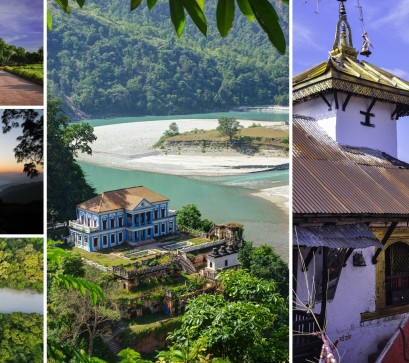
Hidden in the grasslands of Bardiya, the Blackbuck Conservation Area tells an extraordinary story of survival, where a population once reduced to just nine animals has made a remarkable recovery through decades of conservation efforts.
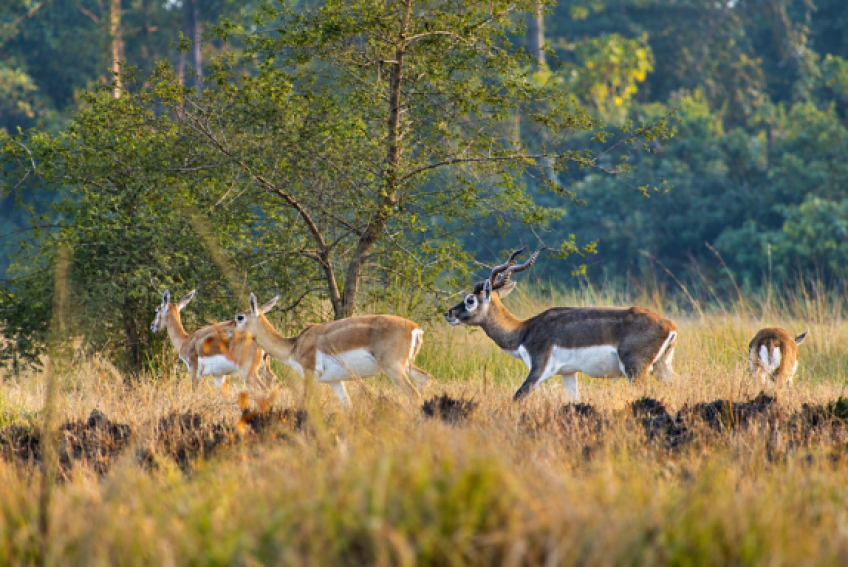
Imagine a place where rare antelopes roam freely across golden grasslands, their elegant spiral horns rising above the vegetation. Located in Khairapur, Gulariya Municipality, Bardiya District, the Blackbuck Conservation Area, locally known as Krishnasaar Conservation Area, is one of Nepal’s most fascinating yet lesser-explored wildlife destinations.
Covering 16.95 square kilometres, this protected area was officially established on March 16, 2009, to safeguard Nepal’s last surviving native wild population of blackbucks (Antilope cervicapra). Unlike the dense forests of Bardiya National Park, this conservation area offers open grasslands where visitors can observe wildlife in its natural surroundings.
The conservation area's history began in 1975, when just nine blackbucks were rediscovered in Khairapur after the species was feared extinct in Nepal. Recognising their importance, the government immediately introduced protective measures, including deploying guards and establishing a security post.
These efforts gradually transformed the species' future. By 2009, the population had reached 202 individuals. More recent conservation records report 248 blackbucks, demonstrating the importance of sustained wildlife protection.
Of the total protected area, approximately 5.27 square kilometres serve as blackbuck habitat, while the remaining 11.68 square kilometres form the surrounding affected zone.
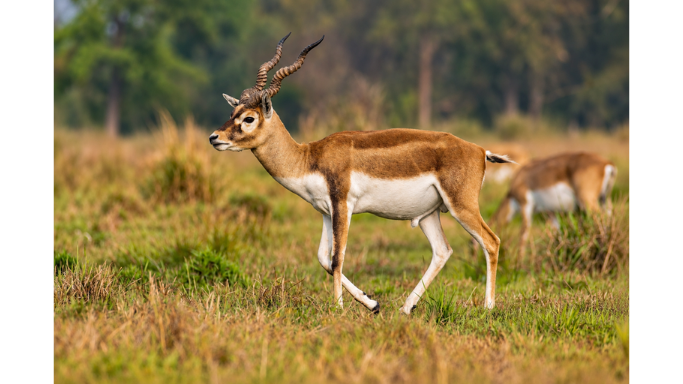
Blackbucks are among the most distinctive antelopes of the Indian subcontinent. Adult males have dark brown to black upper bodies, white underparts and striking spiral horns, while females are generally light brown and usually hornless.
Built for speed, these remarkable animals can run at approximately 80 kilometres per hour. They prefer open grasslands covered with dubo and kaans grasses, where they graze in herds and remain active during daylight hours.
Beyond blackbucks, the conservation area also supports other wildlife and grassland birds, making it an interesting destination for birdwatchers and nature photographers.
The conservation area is gradually attracting greater attention from travellers. During the 2024/25 fiscal year, at least 4,600 domestic and international tourists visited to observe these rare animals.
Visitors can explore the grasslands, enjoy wildlife photography and learn about conservation efforts supported by local communities.
The reported entry fees are:
Located approximately five kilometres west of Gulariya and around 45 kilometres from Bardiya National Park, the destination can be included in a broader Bardiya wildlife itinerary. October to March generally offers pleasant conditions for exploring.
The Blackbuck Conservation Area represents more than a wildlife attraction. It demonstrates how dedicated protection, habitat management and community participation can help a threatened population recover.
For travellers seeking an experience beyond Nepal’s famous national parks, Khairapur offers something equally meaningful: the opportunity to witness one of Nepal’s remarkable wildlife survival stories.