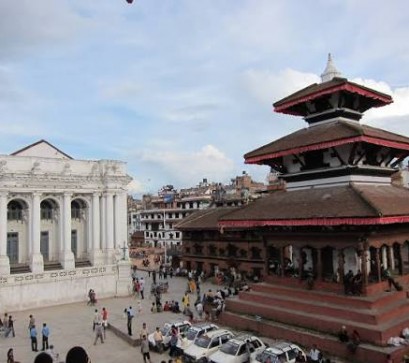
In the old quarters of Kathmandu, where brick courtyards echo with ritual chants and temple bells regulate the rhythm of daily life, the legend of Gurumapa still lingers in evening whispers. For the residents of Itumbahal, this is not merely folklore to frighten children, it is a living covenant between a community and a once-ravenous being.
For cultural travellers exploring the historic heart of the Kathmandu Valley, the story offers a compelling window into Newar myth, ritual obligation and the social mechanisms that transform fear into tradition.

The Gambler and the Golden Plate
Long ago in the Kathmandu Valley lived a man named Kesha Chandra. Known for his weakness for gambling, he squandered more than coin. He gambled away dignity, trust and restraint.
One day, he visited his sister, who welcomed him warmly and served sixteen delicacies on a golden plate. Bound by habit stronger than gratitude, Kesha carried the plate to a gambling den and lost it. The next day, she served him on a silver plate. He lost that too. On the third day, she offered food on a brass plate, and that too vanished into ruin.
Finally, determined to teach him humility, she placed his meal directly upon the floor. Ashamed and wounded in pride, Kesha gathered the rice into a cloth and wandered into the surrounding hills.
Exhausted, he spread the rice to dry and fell asleep. When he awoke, pigeons had eaten every grain. Overcome with despair, he wept. Moved by compassion, the pigeons performed a miracle: they excreted gold.
Thus, fortune returned to the foolish man, not through cunning but through grace.

A Dangerous Bargain with Gurumapa
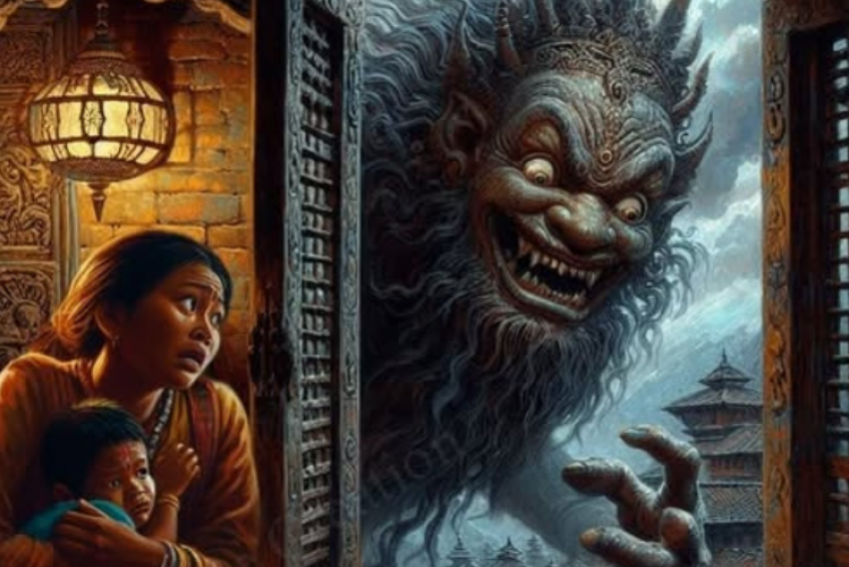
Struggling beneath the weight of gold, Kesha encountered Gurumapa: a gigantic ogre said to haunt the outskirts of the Valley. The creature threatened to devour him.
Thinking quickly, Kesha addressed him as maternal uncle and proposed a bargain: help carry the gold to town, and in return Gurumapa would receive lavish meals and shelter.
The ogre agreed.
But hunger, once invited, rarely remains controlled. Soon Gurumapa began devouring the neighbourhood’s children and men. Parents invoked his name at dusk, warning little ones not to stray beyond home.
Then tragedy struck: Gurumapa consumed Kesha Chandra’s only son.
Grief sharpened into resolve. The monster he had introduced into the Valley now had to be contained.

The Covenant of Tundikhel
The townspeople united and proposed a pact. Gurumapa would reside permanently in Tundikhel; Kathmandu’s great ceremonial ground. In exchange, the community would offer him an annual feast:
Gurumapa agreed but asked what he would do in such a vast open field.
The folks answered wisely: he would separate three kinds of stones and pebbles; an endless task symbolising protection from three categories of calamity. Some interpretations suggest the three pebbles represent the Valley’s three historic districts: Kathmandu, Lalitpur, and Bhaktapur.
Bound by ritual obligation, Gurumapa has remained there ever since; sorting stones, guarding the Valley from unseen misfortune.
A Living Tradition in Itumbahal
To this day, on the evening of the full moon of Falgun during Holi, the people of Itumbahal prepare the promised feast and offer it to Gurumapa. The ritual sustains an agreement forged generations ago.
Kesha Chandra, transformed by loss and responsibility, later established a bihar (monastic courtyard) and founded a guthi, a traditional Newar socio-religious trust to sustain communal rites. During Gunla in the month of Shrawan, when grain stores historically ran low, the guthi assumed the duty of feeding pigeons: a lasting act of gratitude toward the birds that restored his fortune.
Even today, residents of Itumbahal revere an image of Kesha Chandra as an ancestral figure: a flawed man whose folly invited disaster, and whose repentance restored balance.
More Than a Monster
For visitors interested in Kathmandu’s intangible heritage, the legend of Gurumapa reveals a distinctive feature of Newar cosmology: monsters are seldom destroyed. They are negotiated with, ritualised and integrated into civic life.
The narrative explores enduring themes:
Gurumapa is both warning and guardian: a symbolic embodiment of unmanaged appetite transformed through communal discipline.
While landmarks such as Durbar Squares and stupas draw global attention, stories like Gurumapa’s reveal the psychological and cultural architecture of the Valley. They explain why open spaces like Tundikhel are not merely physical grounds but mythic landscapes embedded with memory.
PC: Cultural Heritages of Nepal, Wikimedia Commons, Bajracharya.org
Also Read