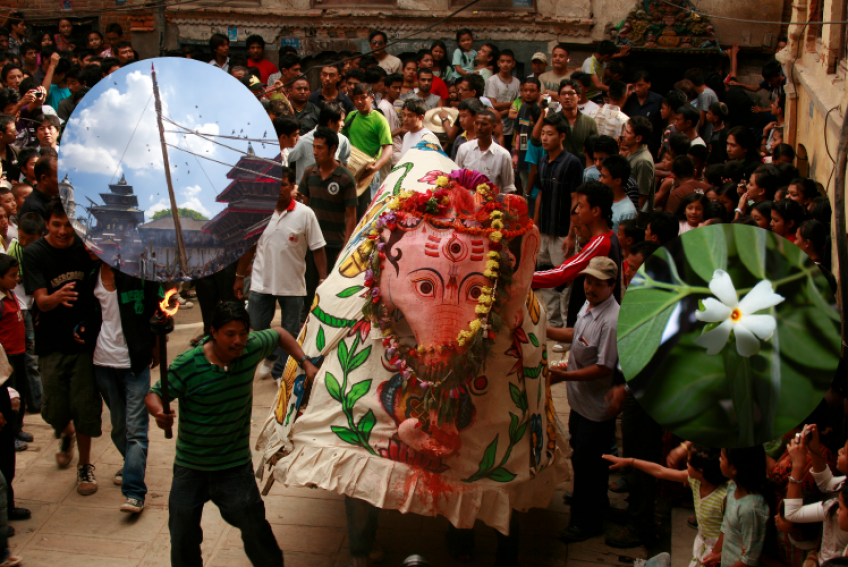
Every year, the streets of Kathmandu slip into something ancient, something almost mythic. Amid the drums, masks, and masked deities of Indra Jatra, a giant white elephant appears; not in stillness, but in motion. It doesn’t simply arrive; it runs, sways, and surges through the narrow alleys as if chasing a memory only it can see.
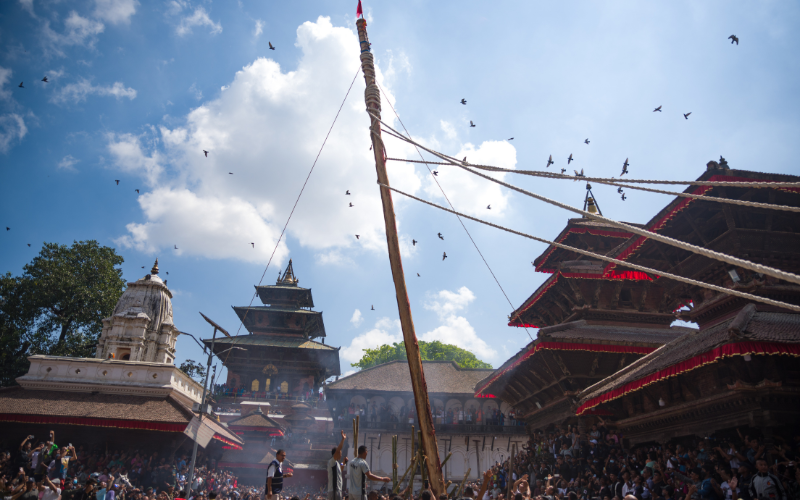
This is Pulukisi, the living symbol of Airavata, the celestial elephant of Bhagwan Indra, the god of heaven. In the heart of Kathmandu’s old city, Pulukisi becomes more than a festival figure, it becomes a story in motion, retold through chaos, rhythm, and devotion.
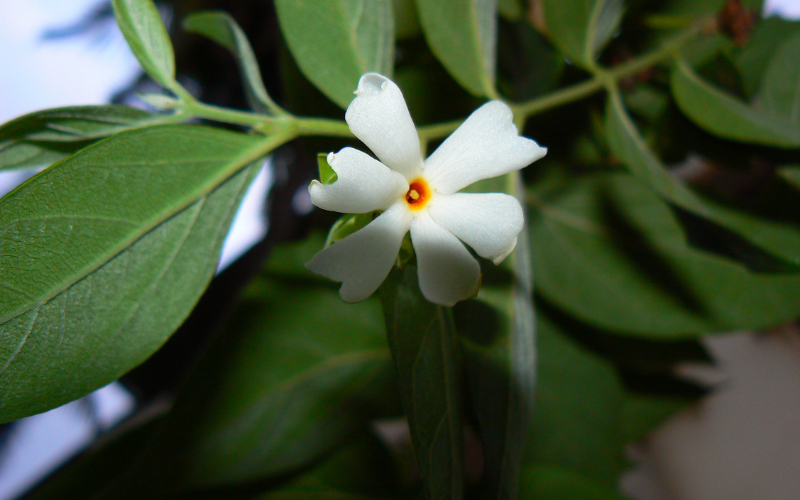
The legend traces back to a moment of misunderstanding. Indra, it is said, descended to Earth in human form to pluck the sacred Parijat (night jasmine) flower for his mother, Dakini; a tale preserved in Newar tradition, where Dakini sends Indra on a divine errand to gather the flower for a ritual offering. But on Earth, the divine disguise was not recognised. Mistaken for a thief, Indra was captured and bound by the locals.
When he failed to return, Airavata grew restless.
The celestial elephant began a desperate search through the mortal world, charging through streets and skies alike, seeking its master. That eternal search is what Pulukisi embodies today, an echo that refuses to fade.
Even the myth carries a resolution steeped in symbolism. Indra is eventually released, in exchange for something intangible yet profound: forgiveness, fog, and the quiet restoration of balance between heaven and earth.
During the procession, Pulukisi’s erratic movements, its sudden turns, forceful charges, and restless swaying are not performance alone. They are emotion made visible. Anger. Grief. Loyalty. Longing. Each motion becomes a fragment of a divine story still unfolding in the present.
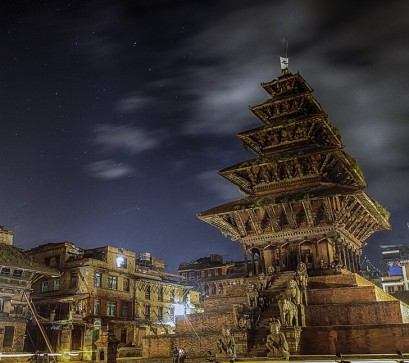
In the tight lanes of the old city, where centuries-old brick houses lean into each other, the atmosphere transforms. Dhaan and Dhime (traditional newa musical instruments) echo louder, crowds surge closer, and the boundary between myth and reality begins to dissolve. For a brief moment, Kathmandu is no longer just celebrating a festival, it is living inside one.
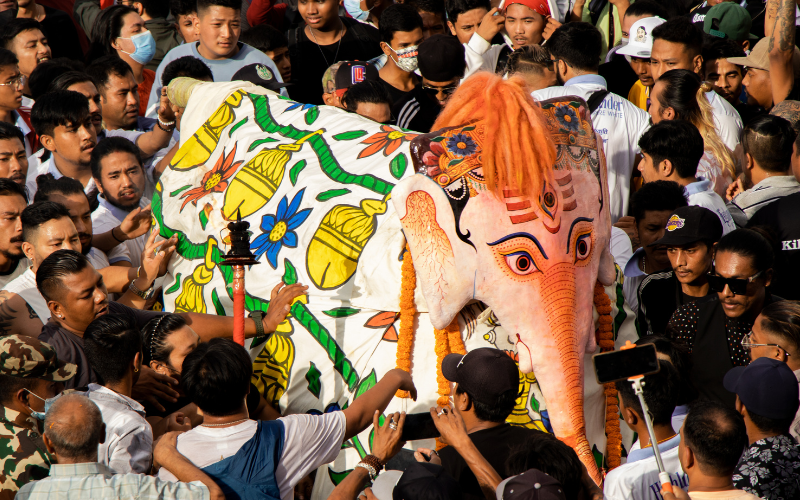
Indra Jatra is not only a ritual of gods. It is a festival of memory. A reminder of how stories endure, passed from one generation to the next, carried not just in texts or temples, but in movement, sound, and collective belief.
And in that fleeting chaos of Pulukisi’s run, something profound becomes clear: Kathmandu does not merely remember its legends.
It runs with them.
PC: Wikimedia Commons
Also Read

.jpg)

.jpg)