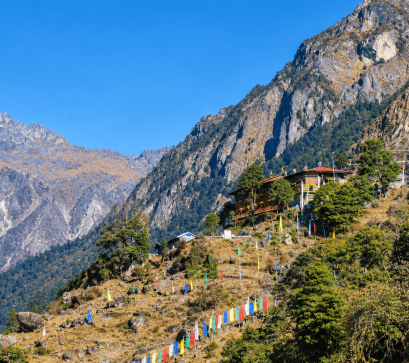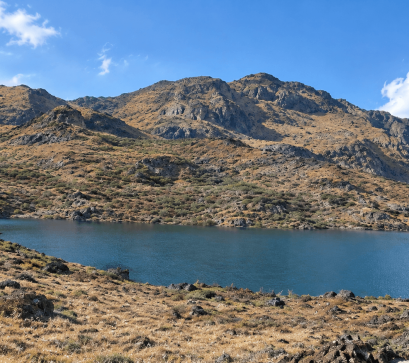
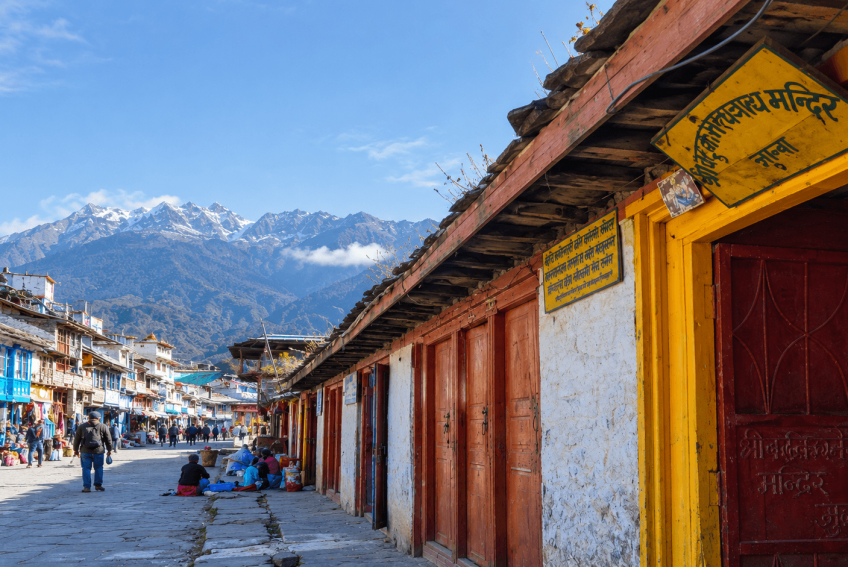
High in Nepal's Jumla District, at roughly 2,500 metres, the Hima River winds through a quiet valley of paddy fields, apple orchards and weathered stone. Few visitors realise they are walking through the ruins of an imperial capital. Sinja Valley was the seat of the Khas Malla kingdom, and it is widely regarded as the place where the Nepali language was born.
From the 12th to the 14th century, Sinja served as the summer capital of the Khas Malla kings, with Dullu in Dailekh as their winter seat. Tradition names Nagraj as the dynasty's founder. At its height, the kingdom stretched from western Tibet across western Nepal into Kumaon and Garhwal in present-day Uttarakhand.
The Italian scholar Giuseppe Tucci, who studied the region closely, remarked that this empire was once larger than his own Italy. After the 14th century it split into the Baise, or Twenty-Two Kingdoms, which lasted until Nepal's unification in the late 18th century.
Sinja's greatest legacy may be linguistic. The Khas language spoken at the Malla court, known as Khas Kura, is the early form of modern Nepali. Some of the earliest examples of Devanagari script, dating to the 13th century, survive on the valley's cliffs and in nearby Dullu. In the 1970s, scholar Satya Mohan Joshi led a five-member team to Sinja to study these roots. Their five-volume study of Karnali folk culture won the Madan Puraskar, with linguist Chudamani Bandhu identifying the local Sinjali speech as a source of the national language.
Excavations by Nepal's Department of Archaeology and Cambridge University uncovered palace foundations, an old settlement, and the Kanaka Sundari and Tripura Sundari temples. A ring of massive monolithic stone pillars encircles the site, entered through a Malla gateway and steps.
Buried baked-clay pipes point to a sophisticated water supply system. Across the Hima River, caves hold votive Buddhist chaityas and ancient inscriptions, reflecting a society where Buddhism and Hinduism coexisted. Recognising this value, Nepal placed Sinja on the UNESCO World Heritage Tentative List on 30 January 2008.
Sinja is not frozen in the past. Dhami shamans still perform Masto rituals in stone shrines called Dewals, and farmers grow Kalo Marshi, a cold-tolerant red rice, using traditional irrigation and community practices.
Visitors can fly from Kathmandu via Nepalgunj to Jumla, then drive two to three hours, or travel the Karnali Highway by road. Spring and autumn offer the best conditions, and the valley fits neatly into a trek toward Rara Lake.
For anyone curious about where Nepal's language and identity began, Sinja Valley offers something rare: a ruined capital that still breathes.
.png)