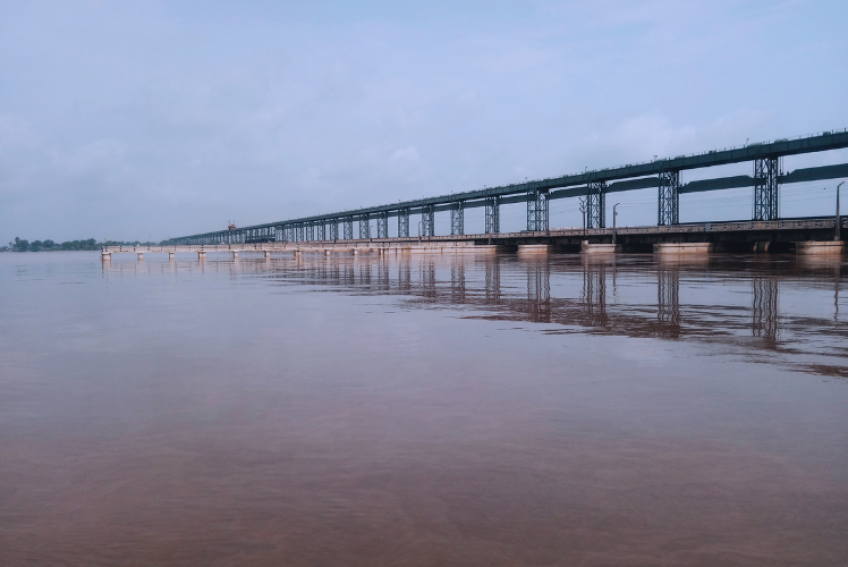
In the flat, riverine expanse of Sunsari District, where Nepal’s eastern rivers slow and spread before crossing into India, the Koshi Barrage stands as more than infrastructure. It is a meeting point of engineering, ecology, and borderland geography.
For travellers drawn beyond the hills, it reveals a different Nepal: wide horizons, shifting wetlands, and the quiet force of one of South Asia’s most dynamic river systems.
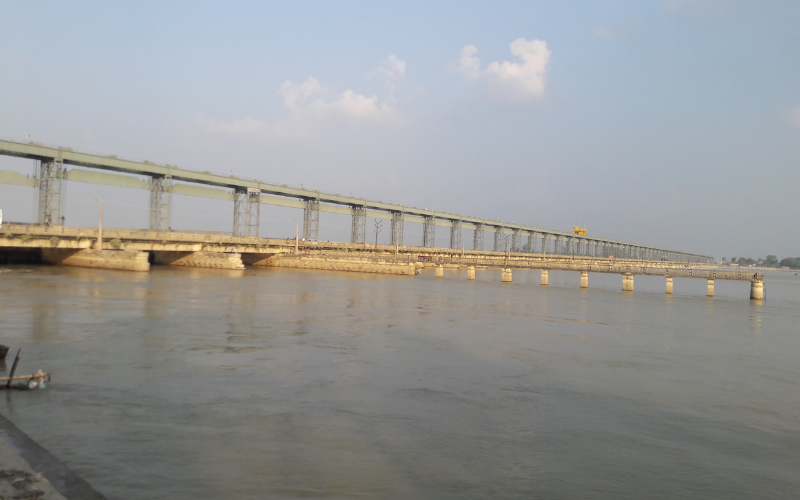
Completed in 1962 under the Koshi Agreement, the barrage spans roughly 1,150 metres across the Koshi River. Unlike a dam, which stores water, a barrage regulates and diverts flow.
Its 56 sluice gates are operated to manage intense monsoon discharge and support downstream irrigation systems. From the roadway that runs across it, also functioning as a border route into Bihar, India, the river’s behaviour changes dramatically with the seasons.
In the dry months, it contracts into braided channels. During the monsoon, it expands into a vast, shifting water landscape that can stretch far beyond the visible horizon.
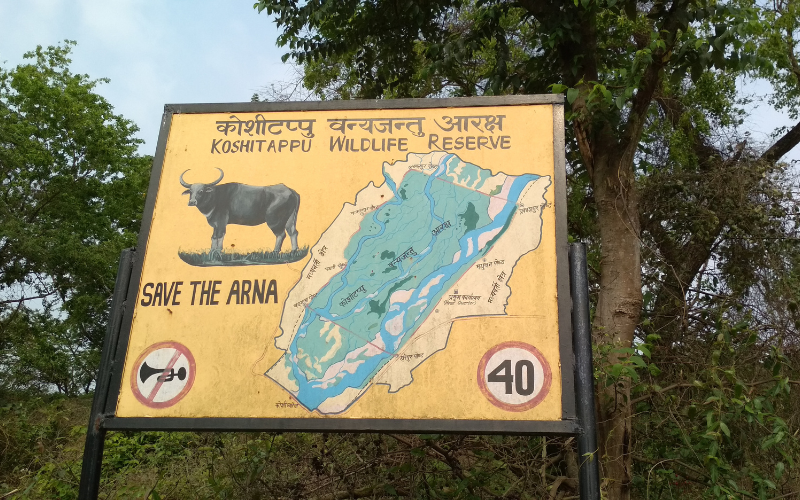
Immediately adjacent lies the Koshi Tappu Wildlife Reserve, a 175 sq. km Ramsar-listed wetland of international importance.
Ironically, the regulation of the Koshi River has helped stabilise wetland habitats that now support exceptional biodiversity. The region is home to Nepal’s only population of wild water buffalo, along with sightings of Ganges river dolphins, marsh crocodiles, and smooth-coated otters.
More than 485 species of birds have been recorded across the wider floodplain, making it one of Nepal’s most significant birding landscapes.
Between November and February, Koshi transforms into a major migratory corridor. Sandbanks and shallow waters attract flocks arriving from Siberia and Central Asia.
Northern pintails, gadwalls, common teals, and ruddy shelducks gather in large numbers, turning the river into a living mosaic of movement. Even the barrage itself becomes a viewing platform for birdwatchers, photographers, and quiet observers.
Koshi Barrage is not a destination of action but of observation. Walking along the structure offers a rare sense of openness in the Terai, where wind, water, and sky dominate the experience.
The sound of water rushing through the gates forms a constant background rhythm. Below, cormorants dry their wings on sandbanks while herons and egrets move slowly through shallow channels. In the distance, fishermen work quietly in small boats, maintaining a rhythm unchanged by time.
Sunset is the most compelling moment, when golden light flattens the river surface and bird silhouettes drift across an open sky.
The barrage is easily accessible by road from Inaruwa, Itahari, and Biratnagar. The main entry point is commonly referred to as Gate No. 1 on the Kushaha side. Entry is free and open throughout the day.
Facilities are minimal, so travellers should carry water, sun protection, and essentials. Rhesus macaques are commonly seen near access points, and visitors are advised not to carry visible food. While photography of the landscape is generally acceptable, caution is advised near security posts due to the site’s strategic location.
The most rewarding period is from late November to February, when migratory birds peak and the weather is pleasant.
Pre-monsoon months bring extreme heat but reveal exposed sandbanks and raw river textures. The monsoon transforms the entire landscape into a powerful and fast-moving water system, though access can become difficult.
The Koshi Barrage exists in a rare in-between space; neither fully natural nor entirely engineered. It is a place where a powerful river is guided but never fully contained, and where ecological richness has emerged alongside human intervention.
For birdwatchers, it is one of eastern Nepal’s most important wetland viewpoints. For travellers, it is a reminder that rivers are not controlled but only temporarily directed.
A visit here is best paired with an overnight stay near the Koshi Tappu buffer zone, where dawn reveals the wetlands at their most alive and atmospheric.
Also Read