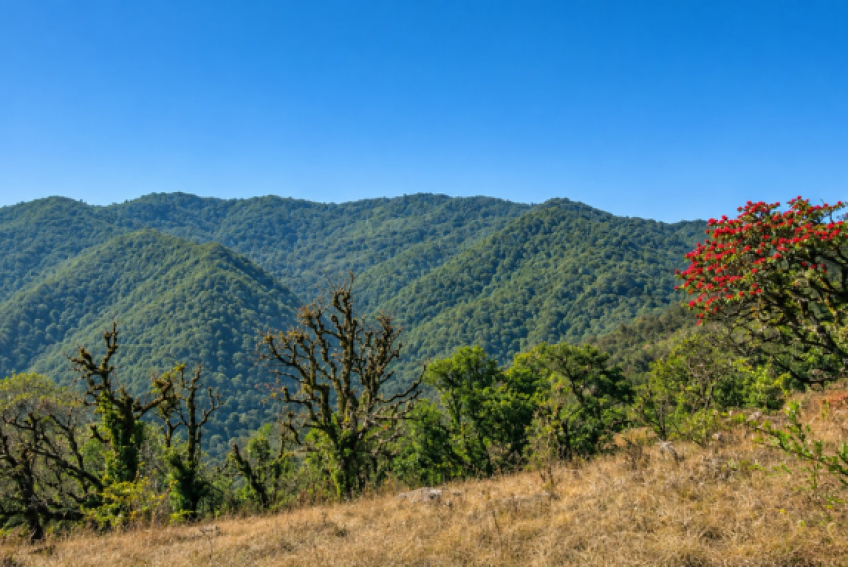
Located in Gulmi district of Lumbini Province, Madane Protected Forest is one of western Nepal’s lesser-explored natural destinations. Covering approximately 13,761 hectares, the forest stretches from 975 to 2,690 metres above sea level. With its dense woodlands, scenic ridges, and remarkable biodiversity, Madane offers a refreshing experience for travellers seeking nature beyond Nepal’s popular tourist destinations.
Madane is home to a remarkable variety of plants, birds, and wild animals. Its changing elevations support subtropical vegetation, pine forests, oak trees, and rhododendrons. Wildlife recorded in the area includes Himalayan black bears, common leopards, barking deer, wild boars, and jungle cats.
The forest is particularly important for bird conservation. According to Bird Conservation Nepal surveys, 289 bird species have been recorded in Madane, making it a significant birdwatching destination. Rare birds such as the Cheer Pheasant, Egyptian Vulture, Red-headed Vulture, and Himalayan Griffon have been documented in the area. The surrounding forests of Gulmi also provide habitat for Nepal’s endemic Spiny Babbler, locally known as Kande Bhyakur.
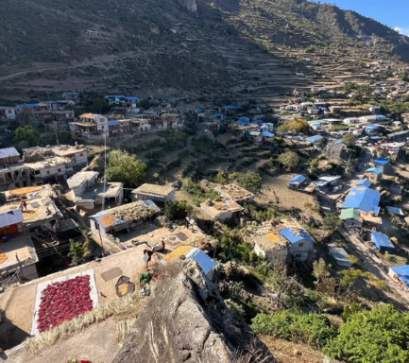
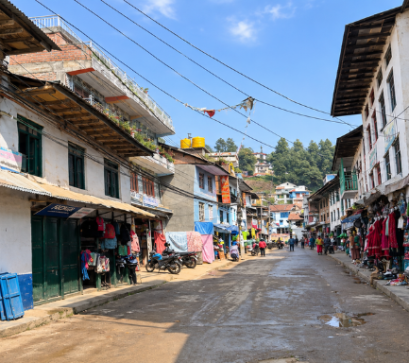
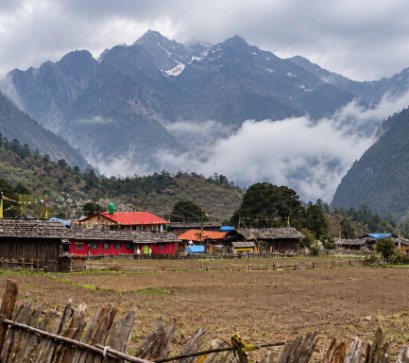
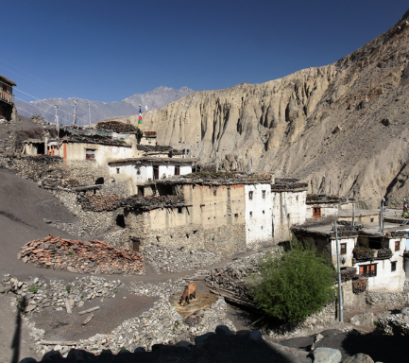
Beyond its biodiversity, Madane offers beautiful trails passing through peaceful villages, forested hills, and traditional settlements. Travellers can experience the rural lifestyle of local communities while exploring the natural landscape.
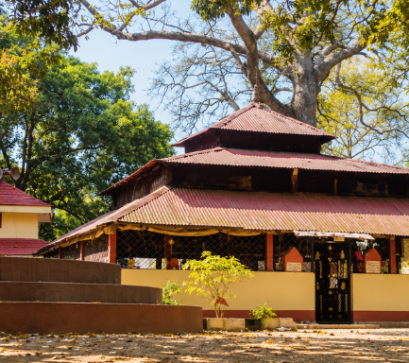
Nearby attractions include Kanke Deurali, a religious and scenic destination near the borders of Gulmi, Arghakhanchi, and Pyuthan. The Marbhung Malika Devi Temple is another important cultural landmark, attracting devotees during local religious festivals.
For adventure lovers, the Madane hills offer opportunities for hiking, nature photography, birdwatching, and exploring traditional village life.
Spring, particularly March to May, is an excellent time to explore Madane when rhododendrons bloom across the hills. Autumn, from October to November, generally provides pleasant weather and clearer views of the surrounding landscapes. Birdwatching can also be rewarding during the cooler months.
Madane Protected Forest lies approximately 50 kilometres west of Tamghas, the headquarters of Gulmi district. Travellers can reach the surrounding settlements through local roads, although road conditions and accessibility vary with the season.
Despite its ecological importance, Madane remains relatively unexplored by mainstream tourism. Its combination of rare wildlife, peaceful forests, cultural heritage, and rural landscapes makes it an appealing destination for nature lovers looking to discover a quieter side of Nepal.