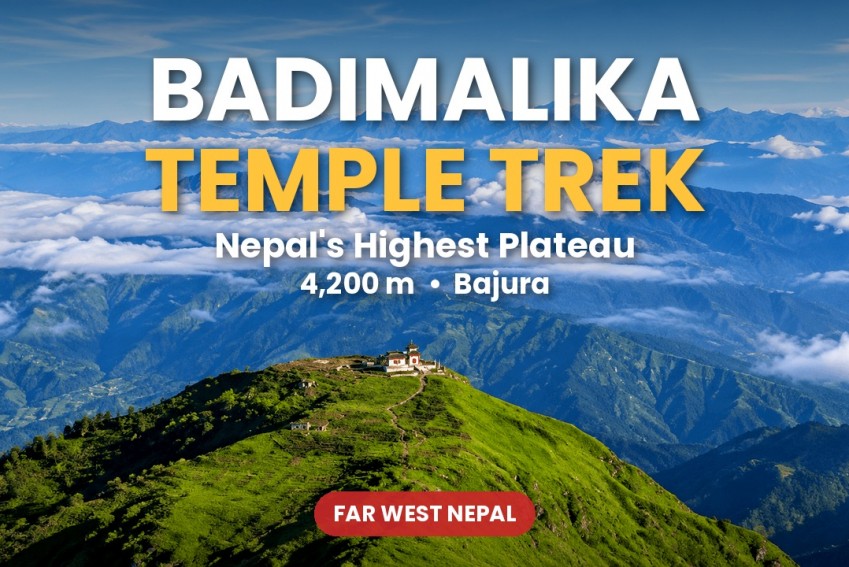
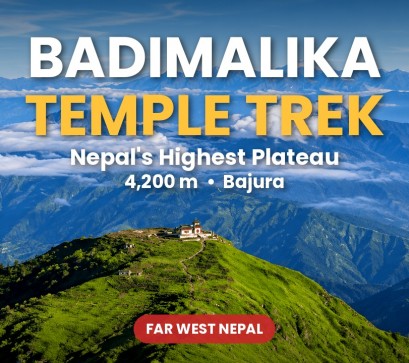
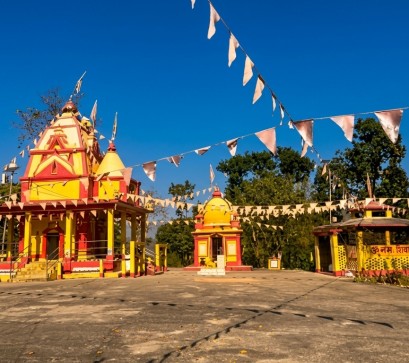
High in Bajura District, Sudurpashchim Province, a pagoda-style temple sits at about 4,200 meters, ringed by 22 rolling alpine meadows known as patan. This is Badimalika, one of Nepal's most sacred Shakti Peeths and one of its least-visited trekking routes. It suits travelers who want pilgrimage, solitude, and wilderness without the crowds of Everest or Annapurna.
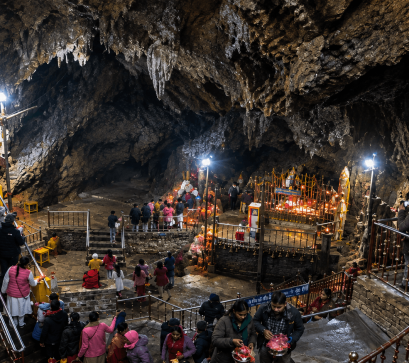
According to Hindu tradition, Sati Devi's left shoulder fell here as Lord Shiva wandered the earth in grief. The temple houses the goddesses Mahakali, Mahalaxmi, and Durga, and is regarded as the eldest of the seven sister goddesses of the Far West. Each year, thousands of Nepali and Indian pilgrims arrive for the Janai Purnima fair in August.
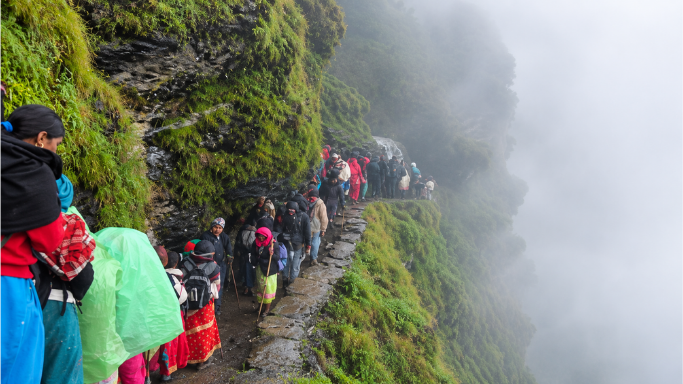
Fly from Kathmandu to Dhangadhi (about an hour), then drive roughly 10 to 12 hours via Dipayal and Sanfebagar to Martadi, the Bajura headquarters. Some operators instead drive via Dadeldhura to Jadanga and start the trek from there. From Martadi, the walk to the temple takes about three days.
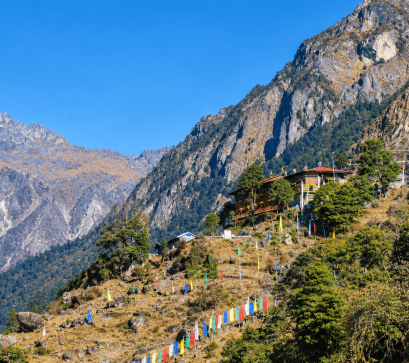
A typical route climbs from Martadi to Budha Krodh (2,600 m), then to Triveni Dham (about 3,875 m), and finally to the temple. Triveni is where the Kshir, Benurudra, and Mandakini rivers meet, and pilgrims bathe here before the final ascent. Along the way you pass villages, forests, waterfalls, and open pastures, with views of the Api and Saipal ranges.
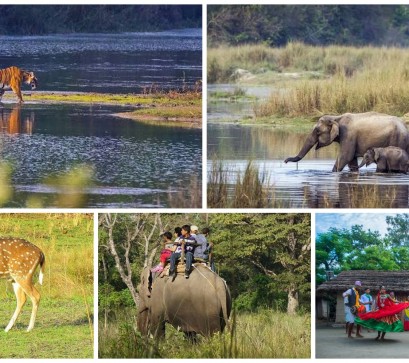
Wildlife includes Himalayan monal, goral, tahr, and barking deer. The return can loop via Nauli and Lamagada, or take a longer route through Dhawalpur Lake and Silgadhi. Itineraries run from about 9 to 15 days from Kathmandu.
Spring (March to May) brings rhododendrons and clear skies, and autumn (September to November) offers the most stable weather. Monsoon turns the meadows green and flowered, but trails get slippery and roads can be disrupted. Winter snow makes the route much harder.
The trek is moderate to demanding. The altitude is manageable, but the challenge comes from 5 to 8 hours of daily walking, steep ascents, and isolation. Trails have few signs, so a local guide is essential, and sources indicate one may be required.
Teahouses exist only in the lower villages. Higher up, you need tents, food, and cooking supplies, usually arranged by a trekking company. Pack warm layers, sturdy boots, and rain gear, and allow time to acclimatize at Triveni.
You will typically need a TIMS card, a Khaptad National Park permit, and a Bajura local area permit. Arrange these in Kathmandu before departure. Package prices vary widely with group size and services, with one source citing roughly USD 1,000 to 2,500 per person. Confirm current requirements and prices with your operator.
This region is fragile. Carry out your plastic, respect local customs, hire local guides and porters, and buy food locally.
Badimalika rewards effort with spiritual depth, wide-open Himalayan pastures, and a sense of discovery. If you want a trek that still feels undiscovered, this is one of Nepal's best.
.png)